
Home / Filter Press Products / Cast Iron Filter Press
CAST IRON PLATES / HEATED SLURRY FILTRATION
Cast Iron Filter Press for High-Temperature Filtration
Evaluate cast iron or ductile iron filter plates for a heated solid–liquid separation process. Select the plate arrangement, filter cloth and operating limits around your feed temperature, chemistry and production duty.
Send the normal and peak feed temperatures, pressure requirement, slurry composition and throughput.
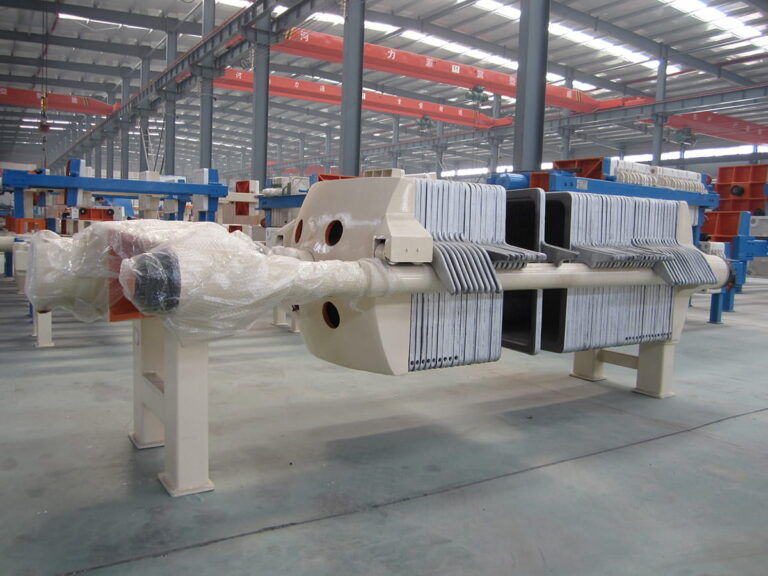
Published filtration area
10–200 m²Supplier range; the selected model and plate pack require confirmation.
Listed filtration pressure
≤0.6 MPaEquivalent to ≤6 bar. Hydraulic closing pressure is a separate rating.
Plate configurations
Two arrangementsPlate and frame or recessed plate, with handling matched to the configuration.
The supplier states plate temperature resistance up to 200 °C. Confirm the complete press, cloth, seals and permitted pressure–temperature combination for your process.
Start with the Temperature and the Material in Contact
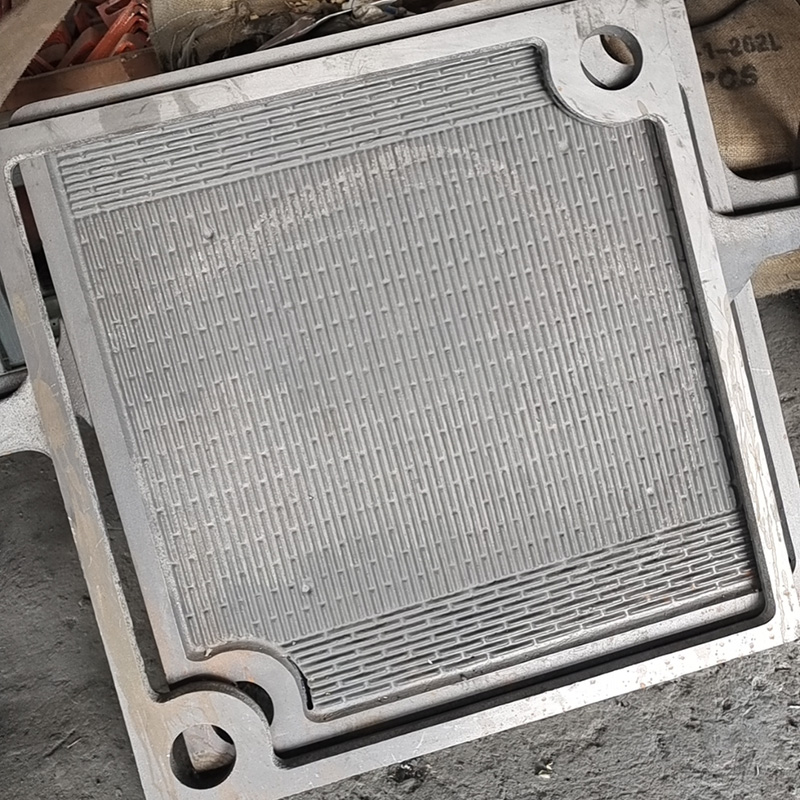
Supplier plate-detail photograph showing the filtration surface and drainage grooves. Confirm the exact casting, dimensions and surface condition for the selected equipment.
Metal plates are one part of the operating envelope
The reference product uses filter plates made from cast iron or ductile iron. Filter cloth lies between the plates, retaining solids while liquid passes into the drainage channels.
For a heated feed, specify both normal operation and any temperature excursions. Check the casting, filter medium, seals where fitted, connections and connected equipment together.
Cast iron construction does not establish compatibility with every hot liquid. Review chemical composition, concentration, corrosion risk, cleaning chemicals and acceptable iron pickup before selection.
Temperature profile
Provide normal, peak and cleaning temperatures, along with heating and cooling conditions. Confirm permitted changes in temperature and the operating procedure.
Pressure & feed behavior
Specify filtration pressure, feed rate, viscosity and solids loading. Confirm these together; separate maximum temperature and pressure statements are not proof of a simultaneous rating.
Product quality
State the required clarity, cake condition and any limits on iron or other contamination. Cloth selection alone does not establish chemical purity or hygiene compliance.
Published Parameters and Items to Confirm
The supplier provides the following material and size ranges, without an individual model schedule. Use them to prepare an enquiry; obtain the model-specific drawing and ratings before ordering.
| Parameter | Published reference | Selection note |
|---|---|---|
| Filter plate material | Cast iron or ductile iron | Confirm the offered casting grade and suitability for the feed and cleaning duty. |
| Published plate temperature resistance | Up to 200 °C | A plate-material statement, not an unconditional operating limit for the complete press. Confirm cloth, seals, connections and the pressure–temperature duty. |
| Filtration pressure | ≤0.6 MPa | Equivalent to ≤6 bar. Keep separate from hydraulic closing-system pressure. |
| Feeding pump pressure | 6 bar | This source entry is not a full pump selection. Confirm slurry flow, operating control and the permitted equipment limits. |
| Filtration area range | 10–200 m² | Published range only. The source does not map areas to individual models, plate counts or chamber volumes. |
| Listed plate sizes | 320×320, 450×450, 630×630, 800×800 mm | Four square sizes reproduced from the source. Confirm the selected plate and installation drawing. |
| Additional plate-size entry — confirm | 1000×100 mm | The source writes 1000x100mm. This may be a typographical error; do not assume 1000×1000 mm without confirmation. |
| Plate configurations | Plate and frame / recessed plate | The supplier describes manual handling for its plate-and-frame arrangement and manual or automatic pulling for its recessed arrangement. Confirm the supplied functions. |
Plate-size entry requiring confirmation: The source lists “1000x100mm.” It may contain a missing digit, but no correction to 1000 × 1000 mm has been assumed. Ask for the current plate drawing.
The source does not provide model-specific chamber volumes, plate counts, motor powers, weights, installation dimensions or guaranteed throughput. Request these for the proposed configuration. Swipe within the table on a phone.
Reference: supplier cast iron filter press product information, reviewed 30 September 2026.
Plate and Frame or Recessed Plate?
The supplier distinguishes two plate arrangements. Compare the filter medium, cake formation, discharge work and maintenance access for your application.
Plate and frame arrangement
Separate plates and frames create space for retained solids. The reference supplier describes manual plate handling and unloading for this configuration.
Review the medium, frame depth, cake removal and operator access in the proposed drawing. Filtration clarity depends on the feed and media, not on the arrangement name alone.
Recessed plate arrangement
Recesses in adjacent plates form the filter chambers. The supplier describes manual and automatic plate-pulling options for this arrangement.
Confirm the included plate-shifting mechanism, cake discharge sequence and handling provisions for the selected plate mass and size.
Specify the closing mechanism separately. The supplier mentions manual, mechanical and hydraulic compression; hydraulic closing is not membrane squeezing.
Plan Filtration, Cooling and Cake Handling as One Cycle
01
Assemble & close
Inspect the plates, sealing surfaces and filter cloth, then assemble and secure the plate pack according to the equipment procedure.
02
Feed & filter
Feed within the confirmed temperature and pressure limits. Monitor pressure, filtrate conditions and the agreed filtration endpoint.
03
Stop & discharge
Stop and isolate feed, verify depressurization and meet the specified handling temperature before opening. Discharge cake and inspect the cloth and plates.
Include any cooling, opening, cake discharge, cloth cleaning and inspection time in the production estimate. Plate shifting and lifting assistance should follow the actual equipment design.
Applications to Evaluate with Process Data
Petroleum & oil processing
For heated oil-bearing feeds or residues, provide composition, viscosity, solids, temperature and any flammability or containment requirements. Confirm the complete process and equipment specification.
Ceramics & mineral processing
For clay and mineral slurries, review abrasiveness, solids loading and cake-handling requirements. A duty requiring more than the published ≤0.6 MPa must be assessed as a different pressure specification.
Chemical & metallurgical processes
Provide the chemical species, concentration, temperature and acceptable contamination limits. Check corrosion behavior and cleaning compatibility before specifying cast iron plates.
Compare Plate Materials Against the Same Process Duty
| Material | Selection focus | Confirm before ordering |
|---|---|---|
| Cast iron / ductile iron | Evaluate for the proposed heated filtration duty and required plate arrangement. | Casting grade, temperature–pressure envelope, corrosion, iron pickup and plate handling. |
| Polypropylene | Evaluate the specific plate grade and design against the slurry and process conditions. | Manufacturer-rated temperature and pressure together; do not apply one universal PP temperature cutoff. |
| Stainless steel | Evaluate the required contact grade, product quality and cleaning conditions. | Component grades, seals, filter medium and chemical compatibility; stainless steel is not automatically suitable for every hot acid. |
Cast Iron Filter Press FAQs
Can this filter press operate at 300 °C?
The reference supplier states cast iron plate temperature resistance up to 200 °C, not 300 °C. The allowable operating temperature of the complete equipment must be confirmed for the selected cloth, seals, connections and process duty.
Is the filtration pressure 2.5 MPa?
The supplier lists filtration pressure ≤0.6 MPa and a feeding pump pressure entry of 6 bar. No 2.5 MPa rating is substantiated for this product. Hydraulic closing pressure is a separate specification.
Is the entire machine cast iron?
The defining material in the source is the filter plate casting. Confirm the materials of the beams, heads, cylinder, fittings and other components rather than assuming that the whole press is cast iron.
Does cast iron resist acids or prevent rust?
Cast iron can corrode or oxidize. Suitability depends on the chemical species, concentration, temperature and exposure. A pH cutoff alone is not a sufficient selection rule, and filter cloth does not eliminate dissolved iron or all contamination risks.
Is automatic plate shifting available?
The supplier describes manual handling for its plate-and-frame version and manual or automatic pulling for its recessed version. Confirm availability, plate mass, handling equipment and included functions for the quoted configuration.
What is the largest plate size and how do I select a model?
Four square sizes are listed, plus an ambiguous 1000×100 mm entry requiring confirmation. The source does not map individual models to the 10–200 m² range. Supply your process data and request a confirmed area, chamber volume, plate count and drawing.
TEMPERATURE, MATERIALS & MODEL SELECTION
Request a Cast Iron Filter Press Recommendation
Send the slurry composition, normal and peak temperatures, required throughput with units, solids content and filtration pressure. Include your target filtrate quality or cake condition.
Add cleaning conditions, corrosion or iron-contamination limits, operating hours, preferred plate arrangement, utilities and available space. Ask for the current plate and installation drawings.
Confirm the full operating envelope, materials, handling functions and final dimensions in the quotation.