Home / Industry Applications
APPLICATIONS & PROCESS REQUIREMENTS
Filter Press Applications by Industry
Start with the material you need to separate and the result your process requires. Explore common filtration duties, the information needed for selection and equipment configurations to discuss.
A common machine configuration can serve several industries. The slurry, separation target and operating conditions determine how it should be configured.
01 / Wastewater & sludge
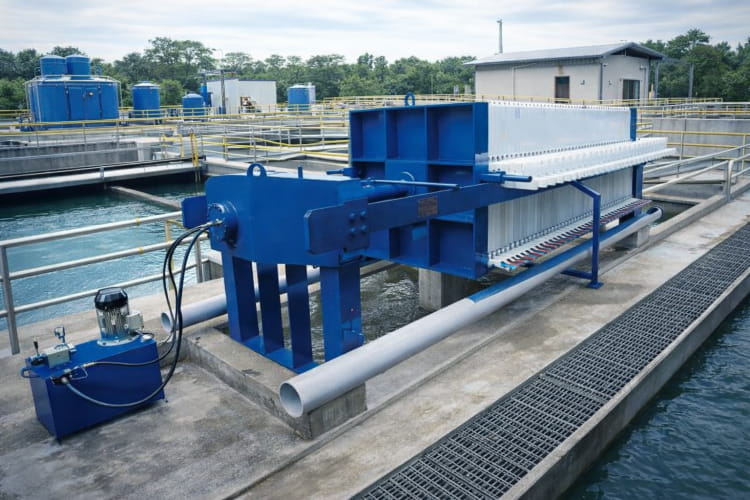
Material examples
Industrial treatment sludge, chemical precipitates and municipal sludge.
Application context; configuration depends on the duty.
Wastewater & Industrial Sludge
Dewater treatment sludge into a cake that is easier to handle, while collecting filtrate for the next treatment stage. Sludge origin and conditioning strongly influence the equipment choice.
Process priorities
Cake handling, disposal requirements, operating hours and filtrate return.
Information for selection
Sludge origin; feed solids; conditioning method; throughput; target cake condition.
Equipment to evaluate
Compare chamber filtration with membrane squeezing where testing supports an additional benefit. Biological and mineral-rich sludges can behave very differently.
02 / Stone, ceramics & sand
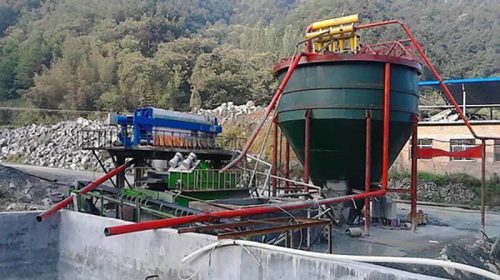
Material examples
Stone-cutting slurry, ceramic processing fines and sand-washing sludge.
Application context; configuration depends on the duty.
Stone, Ceramics & Sand Washing
Separate suspended mineral fines from process water and manage the resulting solids. Design the filtration step around the actual slurry variation and the required quality of reused water.
Process priorities
Water recirculation, cake handling, fine particles and changing feed concentration.
Information for selection
Mineral composition; particle distribution; slurry concentration; flow variation; reuse requirements.
Equipment to evaluate
Review chamber or high-pressure configurations with representative slurry tests. Thickening and feed consistency can affect the complete system duty.
03 / Mining & minerals
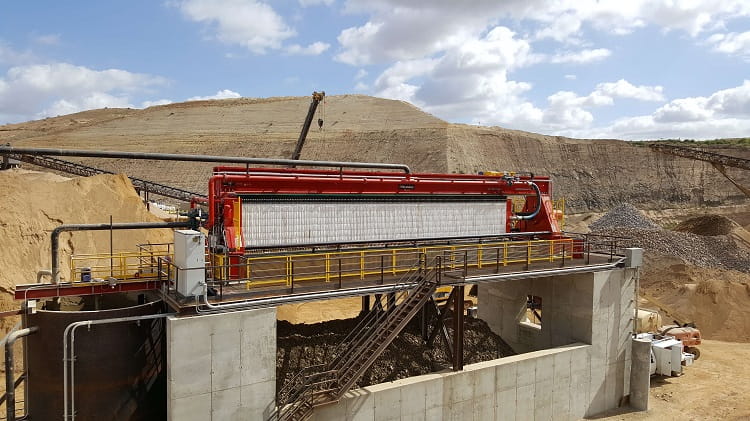
Material examples
Mineral concentrates, tailings and selected metallurgical process residues.
Application context; configuration depends on the duty.
Mining, Minerals & Metallurgical Slurries
Distinguish tailings management from concentrate or process-solids recovery. The value of the cake, filtrate and retained liquor changes what the filtration system must deliver.
Process priorities
Dry solids throughput, water recovery, abrasion, cake transport and product recovery.
Information for selection
Mineralogy; particle size; solids loading; temperature; available cycle time; product or disposal requirements.
Equipment to evaluate
Evaluate membrane or chamber configurations, with pressure and discharge options suited to the material. Chemically aggressive residues also require a compatibility review.
04 / Chemical processing
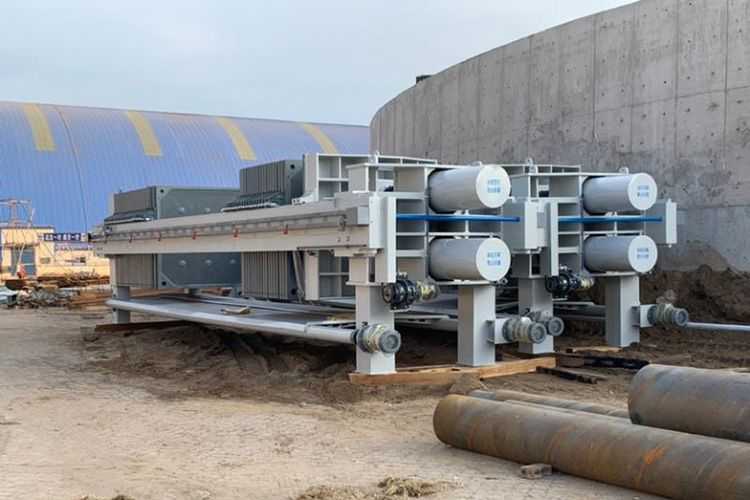
Material examples
Pigment suspensions, silica slurries and compatible reaction precipitates.
Application context; configuration depends on the duty.
Chemical & Process Filtration
Recover process solids, clarify a liquid or wash retained material, depending on the production objective. Select the complete wetted system around the actual chemical composition.
Process priorities
Product recovery, retained liquor, cake washing, temperature and materials compatibility.
Information for selection
Composition and concentration; pH; temperature; solvents where present; desired purity; cleaning requirements.
Equipment to evaluate
Review membrane or gasketed configurations where appropriate. Confirm plates, cloth, seals and piping together; a gasketed plate alone does not establish solvent suitability.
05 / Food & beverage
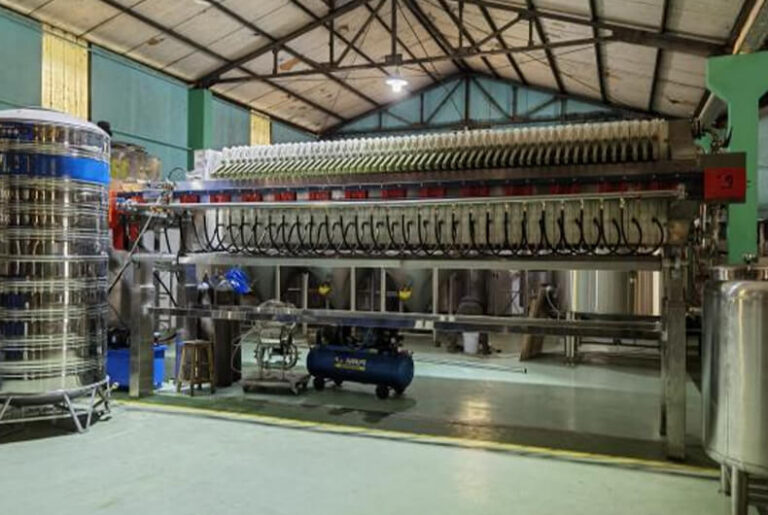
Material examples
Selected syrups, edible-oil clarification duties and ingredient suspensions.
Application context; configuration depends on the duty.
Food & Beverage Processing
Clarify a process liquid or recover suspended ingredients in applications suited to pressure filtration. Product-contact materials, filter media and cleaning access are part of the selection.
Process priorities
Filtrate quality, product recovery, cleaning, media selection and contamination control.
Information for selection
Product composition; temperature; required separation quality; cleaning method; applicable material documentation.
Equipment to evaluate
Discuss stainless steel or plate-and-frame configurations for the specific process. Specify contact materials, seals and finish rather than relying on a stainless steel label.
06 / Pharmaceutical processes
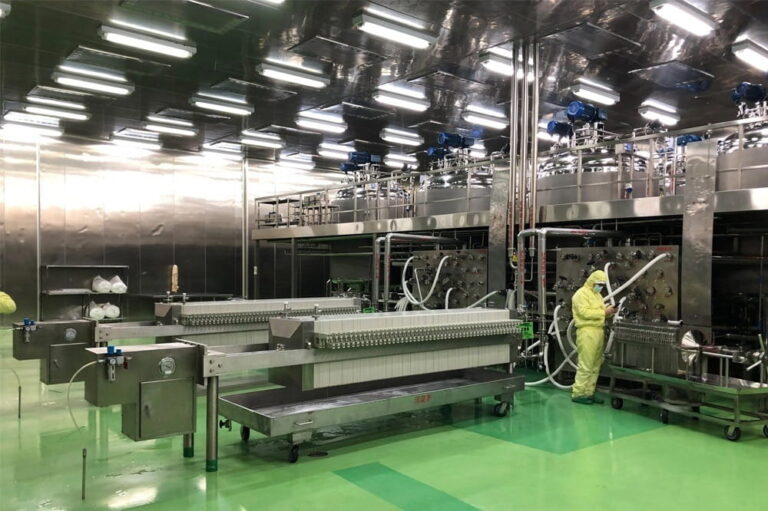
Material examples
Selected intermediate slurries and process suspensions requiring solid-liquid separation.
Application context; configuration depends on the duty.
Pharmaceutical & Intermediate Processing
Review filtration as part of the defined production process, including product quality and cleaning requirements. Equipment suitability needs a project-specific technical and documentation review.
Process priorities
Product purity, cleaning verification, material traceability and containment requirements.
Information for selection
Process chemistry; solvent content; temperature; separation target; cleaning procedure; required documentation.
Equipment to evaluate
Discuss plate-and-frame or stainless steel equipment only after defining the duty. Sterile service, GMP requirements and containment are assessed separately from the basic machine type.
Define What a Successful Separation Looks Like
The process objective determines what to measure. Agree the feed conditions and acceptance criteria before comparing performance claims.
Dewater Sludge
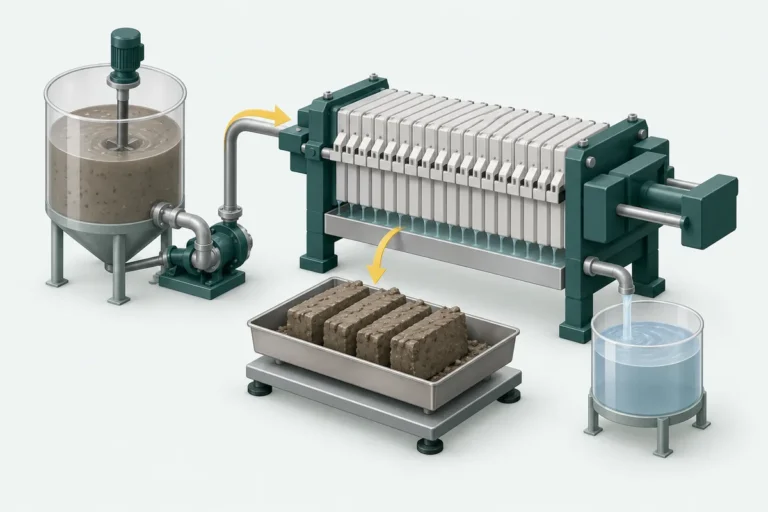
Prepare solids for transport, disposal or downstream handling.
Measure: Feed and cake solids, cycle time, dry solids throughput and handling behavior.
State the feed conditions and moisture measurement basis.
Recover or Wash Solids
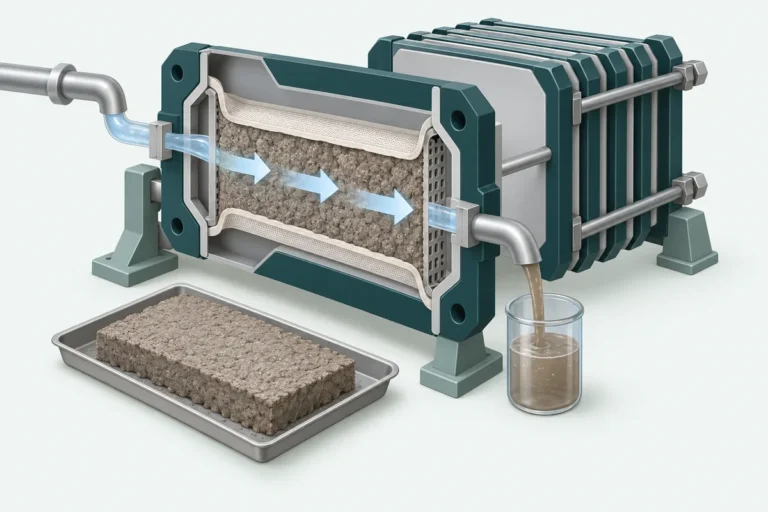
Recover a useful cake or reduce retained mother liquor.
Measure: Solids recovery, residual liquor, wash effectiveness and relevant product quality.
Define the valuable stream and an appropriate sampling method.
Clarify or Reuse Liquid
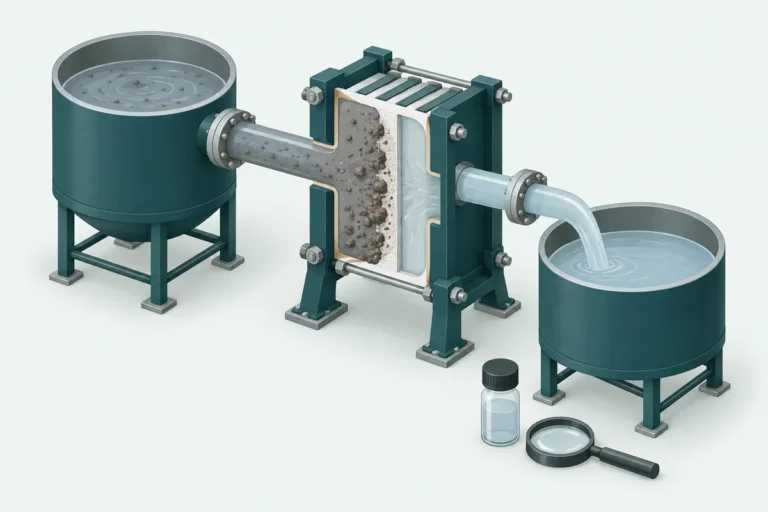
Remove suspended solids for the next process or treatment stage.
Measure: Filtrate suspended solids or clarity, liquid recovery and downstream requirements.
Check dissolved contaminants separately; filtration alone does not establish discharge compliance.
Build the Filtration Step Around the Process
01 / Prepare the feed
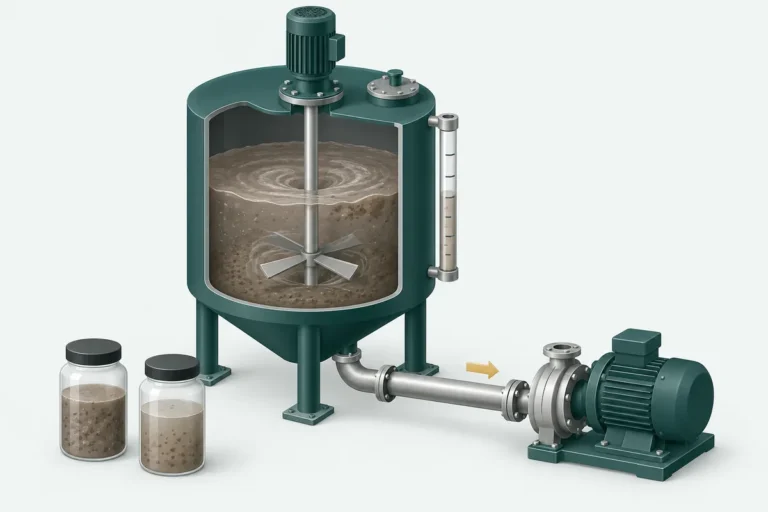
Review feed concentration, variability and any conditioning or thickening needed before filtration.
02 / Separate and handle
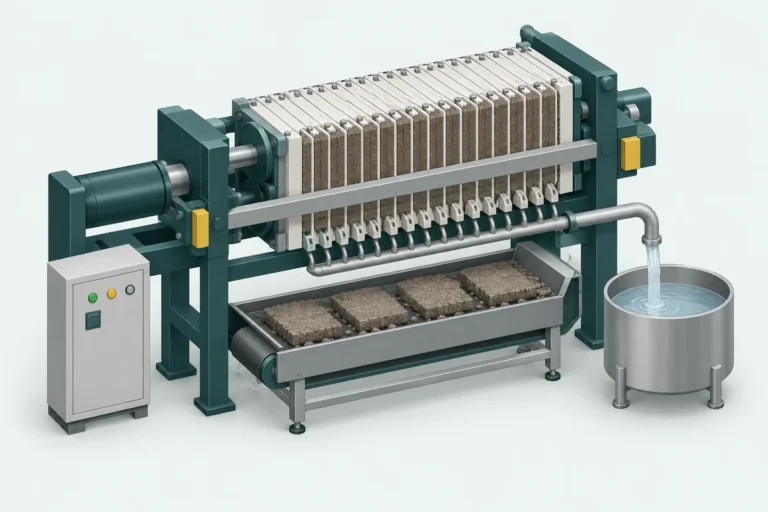
Define filtration, optional washing or squeezing, cake discharge and the collection of filtrate.
03 / Confirm the next step
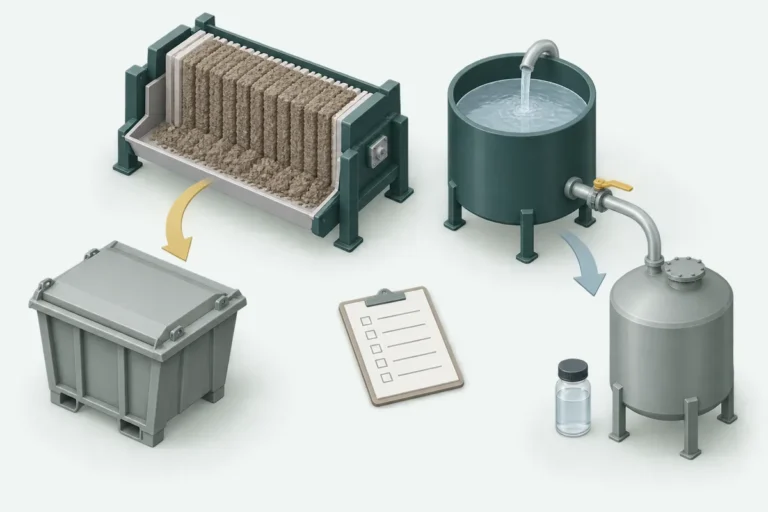
Check cake handling and the required downstream treatment, reuse or disposal route for each stream.
Water reuse and discharge depend on measured quality and local requirements. A filter press is one process step, not a guarantee of complete treatment.
Use Representative Data to Compare Options
Where performance is uncertain, discuss a test using a representative sample and a defined objective. Record the feed and conditioning details alongside the results.
Material and feed
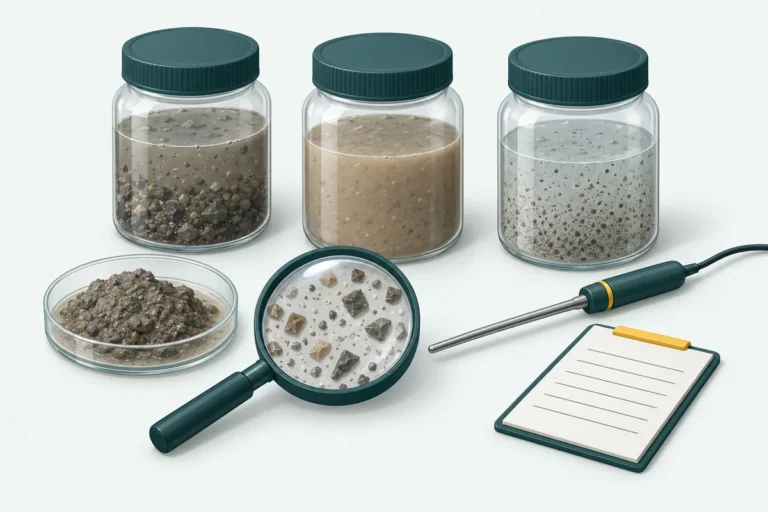
Identify the slurry, solids concentration, particle behavior, chemistry and temperature. Record how the sample represents production.
Cycle and outputs
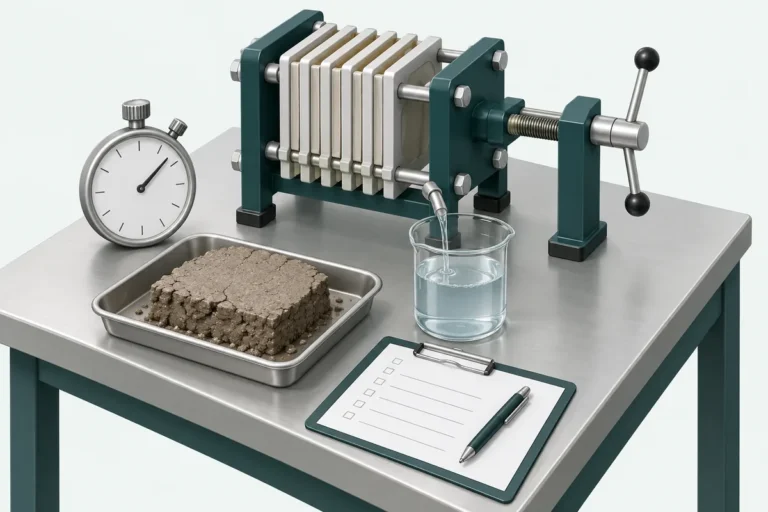
Record the filtration conditions, relevant cycle stages, cake result, filtrate quality and any washing requirement.
Scale-up and scope
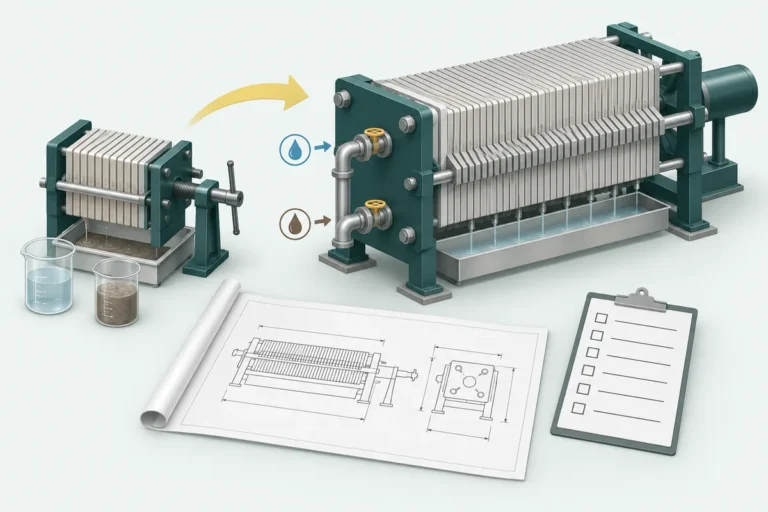
Compare filtration area, chamber volume, complete cycle time, utilities and handling. Confirm what the proposed equipment includes.
Questions About Industry Applications
Can the same filter press serve different industries?
Yes, a basic press configuration can serve more than one industry. Plates, filter cloth, wetted materials, operating conditions and accessories must still match the actual material and duty.
Can you recommend equipment from an industry name alone?
An industry name is a useful starting point. Selection also needs the material, concentration, throughput and required cake or filtrate condition. Describe any unknown values so the next information or testing step can be agreed.
Does a clear filtrate mean the water is ready for reuse?
Not necessarily. Pressure filtration removes suspended material, while dissolved constituents and other water-quality requirements may need separate treatment or testing.
When is a slurry test useful?
Testing is useful when the material response, filter cloth, cake washing or operating cycle is uncertain. A representative sample and a clear test objective make the result more useful for selection and scale-up.
APPLICATION REVIEW
Tell Us About Your Material and Target Result
Include your industry, material or slurry, required throughput and units, and project location. Describe the cake or filtrate condition you need and the problem with your current process.
If some measurements are unavailable, share what you know so the next information or testing step can be discussed.
Please include throughput units and your project location.