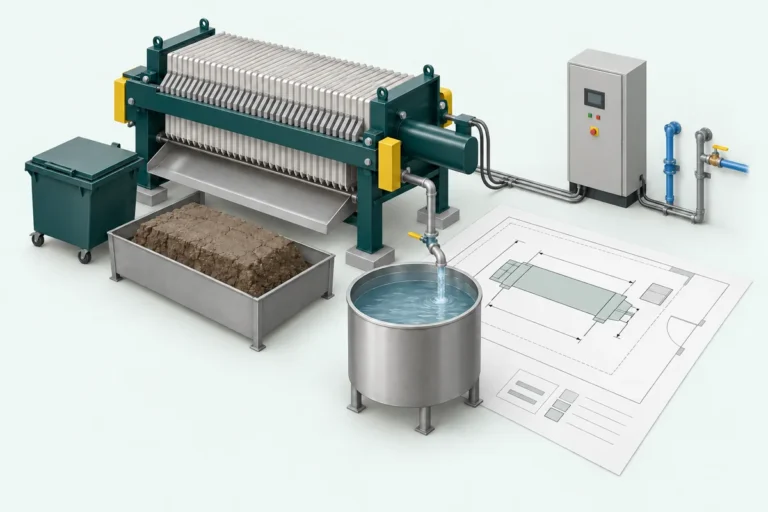
Turn a variable sludge stream into a defined dewatering duty. Compare filter press configurations around the sludge source, conditioning response, required production and the cake your plant needs to handle.
For industrial treatment sludge, chemical precipitates and municipal sludge. Final configuration depends on the actual feed and operating requirements.
Application context. Equipment selection depends on the actual duty.
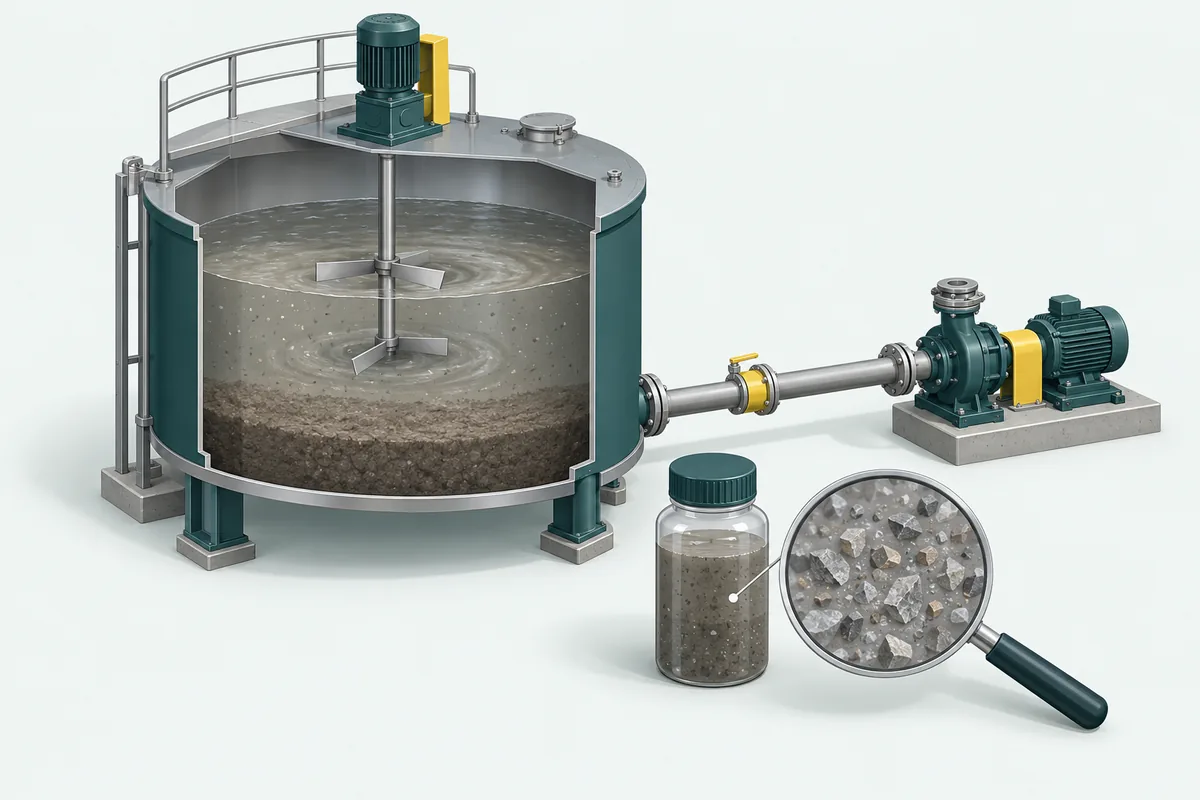
Two plants handling the same volume can need different presses. Feed solids, particle behavior, conditioning and operating hours influence the dry solids load and the filtration cycle. The required cake condition may be driven by transport, storage, disposal or a later drying step.
Chemical treatment sludge
Precipitation and neutralization can produce fine solids with different compressibility and chemical compatibility. Identify the treatment chemicals and expected changes in feed rather than relying on the label ‘industrial sludge’.
Biological or municipal sludge
Organic and biological solids may retain water differently from mineral-rich material. Record the sludge blend and existing conditioning method. A result from one sludge stream should not be used as a universal moisture guarantee.
Mineral-bearing industrial wastewater
Fine mineral solids can introduce abrasion and settling. Check how the feed is collected, thickened and mixed so that changes in solids concentration are reflected in equipment selection.
Connect Dewatering to the Rest of the Treatment Plant
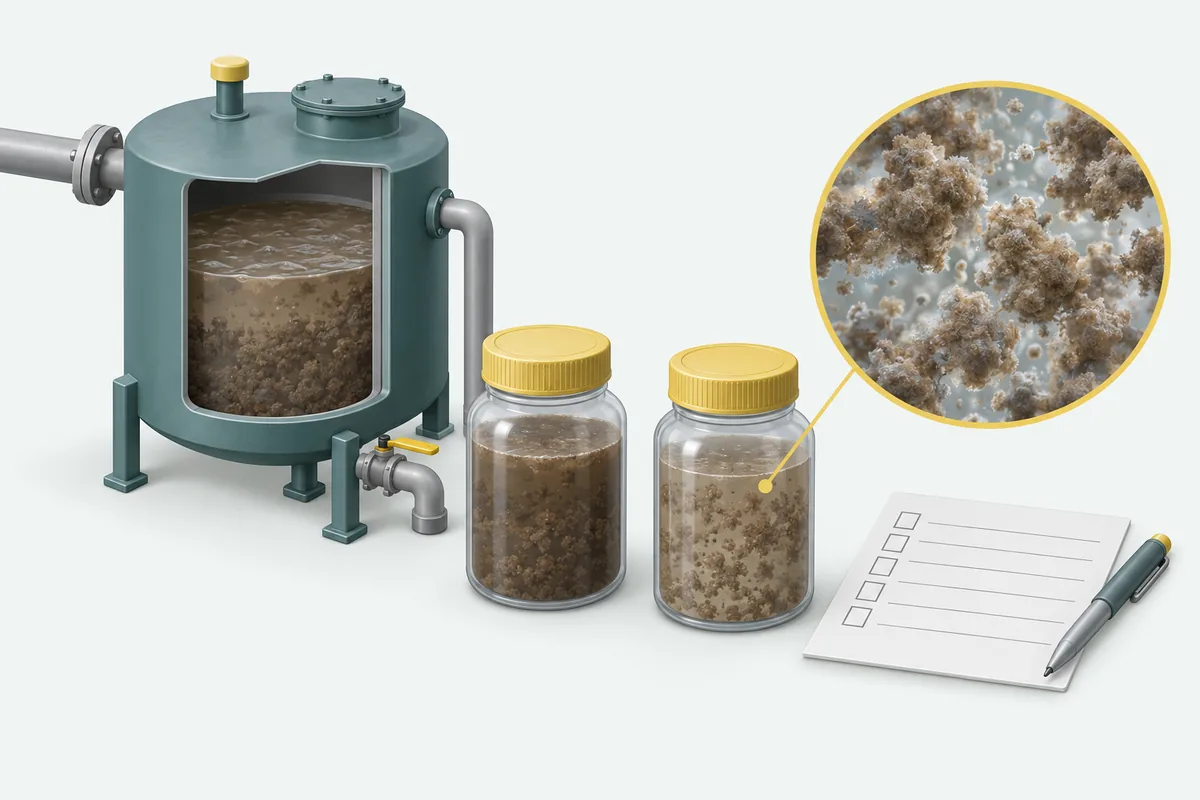
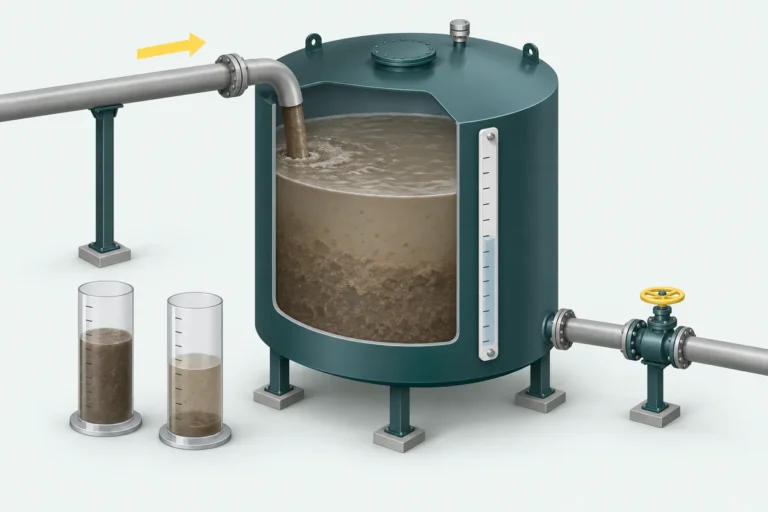
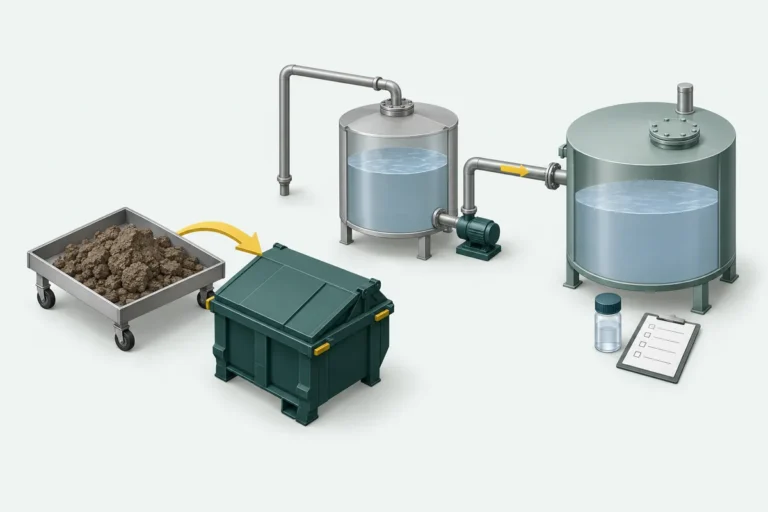
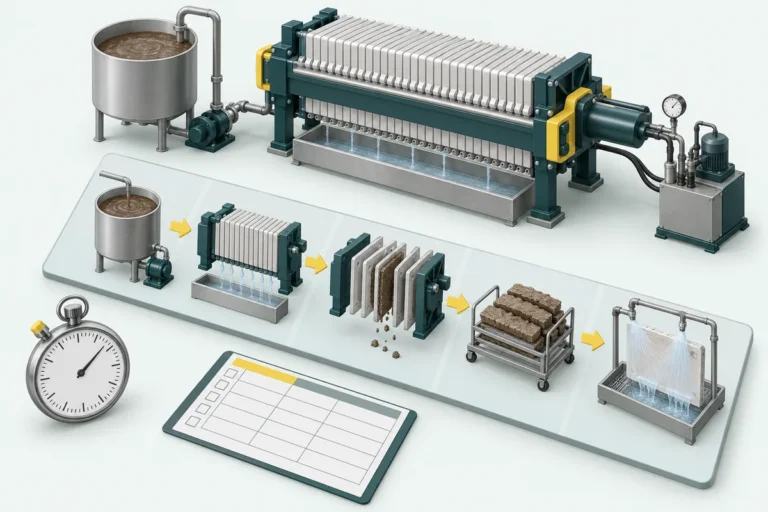
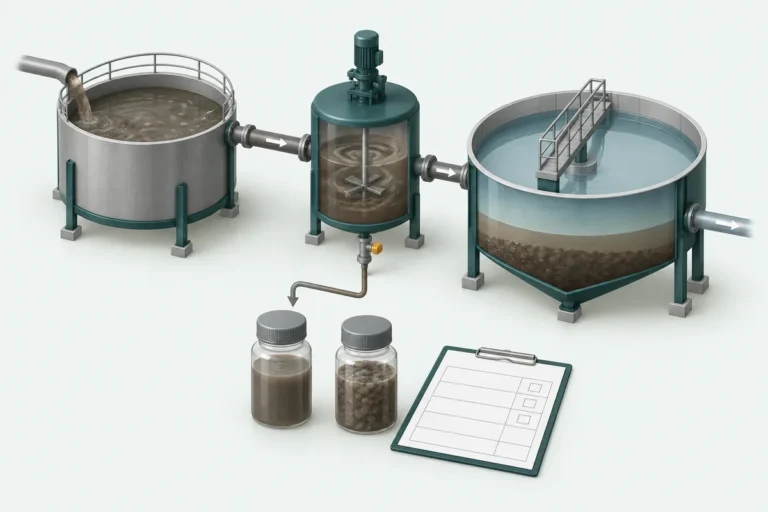
01. Feed collection
Define the expected volume, solids concentration and fluctuations. Review tank capacity and any thickening needed to provide a manageable feed.
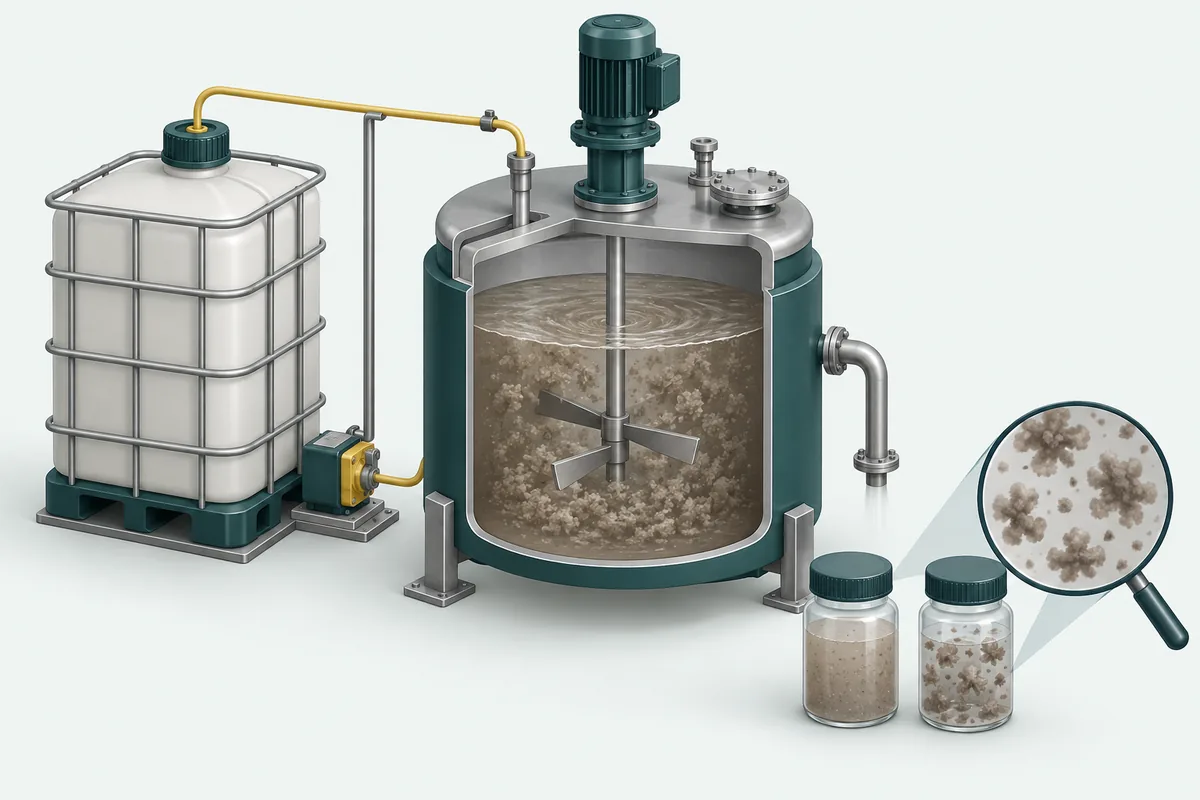
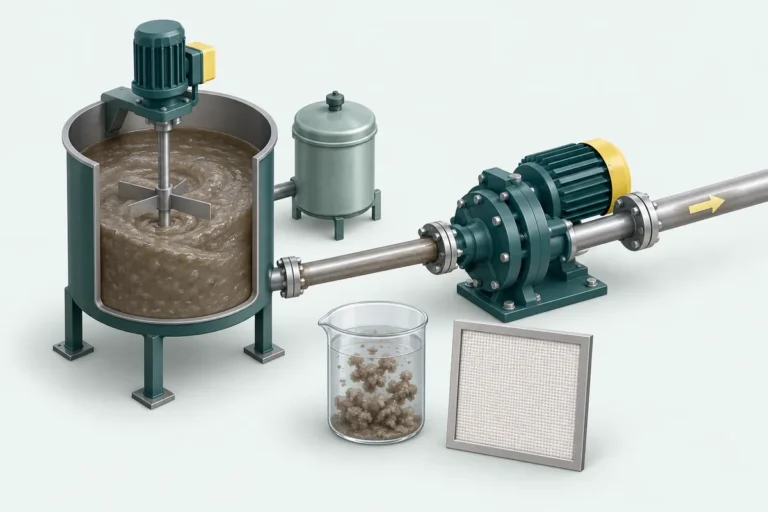
02. Conditioning and feeding
Evaluate whether conditioning is needed and how the selected slurry pump, cloth and operating conditions interact. Record the basis used in any filtration test.
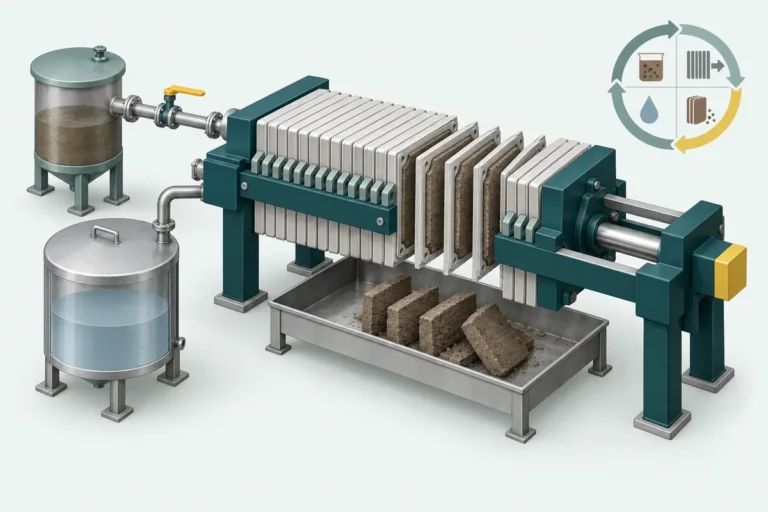
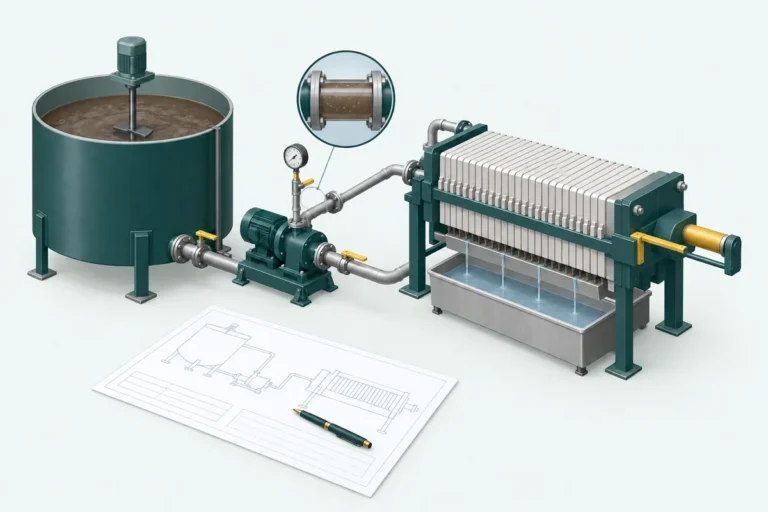
03. Filtration and discharge
Account for the complete batch cycle, including filling, filtration, optional membrane squeezing, opening and cake removal.
04. Cake and filtrate routing
Confirm cake handling and the destination of filtrate. Returning filtrate to the treatment plant may add a load that should be included in the process review.
Configurations to Evaluate
Compare the equipment against the defined process requirement. Open the product pages for model details and available configuration options.
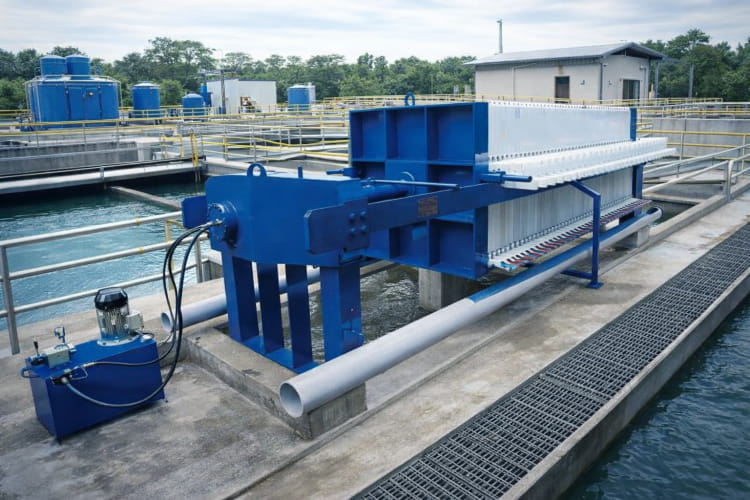
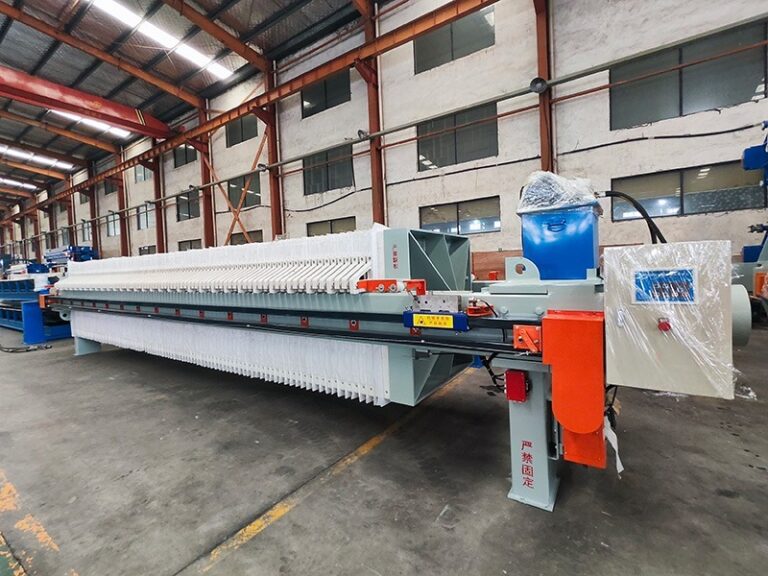
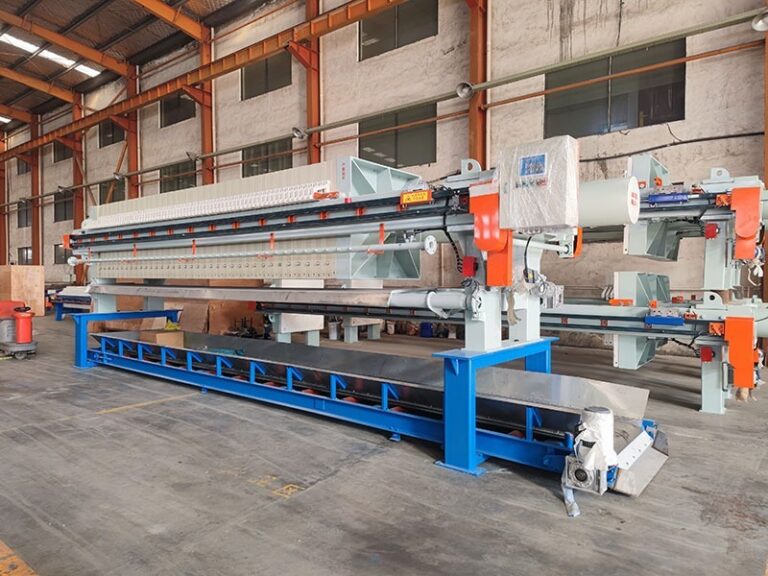
Recessed Chamber Filter Press
A starting point when conventional pressure filtration can meet the cake and production requirements.
Review: Filter area, chamber volume, cloth selection, cycle time and operator workload.
Higher pressure or a membrane stage does not automatically solve poor conditioning, unsuitable cloth or an inconsistent feed. Compare alternatives under stated test conditions.
When the Current Dewatering Result Is Unsatisfactory
Wet or inconsistent cake
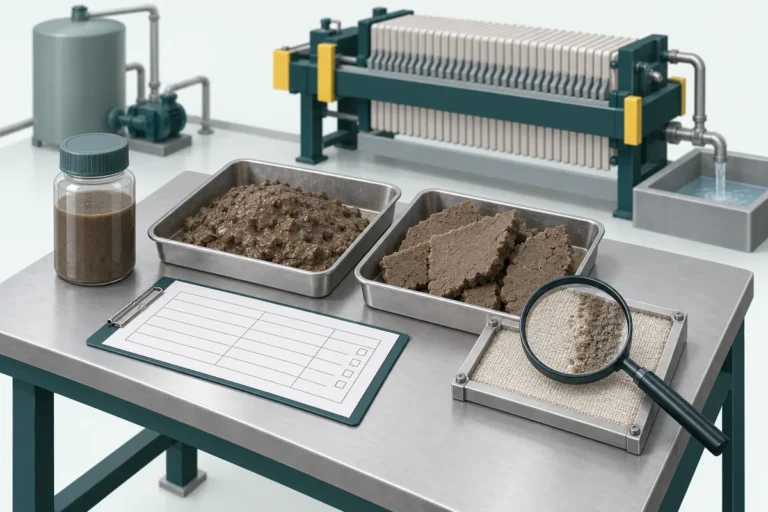
Review changes in sludge blend, feed solids, conditioning, cloth condition and the actual cycle before selecting a replacement machine.
Long cycles or missed production
Separate filtration time from filling, opening, discharge and washing. A capacity review needs the number of complete cycles that can be achieved during available operating hours.
Cloudy filtrate or difficult discharge
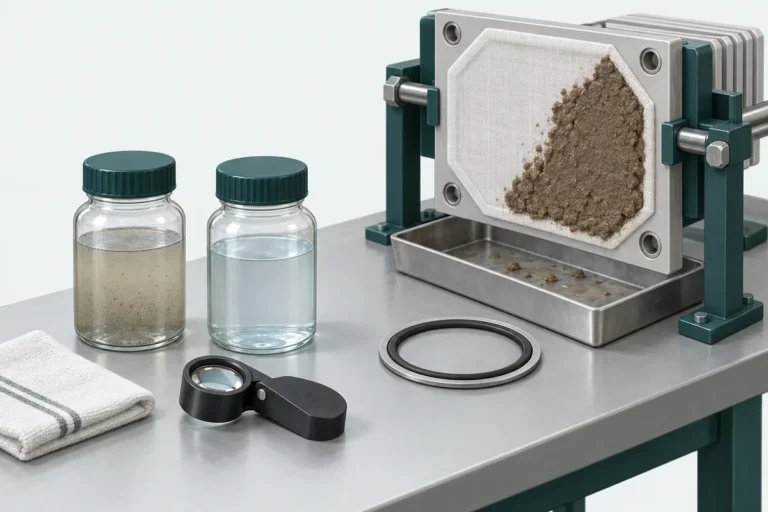
Check the filter medium, sealing and feed behavior, as well as the required downstream quality. Cake release and filtrate clarity are separate performance questions.
Define the Result You Will Accept
Production
Dry solids processed during the available operating period, with the complete cycle included.
Cake
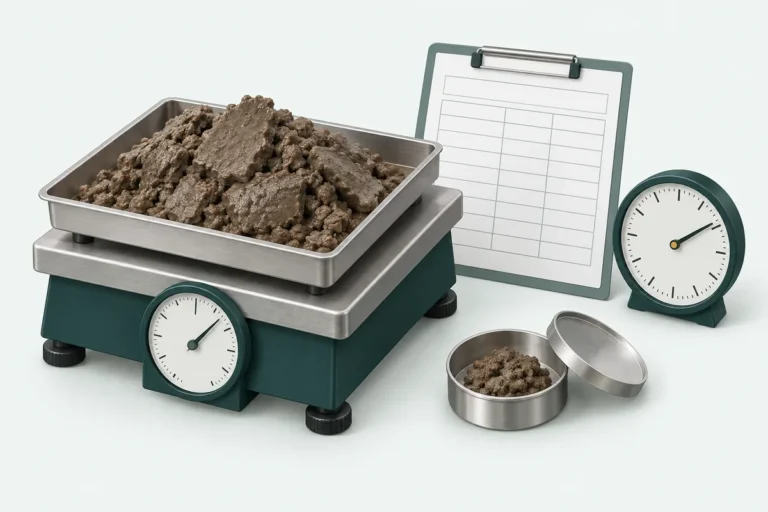
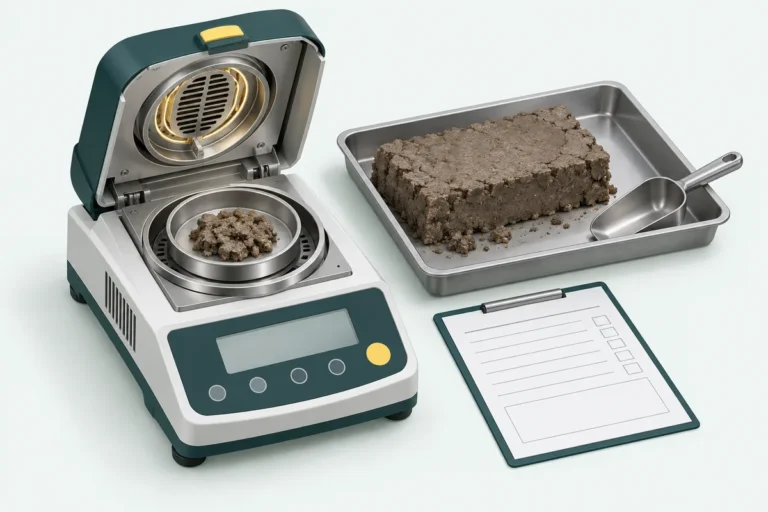
Measured solids or moisture content with a stated method, plus handling characteristics relevant to the disposal route.
Filtrate and operation
The filtrate requirement, conditioning use, operator involvement, washing needs and agreed utility conditions.
Information for an Application Review
Share the available process information below. Identify estimates and unknown values so the next measurement or test can be discussed.
Sludge source
Industry and treatment stage; main constituents; variation between operating conditions.
Feed and production
Slurry volume with units; feed solids concentration and measurement basis; hours available each day.
Existing process
Conditioning method, thickener or holding tank, current pump and any operating problem.
Target result
Cake condition and disposal route; filtrate destination; available space, electrical supply and required automation.
Flow is a starting point, but solids concentration determines the solids load. Sizing also needs the required cake condition, chamber volume, filtration behavior and the available complete cycles.
Is membrane filtration always necessary for sewage sludge?
No. Compare the actual sludge response and economic value of the additional stage. A chamber press may be adequate for a defined requirement, while another sludge may benefit from membrane squeezing.
Does dewatering make sludge safe for disposal?
Dewatering reduces water content. It does not by itself establish the chemical classification or acceptance of the solids at a disposal facility.
What should I include if I do not have laboratory data?
Describe the sludge source, approximate volume, existing process and the problem to solve. Include recent operating observations so the next measurement or test can be discussed.
Mention wastewater or sludge in your message. Include the sludge source, flow and units, feed solids if known, project location and the required cake condition.
Our team can review the information and discuss a proposed configuration, scope of supply and the next technical steps.
Please include your application name and project location.