Home / Filter Press Types / Selection Guide
FILTER PRESS SELECTION GUIDE
How to Choose a Filter Press
Start with your slurry, the result you need and the time available. Then select a configuration that can meet all three under tested conditions.
Use this guide to prepare a specification, shortlist suitable designs and compare quotations for sludge, mineral or process filtration.
YOUR SELECTION PATH
01 Define the duty
Feed properties, output targets and operating time.
02 Shortlist the design
Compare plate arrangements and justified options.
03 Verify capacity
Check cake volume, filtration area and the complete cycle.
04 Test and compare
Use a shared specification and documented results.
STEP 1 / START WITH THE PROCESS
Define the Duty Before Choosing a Model
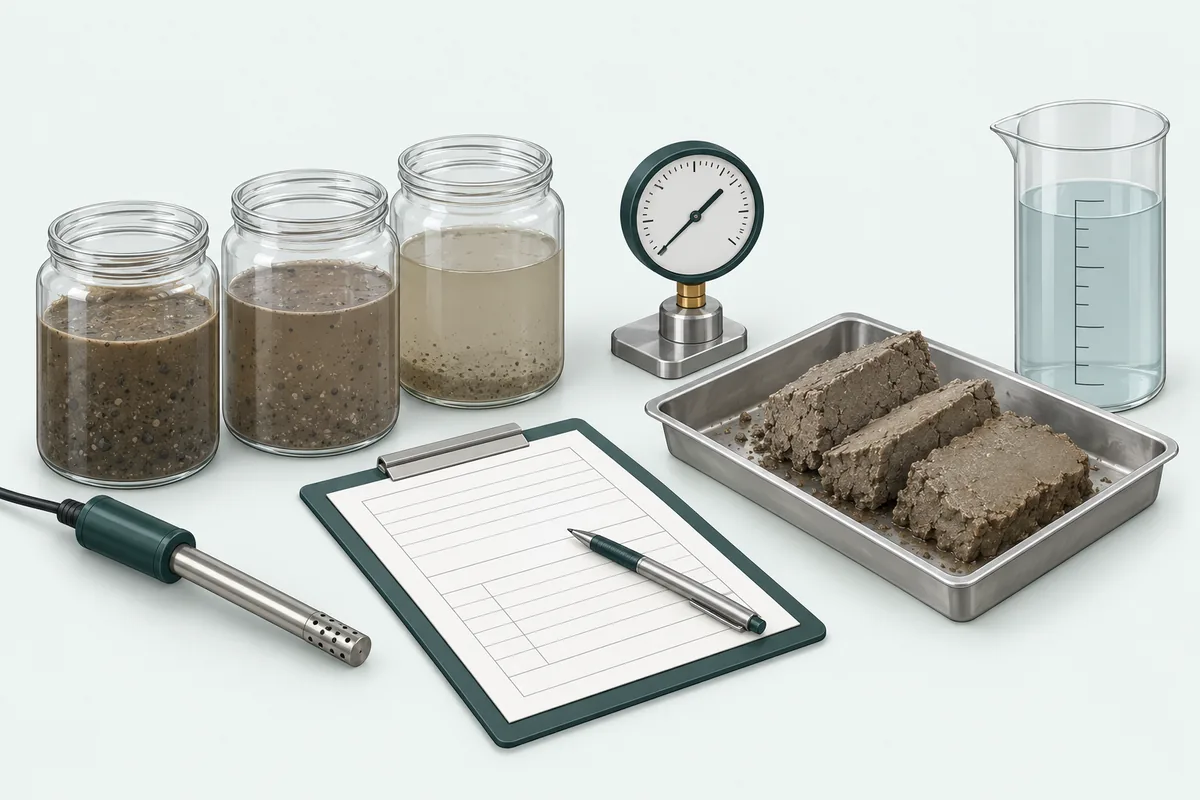
Define the feed and both output targets before selecting equipment. Conceptual illustration.
What Enters the Press?
- Material and source: process stream, batch variation and any conditioning chemicals.
- Solids concentration: measured suspended dry solids, with the percentage basis stated.
- Filtration behaviour: particle size, cake compressibility, viscosity, abrasiveness and stickiness.
- Chemistry: composition, pH and normal/maximum operating temperature.
What Must the System Deliver?
- Duty: normal and peak feed volume or dry-solids load, with units.
- Cake: required moisture or dry solids, handling needs and downstream use.
- Filtrate: measurable clarity or solids limits, plus any liquid-recovery target.
- Schedule: staffed hours, planned downtime and available utilities.
State the measurement basis. For a cake consisting of dry solids and water, 40% dry solids means 60% moisture on a wet-mass basis. Filtration does not automatically remove dissolved contaminants or establish discharge compliance.
STEP 2 / SHORTLIST THE DESIGN
Choose a Plate Arrangement for the Separation Task
An industry name alone cannot choose the press. Start with a design that meets the required separation, then evaluate extra features where they solve a measured constraint.
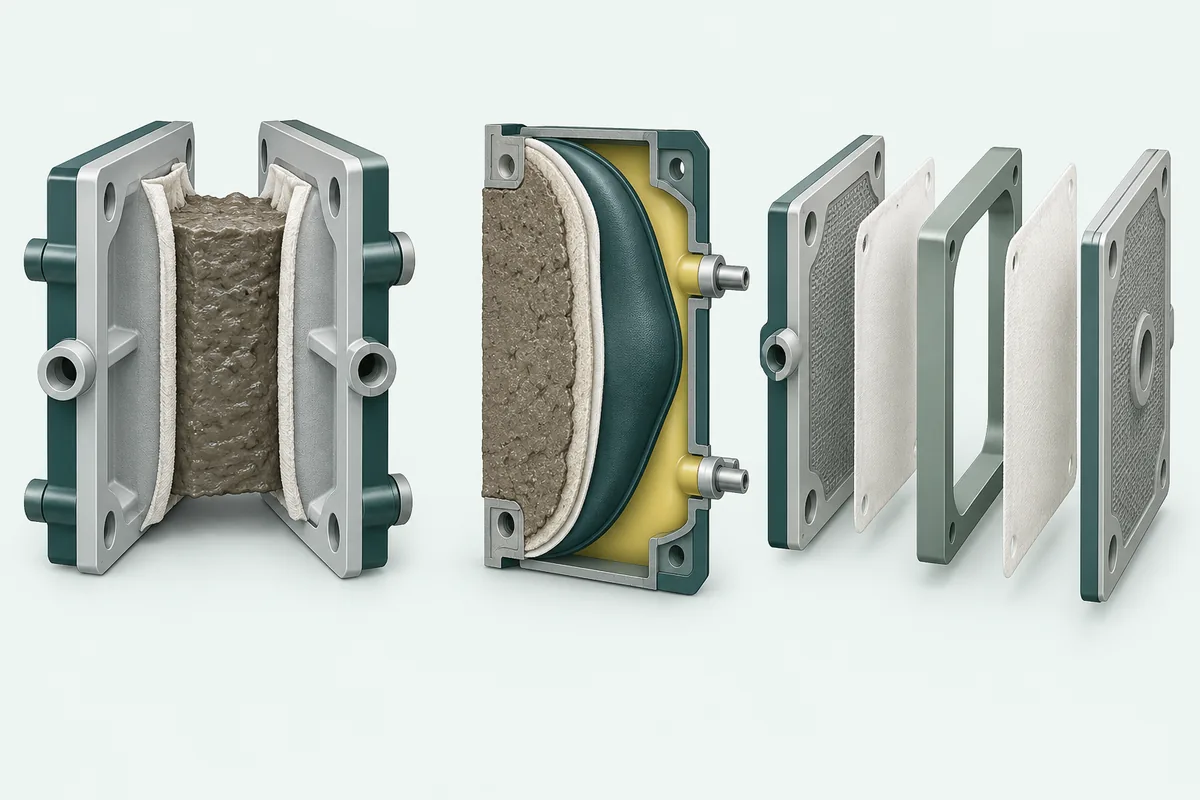
Plate arrangement determines how the cake space is formed and whether a squeeze stage is available. Simplified illustration; not to scale.
| Plate arrangement | When to evaluate it | What must be verified |
|---|---|---|
| Recessed chamber | Conventional pressure filtration meets the cake, filtrate and throughput targets. | Verify complete cycle time, cake release and cloth performance at the required duty. |
| Membrane | Extra liquid recovery, lower wet-cake mass or a shorter filtration stage could justify a squeeze system. | Test the response to squeezing and include its full sequence, utilities and maintenance in the comparison. |
| Plate and frame | Your filtration method calls for separate frames, selected media or a defined cake-washing arrangement. | Confirm media handling, sealing, washing flow paths and cleaning requirements for the actual design. |
High pressure and automation are separate specification choices. A membrane or chamber press can have automatic functions; “high-pressure” describes an engineered pressure rating rather than a separate cake-forming principle. Fine or sticky solids do not automatically call for the highest pressure.
STEP 3 / CHECK SIZE AND OPERATING LIMITS
Verify Capacity, Then Specify the Pressure Profile
Size for Solids and for Time
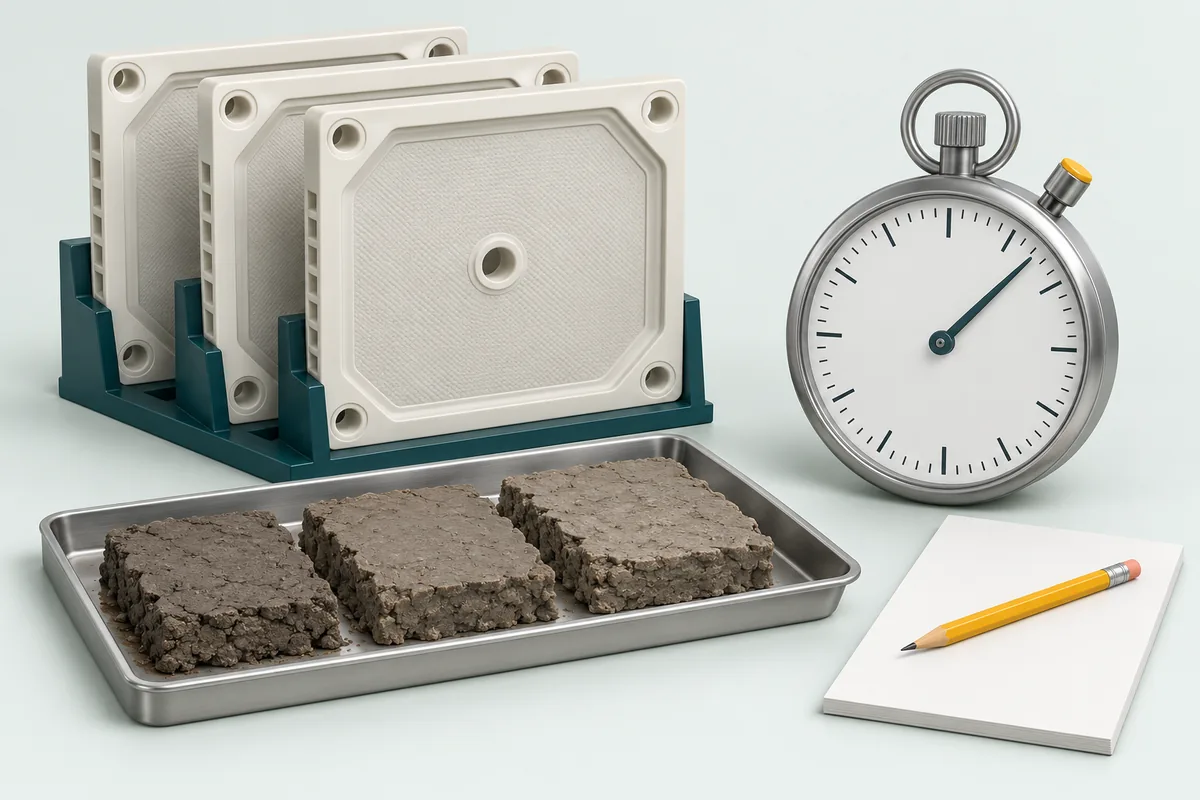
Check cake loading and the time needed for a complete batch. Conceptual illustration without assumed performance values.
Check usable chamber volume against the cake loading per batch. Check filtration area against the tested filtration rate and the time available. Passing one check does not guarantee the other.
Count the complete cycle: closing, filling, filtration, any squeeze/wash stages, depressurization, opening, discharge and recurring cleaning. A larger chamber may also change the cycle time.
Keep the Three Pressures Separate
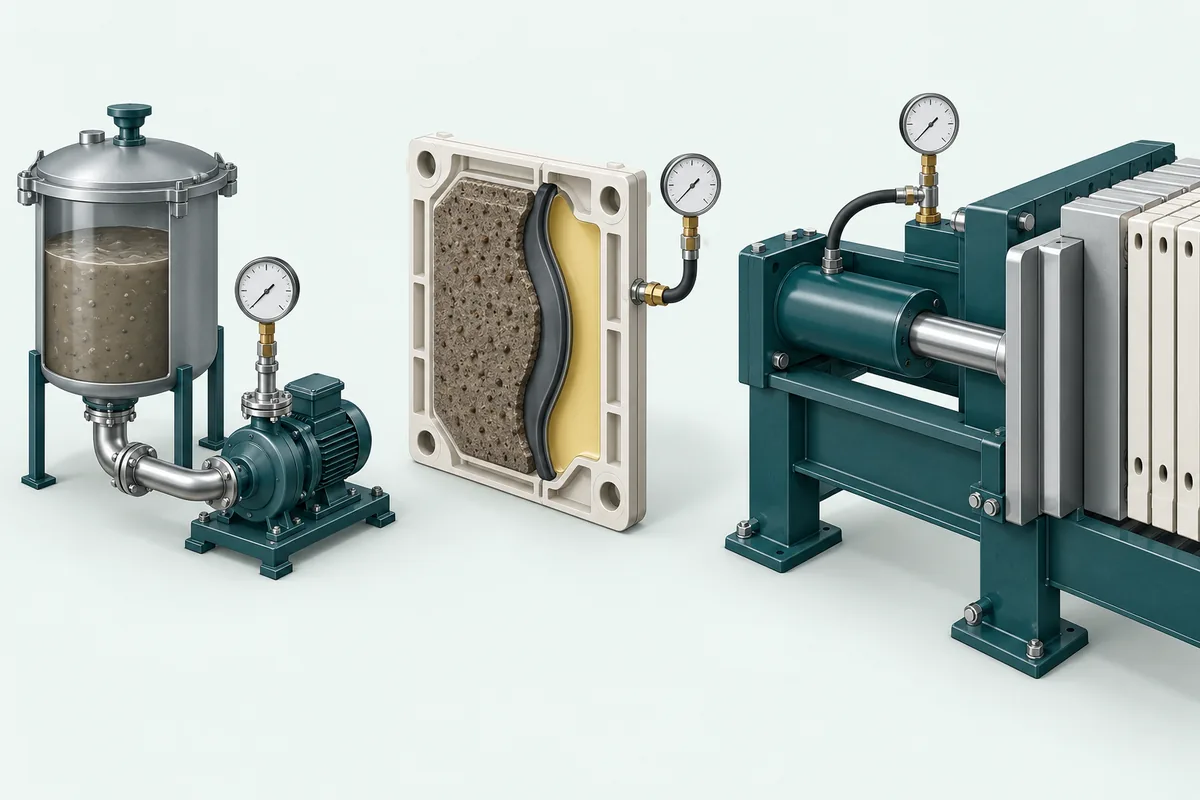
Feed, membrane squeezing and hydraulic closing have different functions. Illustration only; pressure settings come from the approved system design.
- Feed pressure drives slurry filtration through the cloth and cake.
- Membrane squeeze pressure acts behind the diaphragm, where this option is fitted.
- Hydraulic closing pressure creates the clamping force that holds the plate pack closed.
Specify each duty and limit separately. Gauge values are not interchangeable; the complete equipment design and tested pressure profile determine acceptable operation.
Higher pressure can compact a compressible cake and restrict liquid flow. Select a validated operating sequence within the ratings of the complete system; do not use a generic MPa range as an operating instruction.
STEP 4 / COMPLETE THE SYSTEM SPECIFICATION
Match the Configuration to Your Site
Materials & Sealing
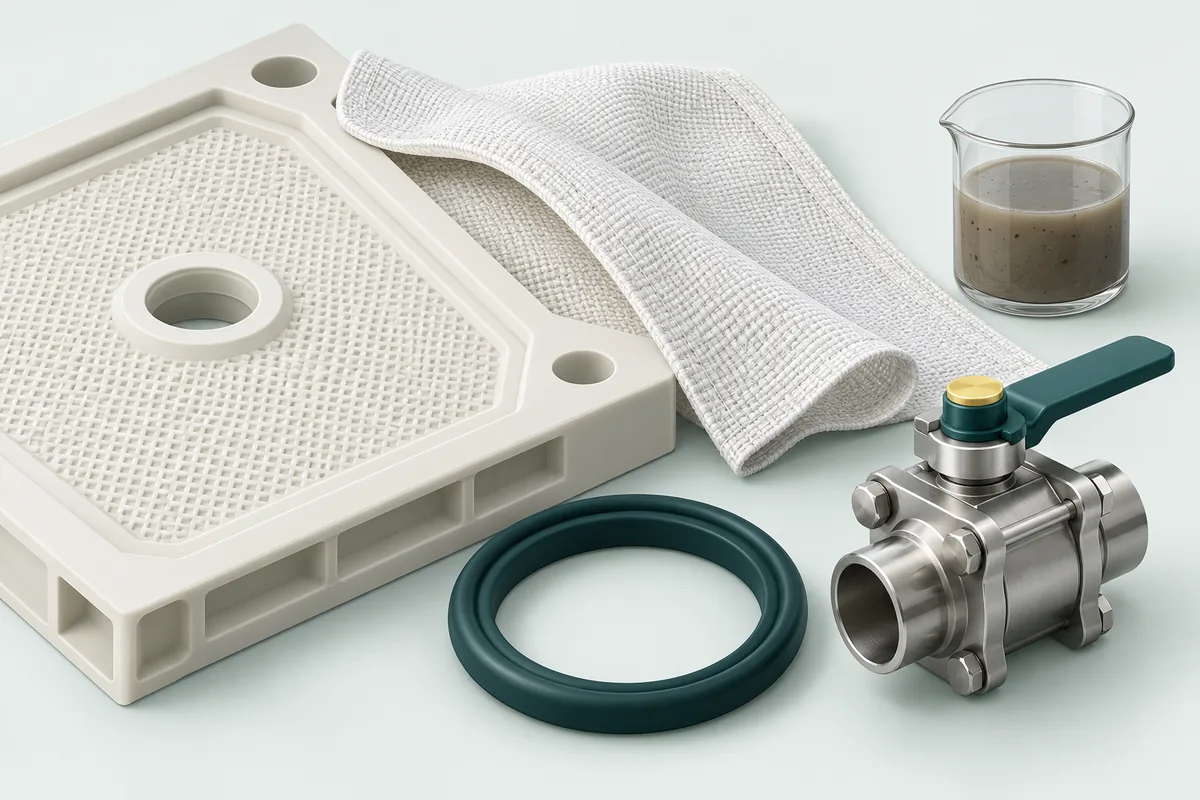
Check the complete wetted system against the process conditions. Conceptual illustration.
- Specify every wetted component: plates, cloths, seals, piping, valves and pump.
- Check compatibility with chemistry, concentration and temperature together.
- For hygienic duties, define finish, cleanability and documentation.
A stainless steel frame or outer cover does not establish the material of the wetted system.
Automation & Staffing
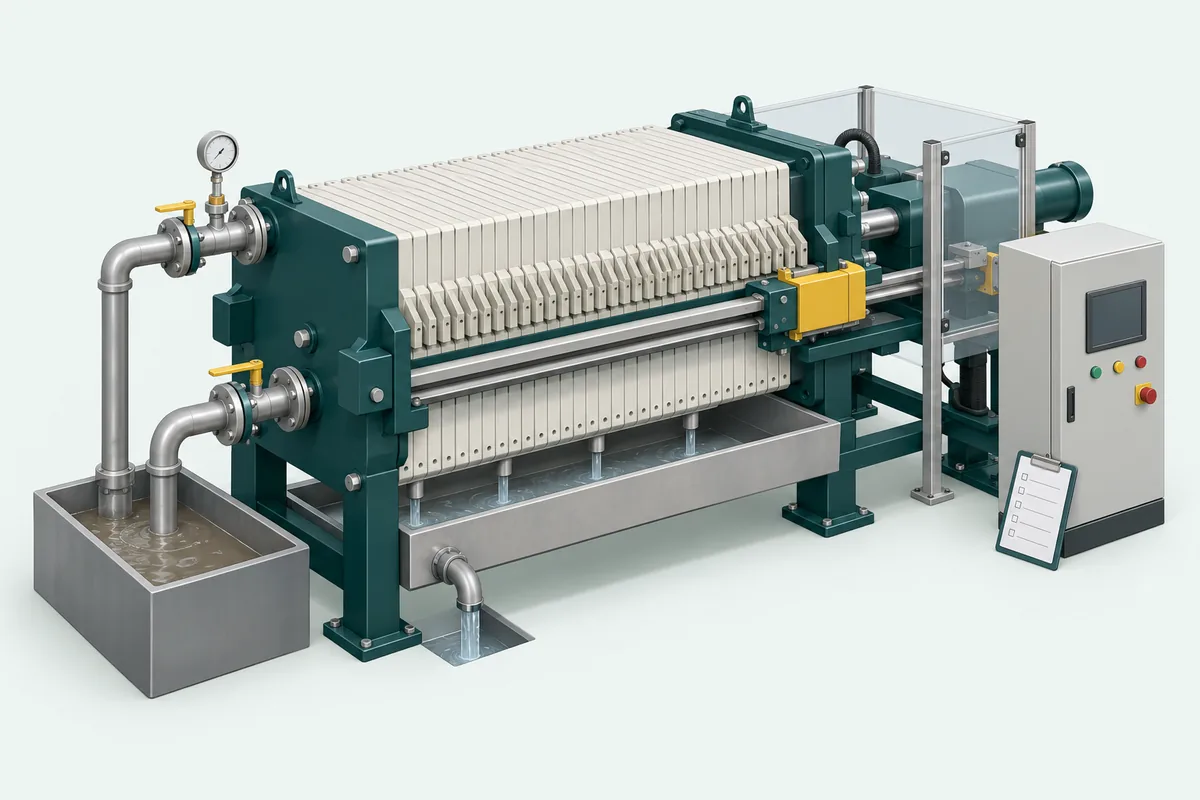
Choose automatic functions around the actual workload and bottleneck. Conceptual illustration.
- Identify the bottleneck: plate shifting, cake release, cloth washing or another stage.
- Check which functions are actually included and which need an operator.
- Define guarding, interlocks, access and maintenance requirements.
An automatic press still needs supervision, inspection and a maintenance plan.
Layout & Utilities
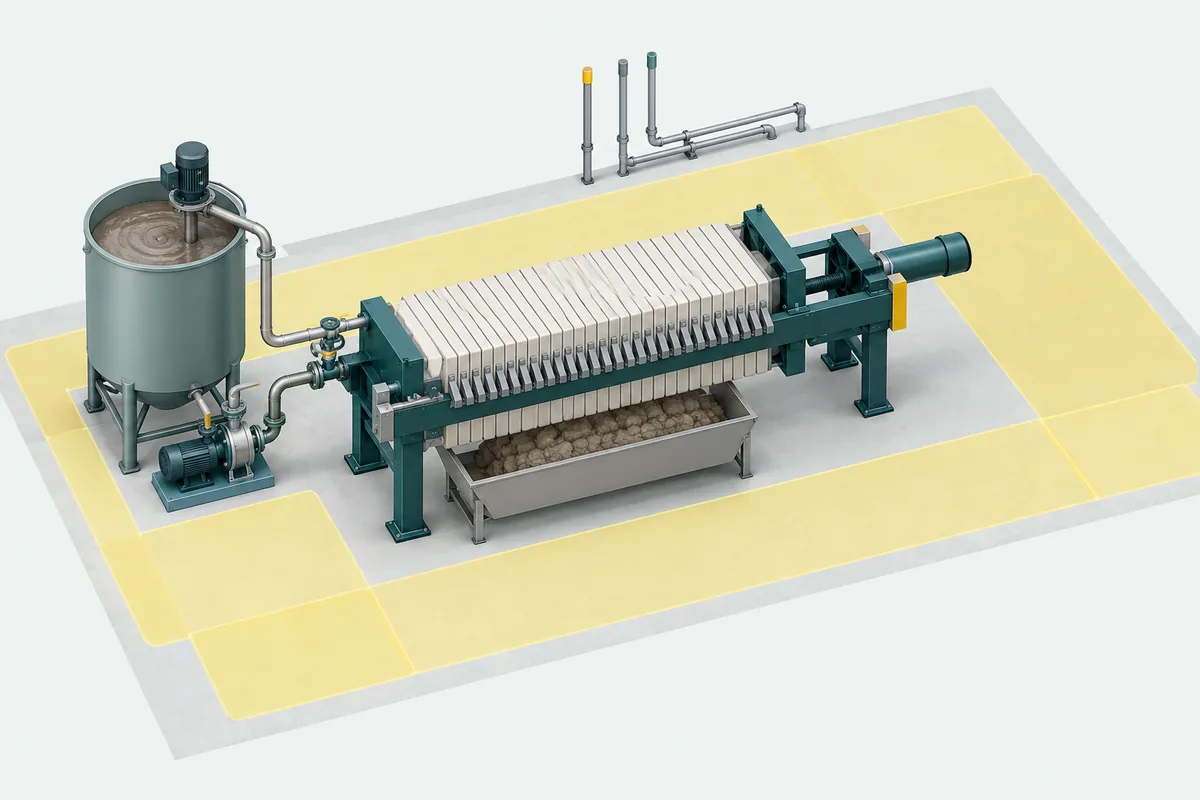
Allow for opening travel, cake handling, maintenance access and utilities. Conceptual layout, not an installation drawing.
- Allow room for opening travel, maintenance and cloth changes.
- Match cake discharge height to the receiving bin or conveyor.
- Confirm power, feed supply, wash water, drainage and any squeeze utilities.
Include upstream buffering if a batch press must serve a continuous process.
STEP 5 / VERIFY WITH REPRESENTATIVE MATERIAL
Use Testing to Resolve the Uncertain Parts
A trial is especially valuable when the feed varies, the cake is difficult to dewater, or the purchase depends on a moisture, recovery or capacity target. Agree on sample preparation and test scope before sending material.
- Record feed properties, conditioning, cloth, cake thickness and each pressure stage.
- Measure dry-solids loading, filtrate quality and representative cake moisture at the same defined endpoint.
- Record cake release and the complete cycle, including any squeezing, washing or drying.
- Ask how the results will scale to the proposed machine, with allowances and acceptance conditions stated.
If membrane squeezing is being evaluated, the test equipment must support it. A small chamber press alone cannot demonstrate squeeze performance.
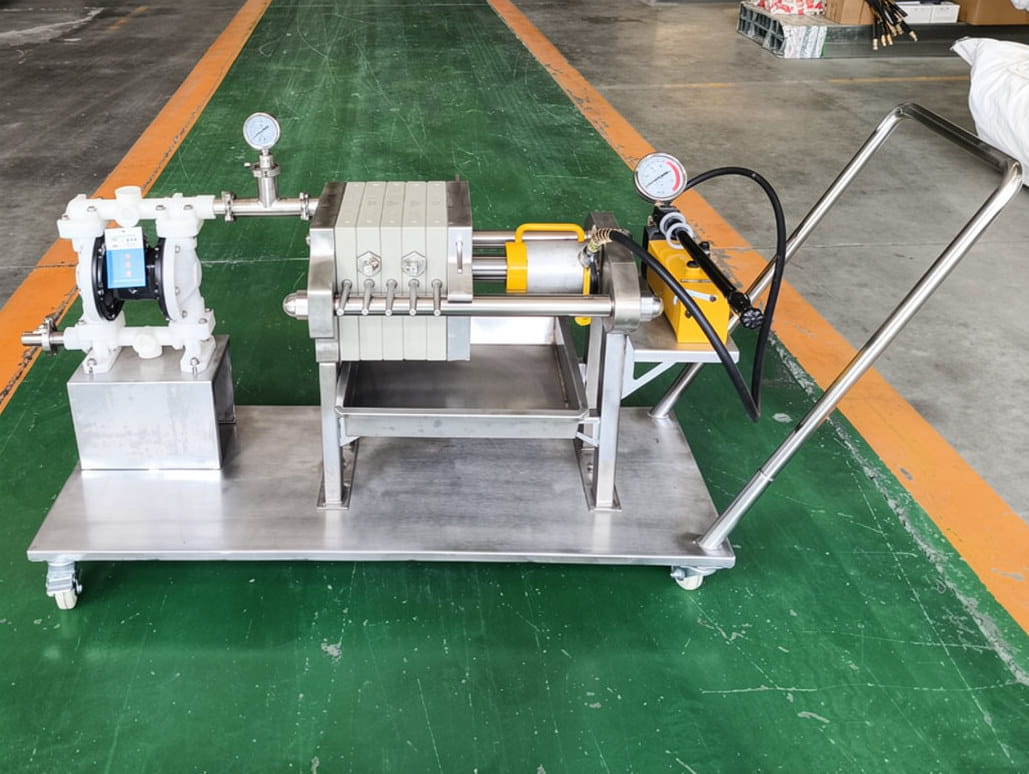
Laboratory filter press example. Confirm the available plate arrangement and test functions before specifying a trial.
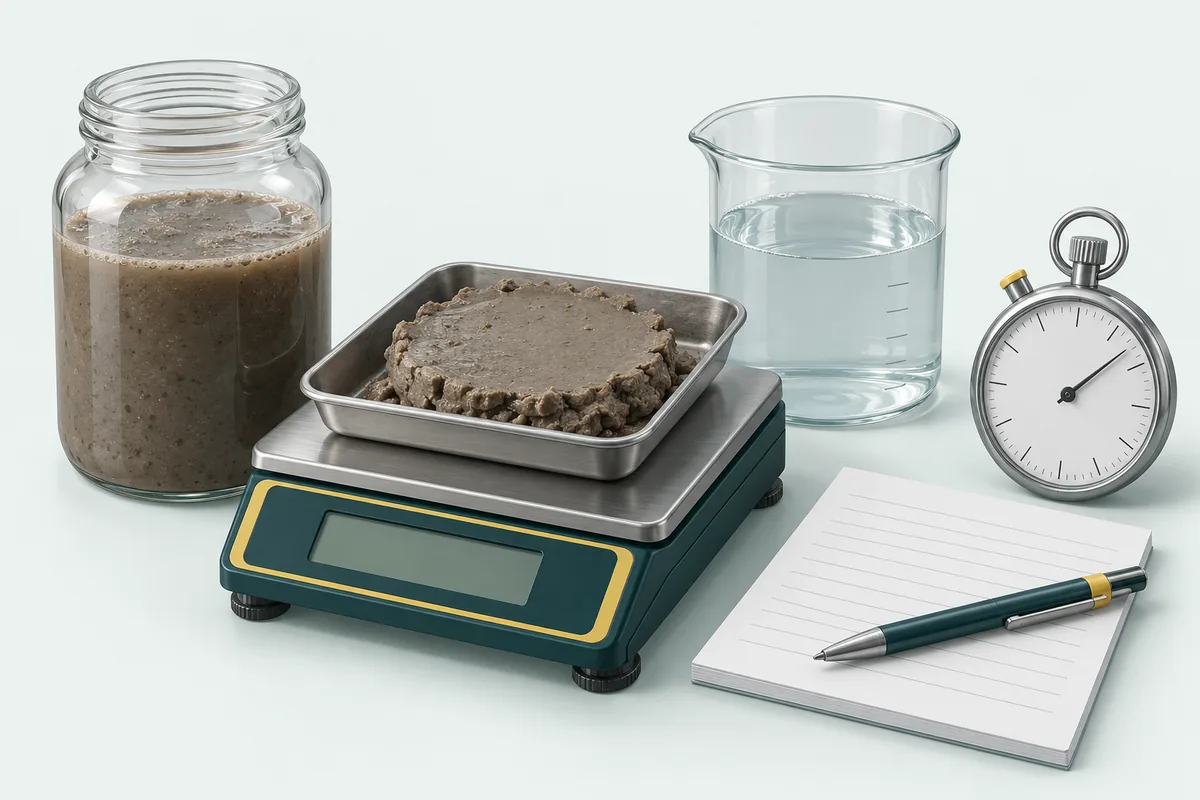
Record representative feed, cake, filtrate and cycle conditions together. AI-generated laboratory illustration, not measured test evidence.
STEP 6 / MAKE THE PURCHASE COMPARABLE
Compare the Complete Proposal, Not Only the Press Price
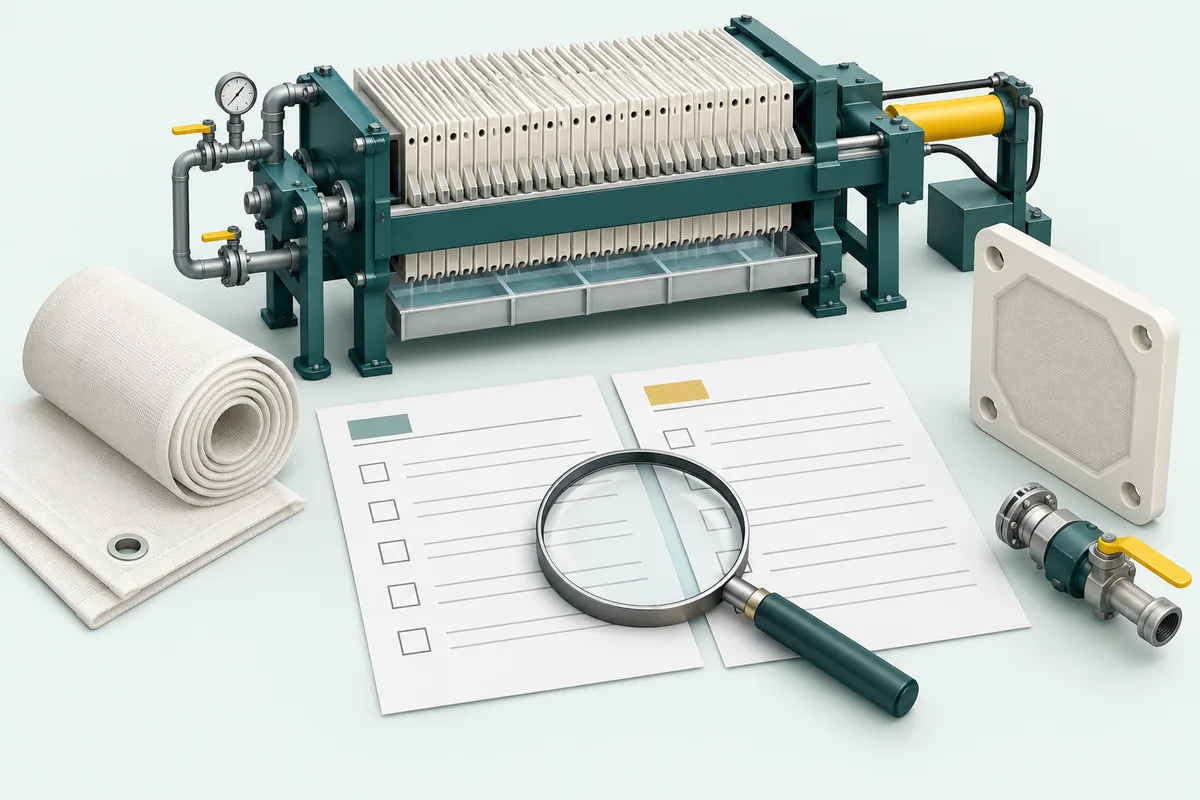
Compare proposals on the same duty, acceptance basis and equipment scope. Conceptual illustration.
Use One Acceptance Basis
- Same feed range and conditioning assumptions.
- Same cake, filtrate and daily-output targets.
- Full cycle, staffing and utility requirements.
- Defined test method, scale-up basis and performance exclusions.
Price the Same Supply Scope
- Press, feed equipment, controls and any squeeze system.
- Cake handling, cloth washing and site connections.
- Installation, commissioning, training and shipping scope.
- Planned spares, maintenance, consumables and downtime.
Compare annual operating cost or cost per dry tonne processed at the same duty. Count savings from drier cake only when local disposal charges or downstream costs actually change. A useful quotation states what is included, what remains for the site and how performance will be checked.
READY TO DISCUSS YOUR APPLICATION?
Send a Clear Selection Brief
Start with the information you have; mark unknown values as unknown. Use the message field for these details, or email a specification and supporting photos.
Material / process: what you filter and where it comes from.
Capacity: normal and peak duty, units and working hours.
Feed conditions: solids, temperature and chemistry, if known.
Required result: cake, filtrate and recovery targets.
Project details: country, utilities, constraints and schedule.