To better dry filter press cake starts with consistent feed, clean drainage paths, and a pressure cycle that suits the slurry. Test membrane squeezing or through-cake air blowing where your press supports them, then keep the settings that improve measured cake solids at an acceptable cost per dry tonne.
| Cake dry solids | Moisture, wet basis | Total wet cake | Water in cake |
|---|---|---|---|
| 25% | 75% | 4,000 kg | 3,000 kg |
| 30% | 70% | 3,333 kg | 2,333 kg |
| 35% | 65% | 2,857 kg | 1,857 kg |
| 40% | 60% | 2,500 kg | 1,500 kg |
These calculated examples are rounded to the nearest kilogram. They assume water is the liquid, solids capture stays constant, and no conditioning solids are added. Your slurry may reach a different solids range.
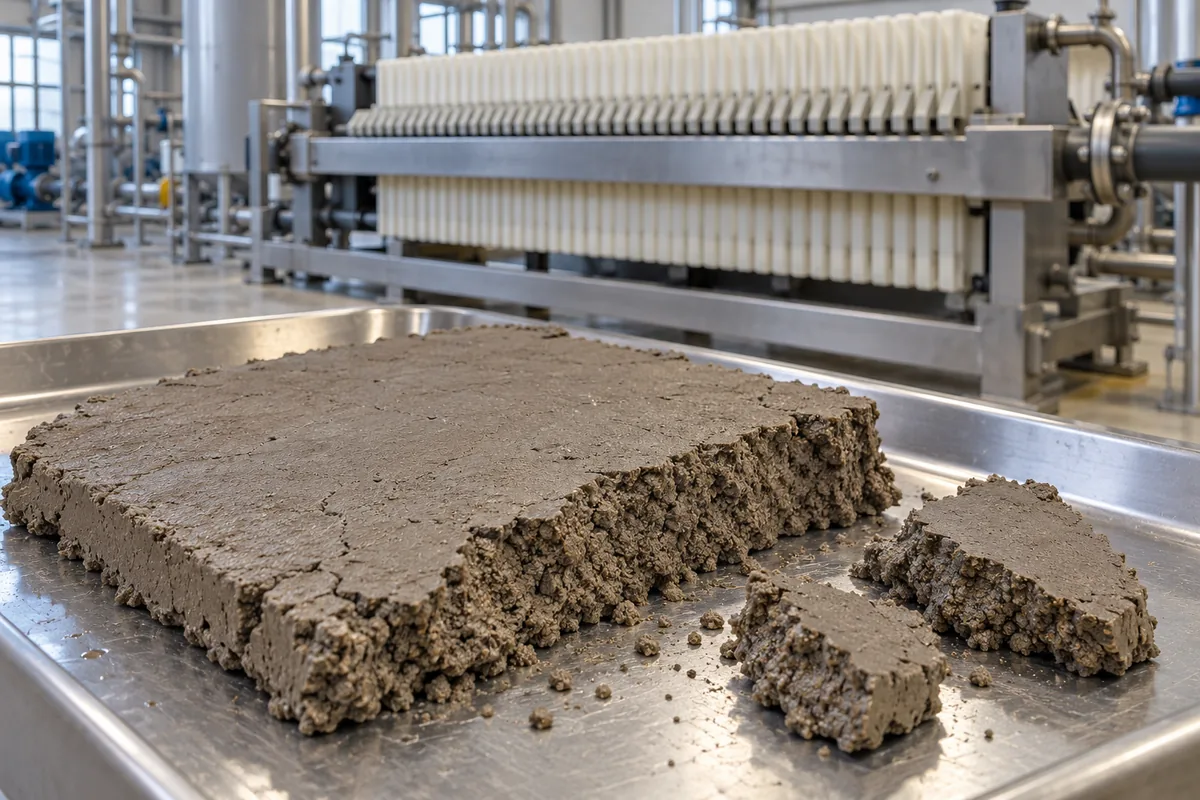
A cake can look firm and still carry plenty of water. You can also get a drier cake by extending the cycle, then discover that the press can no longer keep up with production.
Aim for repeatable dryness at an acceptable operating cost. Measure the whole batch and the complete cycle before deciding that a change has helped.
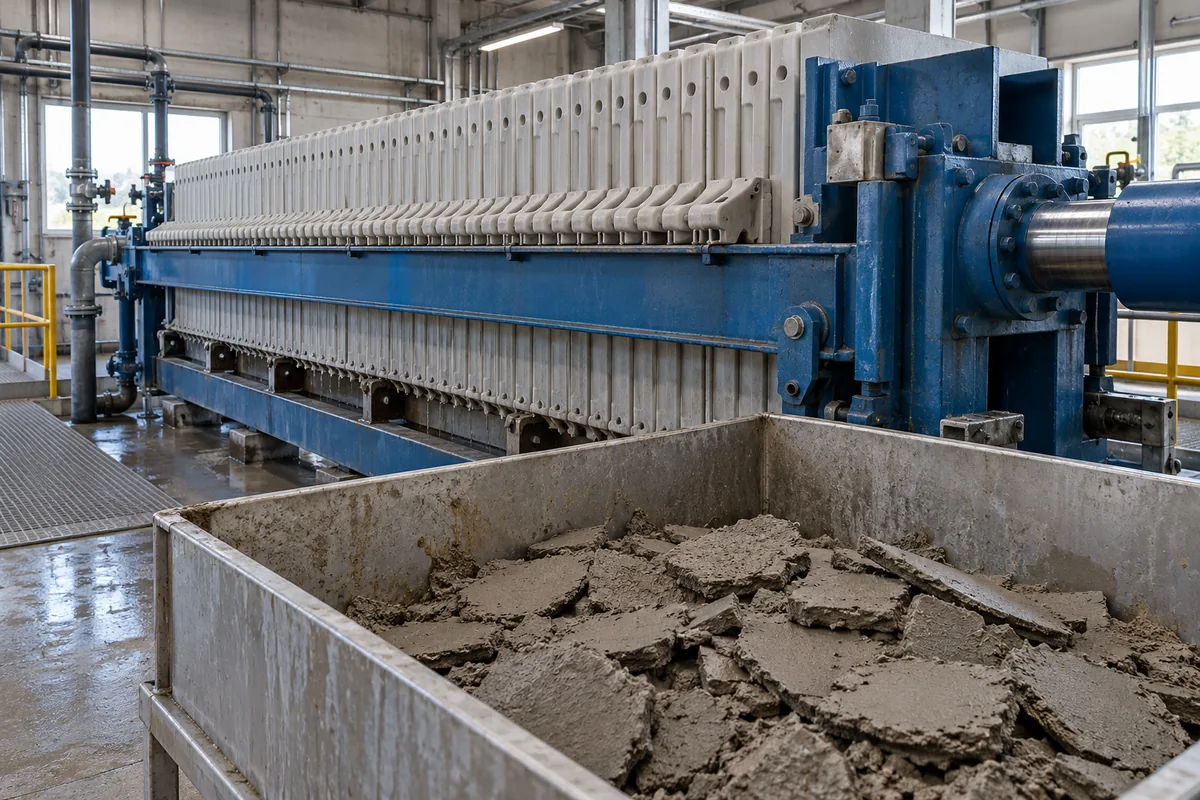
How to Better Dry Filter Press Cake
1. Measure cake moisture before changing settings
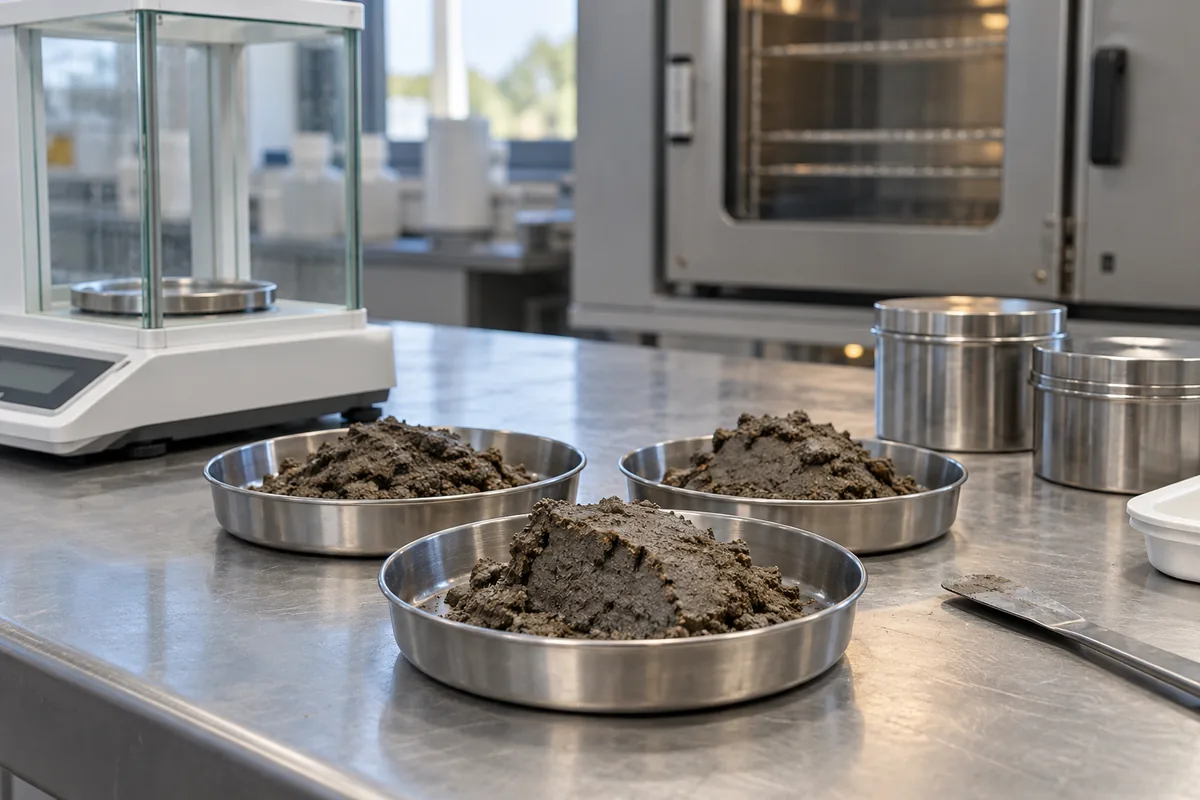
Measure cake dry solids with a consistent laboratory method and sample several locations across the press. A firm surface or one dry-looking piece can give you the wrong impression of the batch.
For an aqueous cake, the basic calculations are:
- Dry solids (%) = dry sample mass ÷ wet sample mass × 100.
- Moisture, wet basis (%) = 100 − dry solids (%).
Subtract the sample container’s mass from both measurements. For example, a 100 g wet sample that leaves 30 g of dry residue contains 30% dry solids and 70% moisture on a wet basis.
McLanahan’s guide to cake solids and moisture describes drying and reweighing a sample until its mass stops changing. Use your laboratory’s validated method and temperature for the material. Volatile compounds or heat-sensitive solids can make a simple loss-on-drying result misleading.
EPA’s published draft Method 1684 describes mass-based solids measurement for sludge and biosolids. Its interference section explains why drying time, temperature, and volatile losses affect the result. Check that your chosen method suits the sample; an oven weight loss is not always water alone.
Keep sampling consistent:
- Take samples from chambers near the feed end, middle, and far end.
- Include comparable positions within each cake, including its interior.
- Sample at the same point after discharge and seal samples promptly.
- Record individual results before combining them into a batch average.
A wet patch near the feed passage gives you a different starting point for troubleshooting than uniformly wet cakes. Note where you found it.
Record feed solids, pressure, total cycle time, filtrate clarity, and chemical dose alongside the samples. Without those numbers, it’s hard to tell whether a better result came from your adjustment or a change in the feed.
2. Restore drainage through the cloths and plates
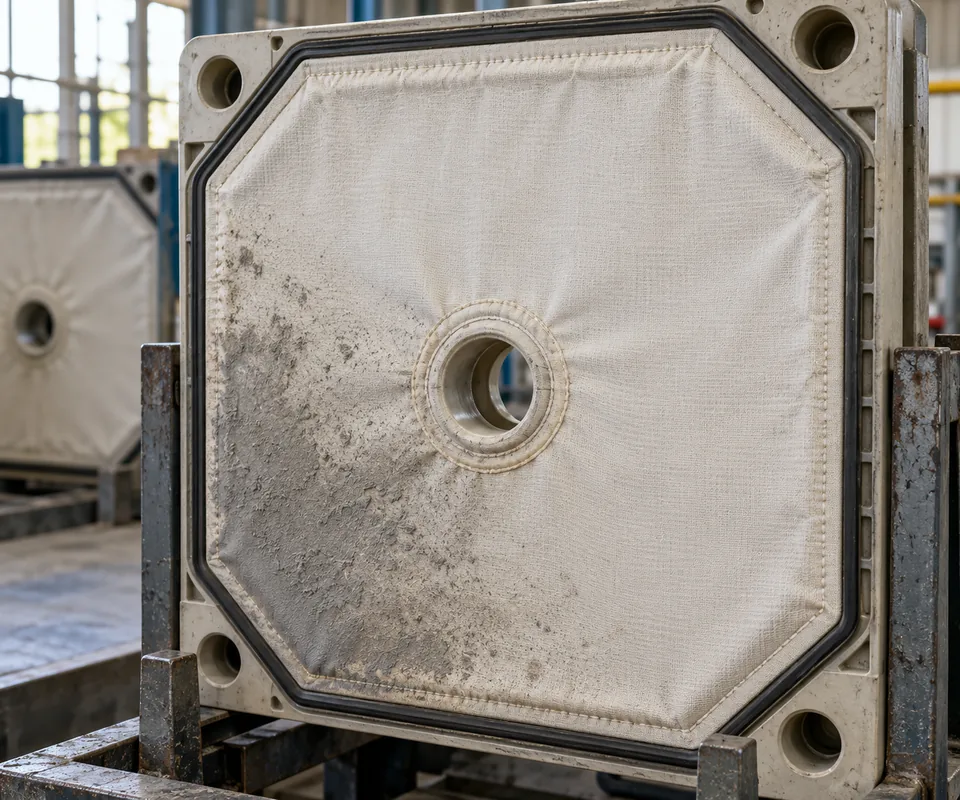
Clean or replace blinded filter cloths and clear obstructed drainage paths before increasing pressure. Water needs an open route through the cake, cloth, plate channels, and filtrate outlet.
Fine particles, scale, oils, and conditioning chemicals can reduce filter cloth permeability. A press may still reach its normal pressure while liquid removal slows down.
After isolating the equipment under the plant’s procedure, inspect it for:
- Embedded solids or deposits on the cloth surface.
- Folds, tears, poor seating, or damaged seals.
- Blocked plate drainage channels and filtrate ports.
- Cake residue on sealing surfaces.
- A plate installed in the wrong position or orientation.
McLanahan’s cloth maintenance guidance explains how particles lodged in the weave inhibit filtration and extend the cycle. Follow the cloth supplier’s cleaning limits, including chemical compatibility and washing pressure.
For the cleaning sequence, see how to clean filter press cloth. Check the sealing edges and drainage openings as well as the fabric face.
A tighter weave may retain fine particles better, but it can restrict drainage. A more open cloth can improve flow while allowing unacceptable solids losses.
Ask the supplier to evaluate retention, permeability, cake release, temperature, and chemical resistance together. Our filter cloth material selection guide explains the fabric and compatibility checks behind that choice. Air permeability alone won’t tell you how a cloth will perform with your slurry.
After maintenance, repeat the baseline cycle with the same feed where possible. Keep chemistry and pressure settings unchanged so you can see what the maintenance achieved.
3. Stabilize feed solids and test slurry conditioning
Keep feed solids and slurry chemistry as consistent as practical, then test whether conditioning improves drainage. Variations upstream can change cake formation even when every press setting stays the same.
Pre-thickening reduces the liquid load per tonne of solids. Take it too far, though, and the thick or viscous feed may become difficult to pump and distribute evenly.
Track slurry solids concentration, pH, temperature, and particle size changes. Check tank mixing and feed pump performance when one cycle behaves very differently from the next.
Fine particles often create narrow drainage paths and hold more water because of their large surface area. Clay-rich or organic feeds can behave very differently from coarse mineral slurries, so check the material before adopting another plant’s dryness target.
Choose polymer dose through testing
Select a polymer or flocculant by comparing dewatering results across several doses. Jar tests help you shortlist products, but even large, fast-settling flocs still need a pressure-filtration test.
Start with representative feed samples. Screen suitable products and doses, then confirm promising combinations with bench pressure filtration or controlled press trials. A laboratory filter press can help with this comparison if its pressure range and configuration match the test you need.
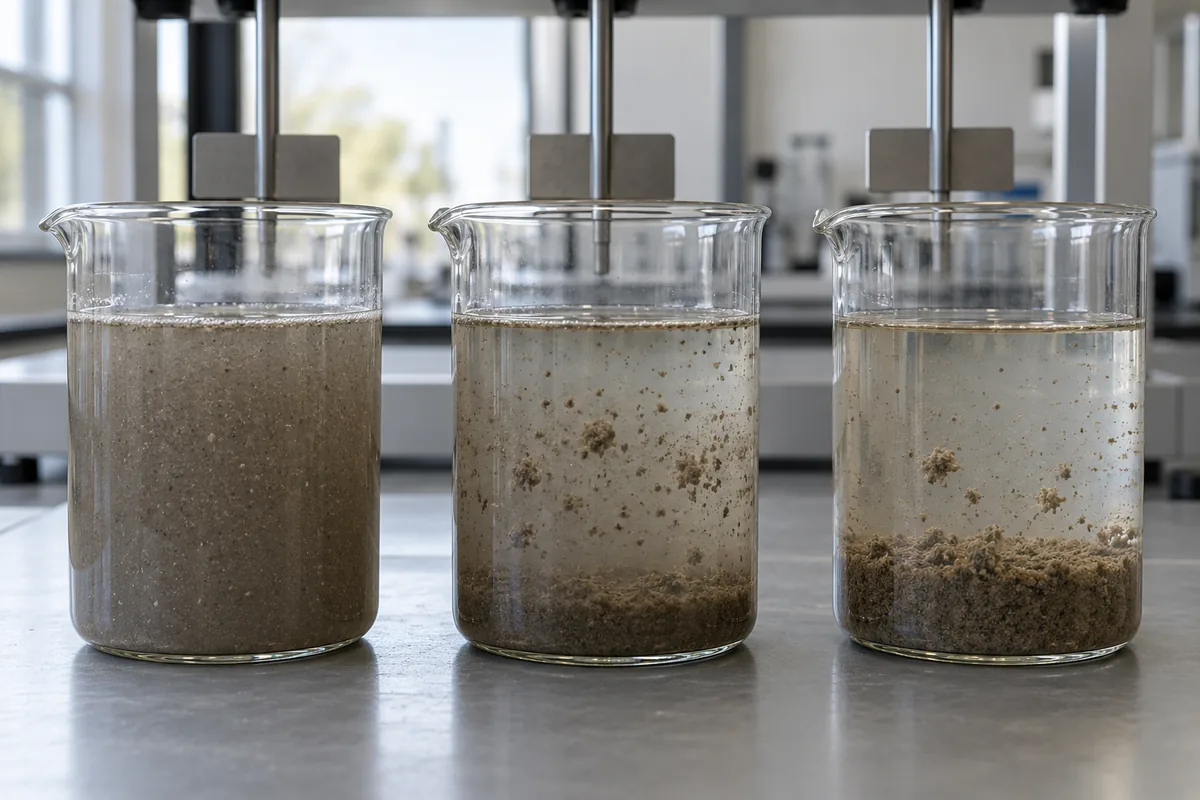
Measure cake solids, filtration time, filtrate quality, and cake release. Express dosage consistently, preferably as active chemical per unit of dry feed solids.
Too little conditioning may leave fine particles dispersed. Too much can increase cost and create sticky deposits or poor drainage. If a promising laboratory result disappears in the plant, check polymer preparation, mixing, and whether pumping breaks the flocs apart.
ChemREADY’s polymer selection guidance also covers preparation and changing sludge conditions. Test whether your feed needs polymer at all before adding it to the operating recipe.
Filter aids such as perlite or diatomaceous earth may help selected difficult slurries. Include their added mass, product compatibility, and disposal cost in the comparison. A higher measured solids percentage can partly reflect added solids rather than more water removed.
4. Optimize feed pressure and the filtration endpoint
Adjust the feed pressure profile and filtration endpoint within the press manufacturer’s limits, using filtrate flow and cake results to judge each change. More pressure and more time both have diminishing returns.
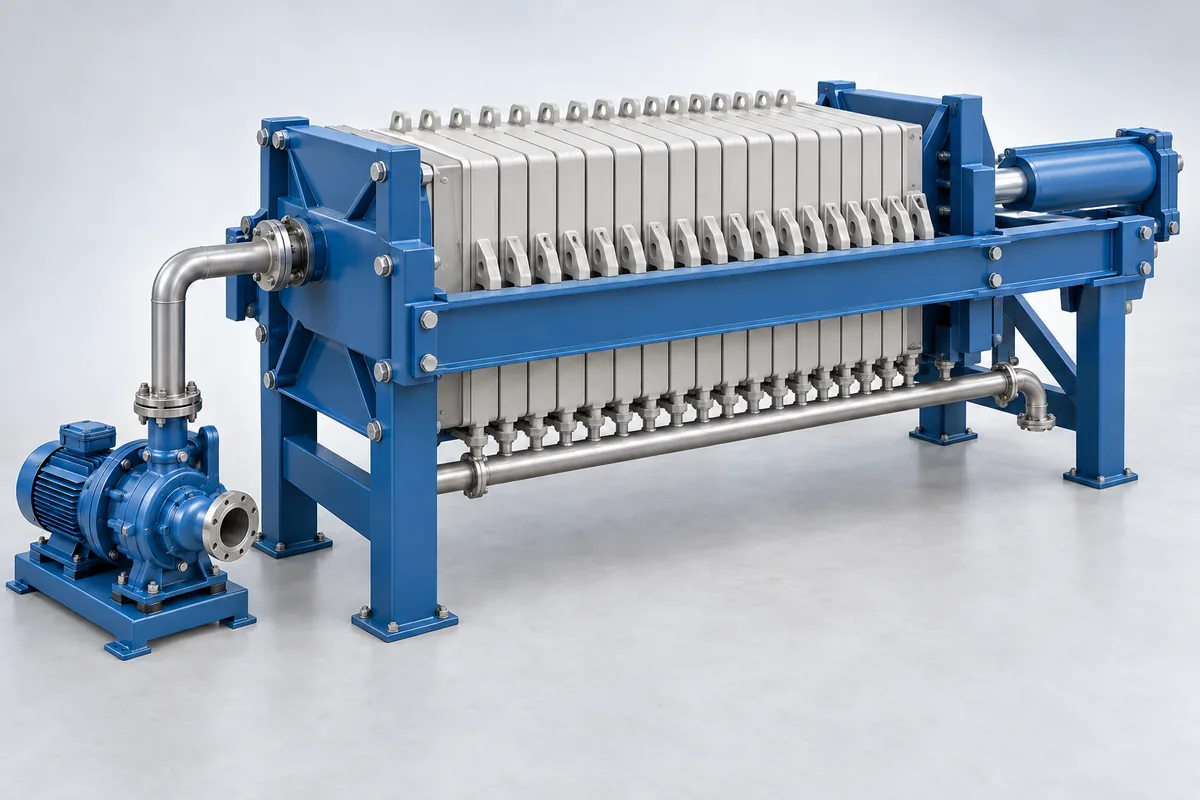
In a recessed chamber press, the feed pump supplies the pressure that drives liquid through the cloth. The hydraulic closing system holds the plate pack sealed. Closing pressure and filtration pressure do different jobs.
McLanahan’s explanation of filter press operation describes those separate roles. Turning up the closing ram setting won’t replace the work of the feed pump or restore a blocked drainage path.
For a compressible cake, additional pressure can also tighten the pore structure and reduce permeability. The useful operating point depends on the material and the equipment.
If the controls permit it, trial an approved pressure ramp that allows even filling and cake formation before the final pressure stage. Watch actual feed pressure and filtrate flow together.
A rapid pressure rise with little filtrate can indicate restricted flow or poor filling. It does not prove that the chambers contain uniformly dewatered cake.
Stop when extra time stops paying
Set the endpoint where extra filtration produces too little improvement to justify the lost capacity. Use an approved flow threshold or a timed recipe that trials have shown to work.
Record how much extra filtrate leaves during a trial extension and whether the final cake solids improve consistently. Compare total batch time, including opening, discharge, cleaning, and closing.
For a fixed dry solids load per batch, extending a 60-minute cycle to 75 minutes cuts theoretical hourly throughput by 20%. That is a calculated trade-off; actual production also depends on uptime and loading.
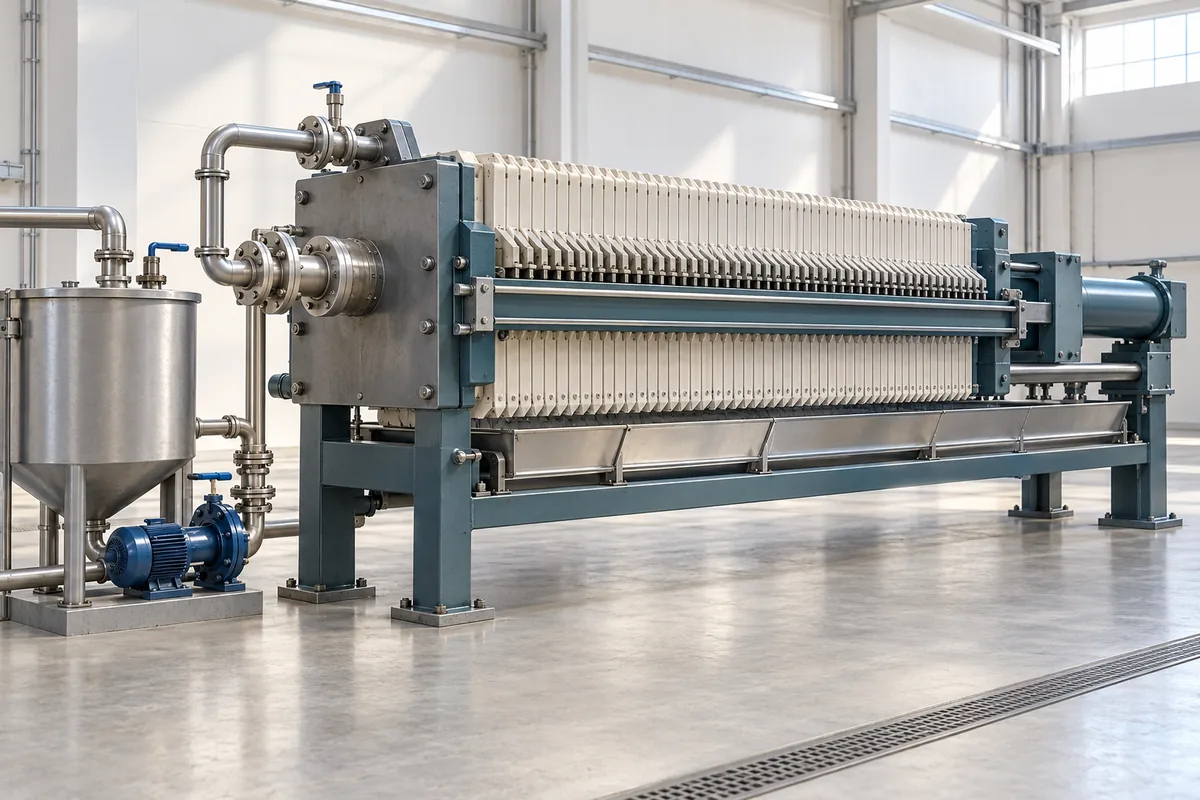
A shorter drainage path can help difficult materials, but changing chamber depth affects batch capacity and requires an engineered plate configuration. Account for that trade-off when you choose a filter press size.
5. Evaluate membrane squeezing with your actual slurry
Use membrane squeezing when trials show that the extra liquid removal pays for the equipment and cycle cost. The cake must be able to compress and still let liquid drain.
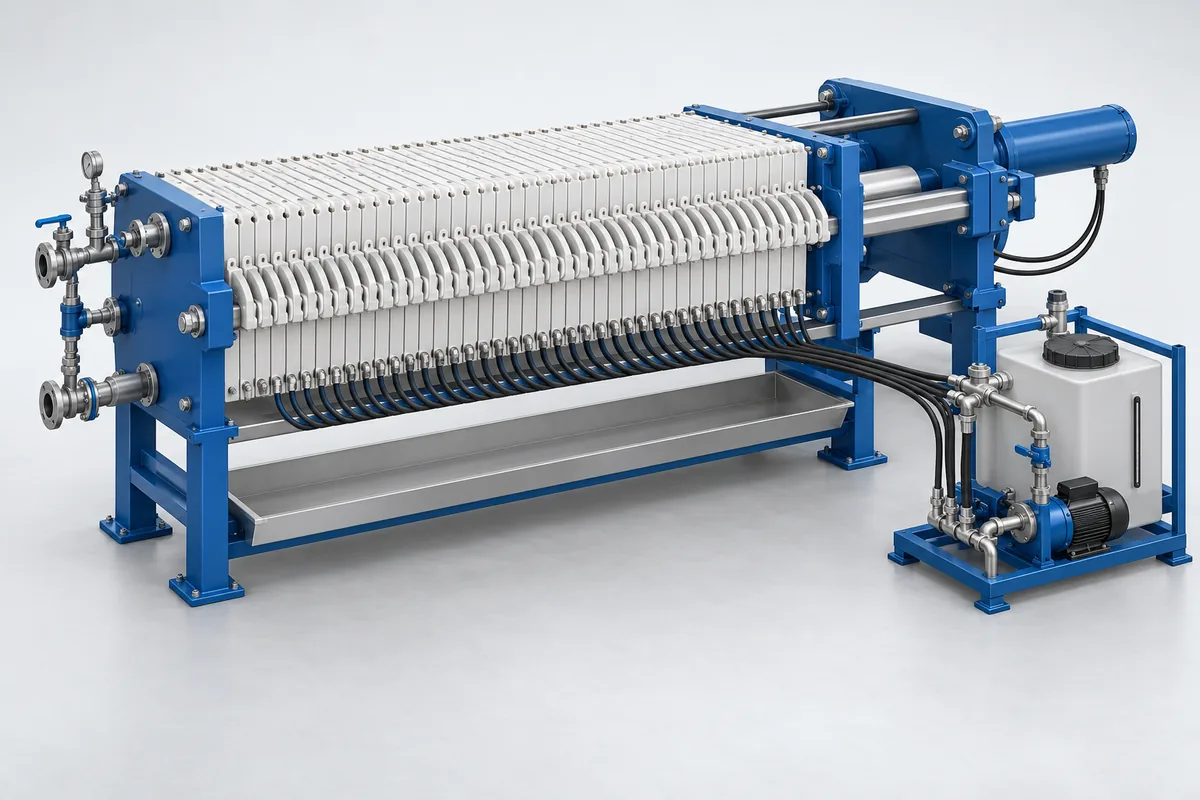
A membrane filter press contains flexible plate surfaces. After the required cake formation stage, an approved squeeze medium inflates those surfaces and reduces the chamber volume, forcing more liquid out.
Micronics describes membrane plates that use water or compressed air for inflation. The squeeze circuit acts behind the membrane; it is separate from air blowing through the cake.
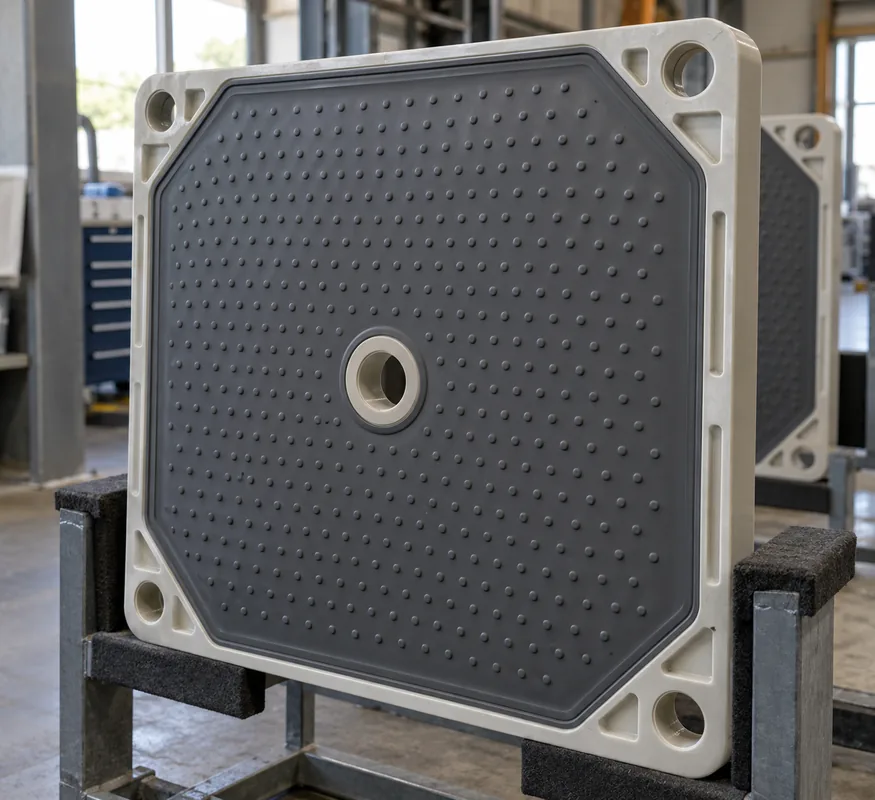
If your press already has membranes, check their condition and verify that the squeeze circuit reaches and holds its approved operating pressure. If some chambers stay wetter than others, inspect for membrane damage, blocked drainage, and incorrect plate assembly.
Then test squeeze pressure and hold time separately. Stop extending the hold when repeated measurements show no useful gain.
Before a retrofit, ask the original equipment manufacturer to check the frame, closing force, plate pack, piping, controls, and protection systems. A plate swap alone cannot establish that the press is suitable for membrane operation.
Follow the specified fill conditions before squeezing. Never inflate membranes in an empty or inadequately filled chamber unless that particular design and procedure explicitly allow it.
For wastewater solids, EPA recommends representative bench testing and an economic analysis before choosing a membrane press over a fixed-volume press. Compare cake moisture content, dry solids throughput, maintenance, and total operating cost against your current equipment.
Use those results to compare membrane and chamber filter press costs, including the squeeze system and replacement membranes.
6. Use the correct air path and clear residual slurry
Through-cake air blowing can displace residual pore liquid when the press has the correct plate ports, valve arrangement, and air supply. Its effectiveness depends on cake permeability and the air actually passing through the cake.
Air takes the easiest available route. Cracks, bypass paths, or incorrect plate sequencing can produce plenty of airflow with limited moisture removal.
Verify the manufacturer’s plate arrangement and air-blow procedure. Then compare cake solids and compressed-air consumption over different approved blow durations.
Use the pressure setting specified for your machine. Met-Chem’s published air-blowdown procedure, for example, gives approximately 35 to 45 PSI and a 1-3-1 plate sequence for the arrangement it describes. Those values apply to that configuration; check your own manual before using them.
Follow the approved pressure limit and operating sequence, and fully depressurize the relevant circuits before opening the press. Before maintenance, use the plant’s isolation procedure. OSHA’s hazardous-energy guidance explains why electrical, hydraulic, and pneumatic energy must be controlled during servicing.
Use core blow to keep wet feed out of the discharged cake
Core blow clears residual slurry from the feed passage before discharge so that wet material doesn’t mix with the finished cakes. Through-cake air blowing removes liquid from the cake’s pores; the two operations need different flow paths.
McLanahan’s core-blow guide describes this function on compatible dual-feed presses. The required valves and piping must support the operation.
If the cakes look reasonably consistent but wet slurry drops from the feed holes when the plates open, inspect core clearing and its controls. A longer filtration cycle may leave that slurry right where it was.
Treat cake washing as a purity step
Cake washing replaces retained process liquor with a cleaner liquid to remove soluble impurities or recover dissolved product. The cake still needs a final dewatering stage to remove the retained wash liquid.
An International Filtration News technical article on membrane press washing explains that the cake’s voids fill with the purer wash liquid. That liquid still has to come out, so adding a wash step alone won’t establish lower final moisture.
If washing is required, evaluate impurity removal, wash consumption, and final cake moisture separately. Follow the equipment’s validated sequence for washing, squeezing, and air blowing.
7. Choose settings by cost per tonne of dry solids
Keep the settings that meet your cake specification at the lowest acceptable total cost per tonne of dry solids processed. Include throughput, chemicals, energy, maintenance, hauling, and disposal in that decision.
At 25% dry solids, 1,000 kg of captured dry solids produces 4,000 kg of wet cake. At 30%, the same solids produce approximately 3,333 kg.
That is about 667 kg less wet cake, or a 16.7% reduction in hauled mass. The dry solids content has increased by five percentage points.
At an illustrative hauling and disposal charge of $100 per wet metric tonne, the reduction is about $66.67 per tonne of captured dry solids. This assumes charges scale directly with wet mass; truck minimums, volume limits, and disposal rules can change the savings.
Subtract the extra chemical, electricity, labor, and maintenance costs. Include lost production if a longer cycle creates a capacity bottleneck.
Run a trial you can repeat
Change one variable at a time while holding the other conditions as steady as practical. Repeat promising settings across comparable batches before adopting them.
Use a log with these fields:
- Feed solids, pH, temperature, and feed description.
- Cloth condition and plate configuration.
- Chemical product and active dose.
- Feed pressure profile and filtration endpoint.
- Membrane squeeze and air-blow settings, where fitted.
- Cake solids by sampling location and filtrate quality.
- Total cycle time, dry solids throughput, and operating cost.
Plot cake solids against total cycle time and keep air use or chemical cost beside each result. Look for the point where the curve flattens: how much more time are you spending for the next improvement in dryness?
Keep unsuccessful trials in the log, too. They help the next shift avoid repeating an expensive adjustment.
Common Questions About Drier Filter Cakes
Set dryness targets, upgrade plans, and maintenance intervals from your feed, downstream requirements, and operating records. Results from another material can be useful context, but they won’t settle the decision for your press.
What is a good filter cake solids percentage?
A good solids percentage meets handling, transport, disposal, or product requirements while maintaining acceptable throughput. There is no single target that applies equally to biological sludge, mineral tailings, and chemical precipitates.
Establish a realistic range through laboratory or pilot testing. Measure variation across the press as well as the average, because an acceptable average can hide troublesome wet chambers.
Can a filter press make cake completely dry?
A conventional filter press usually leaves residual moisture, even after squeezing or air blowing. Mechanical dewatering has limits, particularly where water remains strongly associated with fine or organic material.
If the product requires moisture below the demonstrated mechanical limit, evaluate downstream thermal drying or another suitable process. Include heat demand, product sensitivity, emissions, and material hazards in the equipment assessment.
How often should filter cloths be replaced?
Replace cloths when damage, persistent blinding, poor retention, or declining performance remains after appropriate cleaning. Set the inspection frequency from operating conditions and manufacturer guidance.
Track cycle count, cleaning history, filtrate quality, and filtration rate. Abrasive feed and unsuitable cleaning can shorten cloth life. Use those observations alongside the maintenance schedule when deciding to replace it.
Set up Your Next Trial
Start with representative cake-solids measurements and a drainage inspection. Choose one adjustment that addresses what you found, then repeat it across comparable batches before changing the operating recipe.
Keep your press manual beside the trial log. The mass and cost examples here are calculations, not plant trial results; validate the settings on your own installation.
When the improvement repeats, record the sampling method, settings, operating limits, and cost result in your plant’s procedure for how to better dry filter press cake.