Quick answer: Yes, filter press is affordable if the savings on disposal, labor, water, or recovered product cover the installed cost and running expenses. It can make financial sense for a small operation, too; the answer depends on what you process, how often you run it, and the cash you have available.
| Equipment or project | Published figure | What the figure covers |
|---|---|---|
| Used 470 mm Met-Chem press, 3 cubic feet of cake capacity | $12,000 as-is | A specific equipment listing; reconditioning is listed at an additional $2,000. Confirm availability and accessories. |
| Small automated filter press | $30,000–$60,000 | Obtain a current, itemized quotation. |
| Small precast-concrete wastewater project | $80,000 | Including a press and supporting infrastructure. |
These published supplier examples were checked in 2026. They cover different equipment and project scopes, so treat them as starting points, not current offers or market averages. Freight, taxes, installation, process requirements, and local labor rates can all change the final bill.
What Makes a Filter Press Affordable?
A filter press needs to do the job at a cost your operation can carry, including the money due before it starts earning its keep. A project can show a reasonable payback and still be difficult to fund upfront.
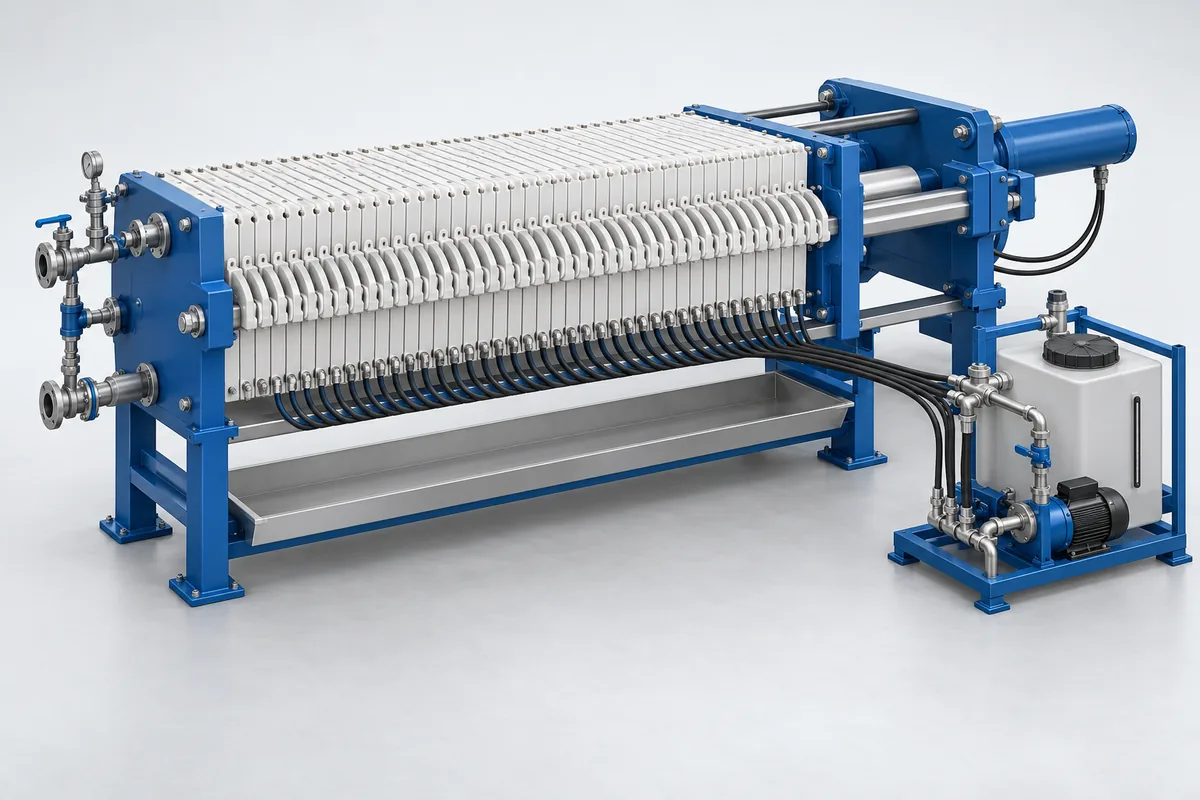
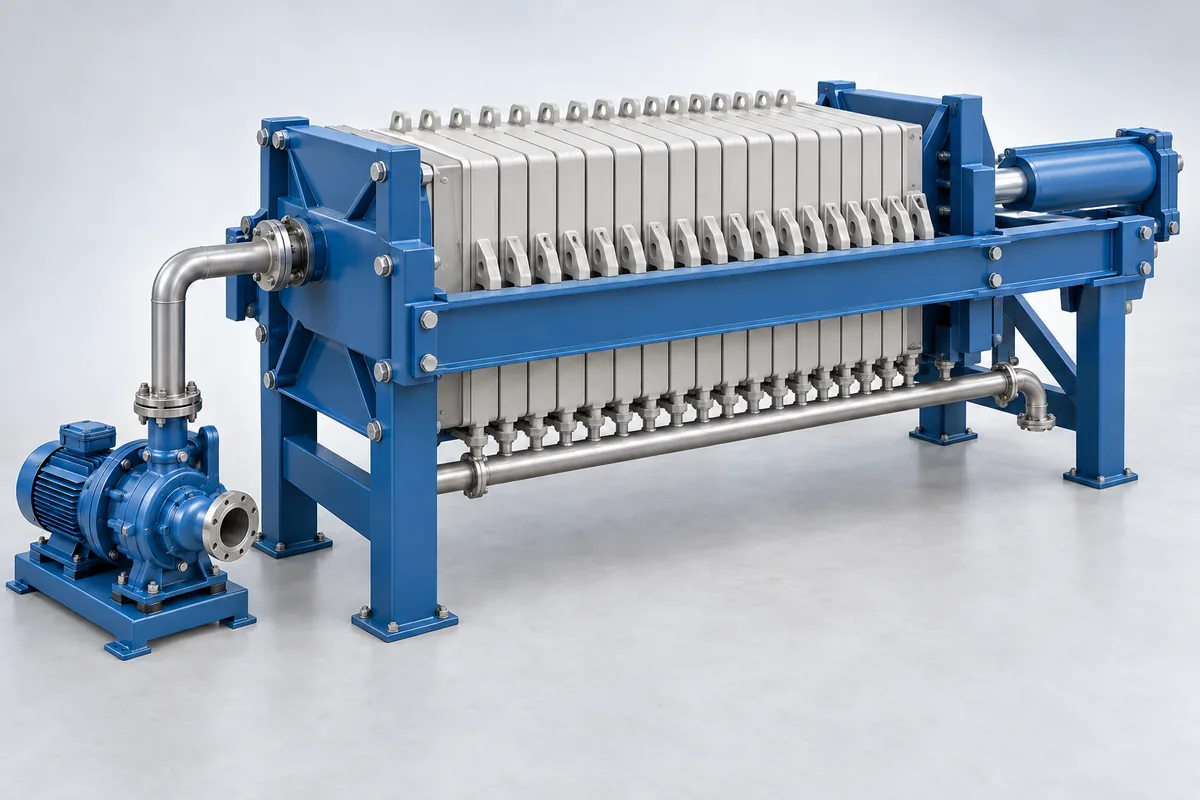
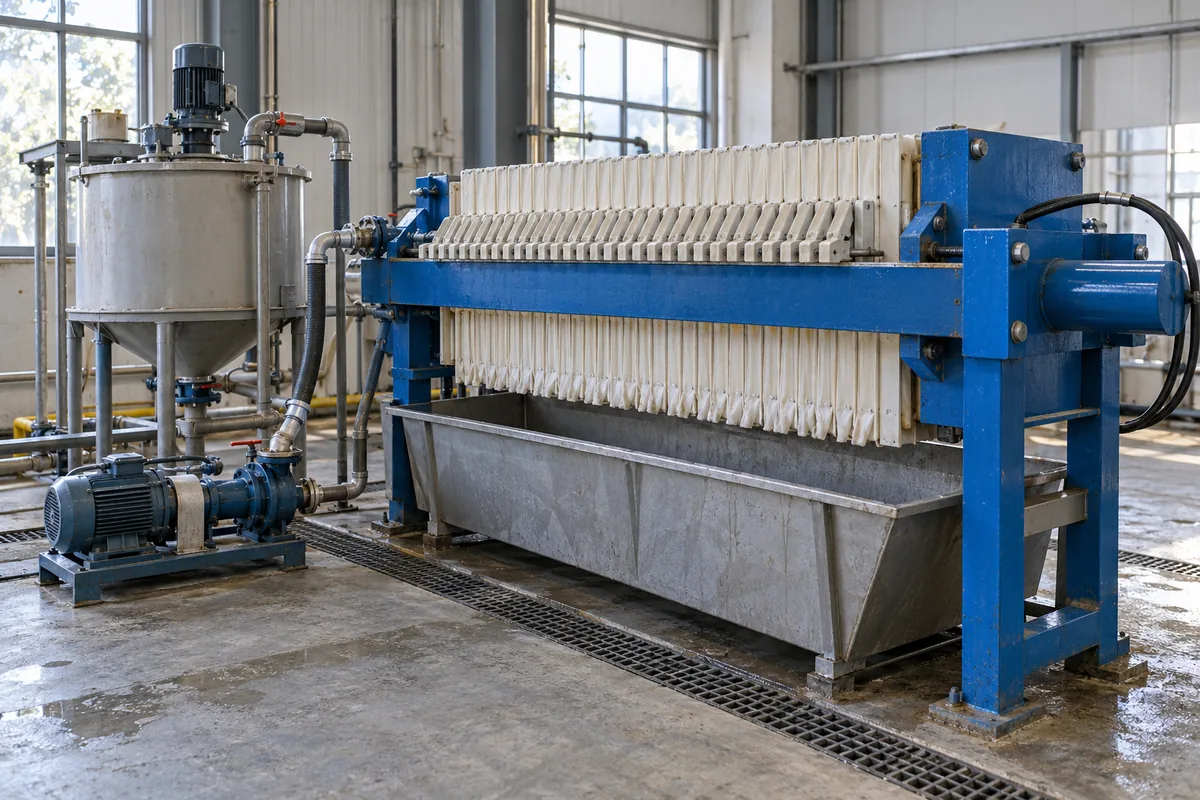
The equipment separates suspended solids from liquid. Slurry enters chambers lined with filter cloth; liquid passes through, and solids accumulate as a cake. In a recessed chamber press, the feed pump supplies the filtration pressure while the hydraulic system holds the plates closed.
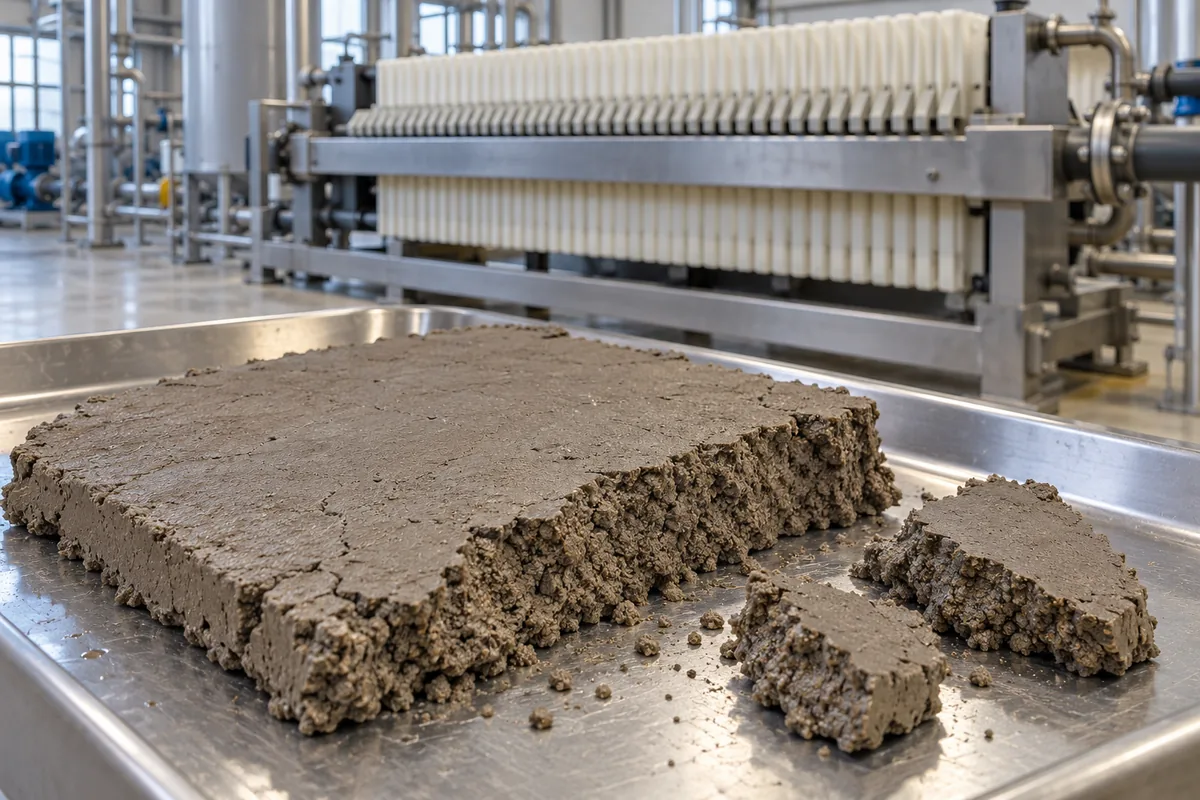
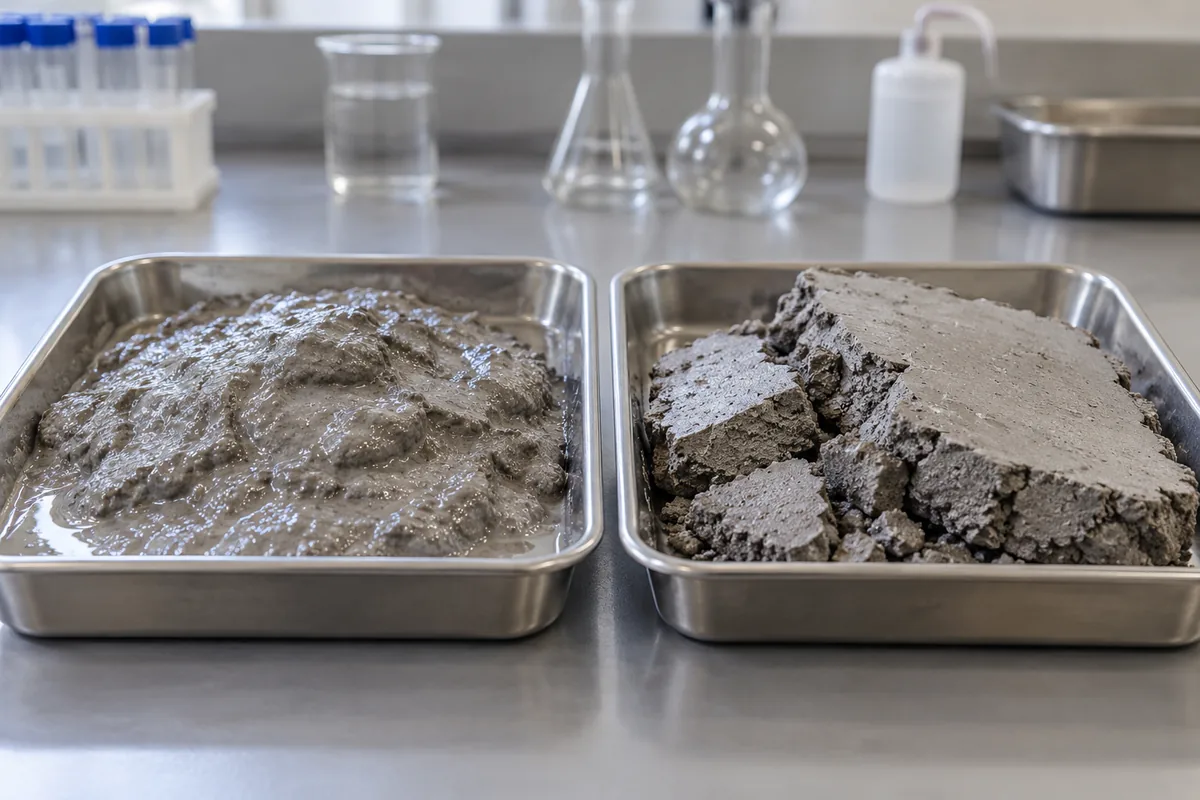
For wastewater residuals, the U.S. EPA’s recessed-plate filter press fact sheet describes the result as a non-liquid cake. Removing water can reduce the wet weight you pay to transport and dispose of. Depending on the process, you may also recover water or solids you can use.
Start with the installed project cost: everything needed to get the system running. Then work out the annual operating cost, including labor, utilities, consumables, maintenance, and waste handling. Compare that with the spending the new system would remove from your existing process.
Compare options over the same period and at the same production volume. A basic five-year ownership calculation includes the installed cost plus five years of operating expenses, less any realistic residual value.
For a larger investment, ask your finance team to include financing, taxes, and when each payment or saving occurs. The U.S. Department of Energy’s explanation of life-cycle cost analysis, written for building systems, shows how higher purchase costs can be weighed against lower operating costs over a project’s life. Simple payback gives you a quick check; a full investment appraisal needs that longer view.
How Much Should You Budget Beyond the Machine?
Your budget needs to cover a working treatment system, including site preparation and commissioning. The machine price is one line in that budget.
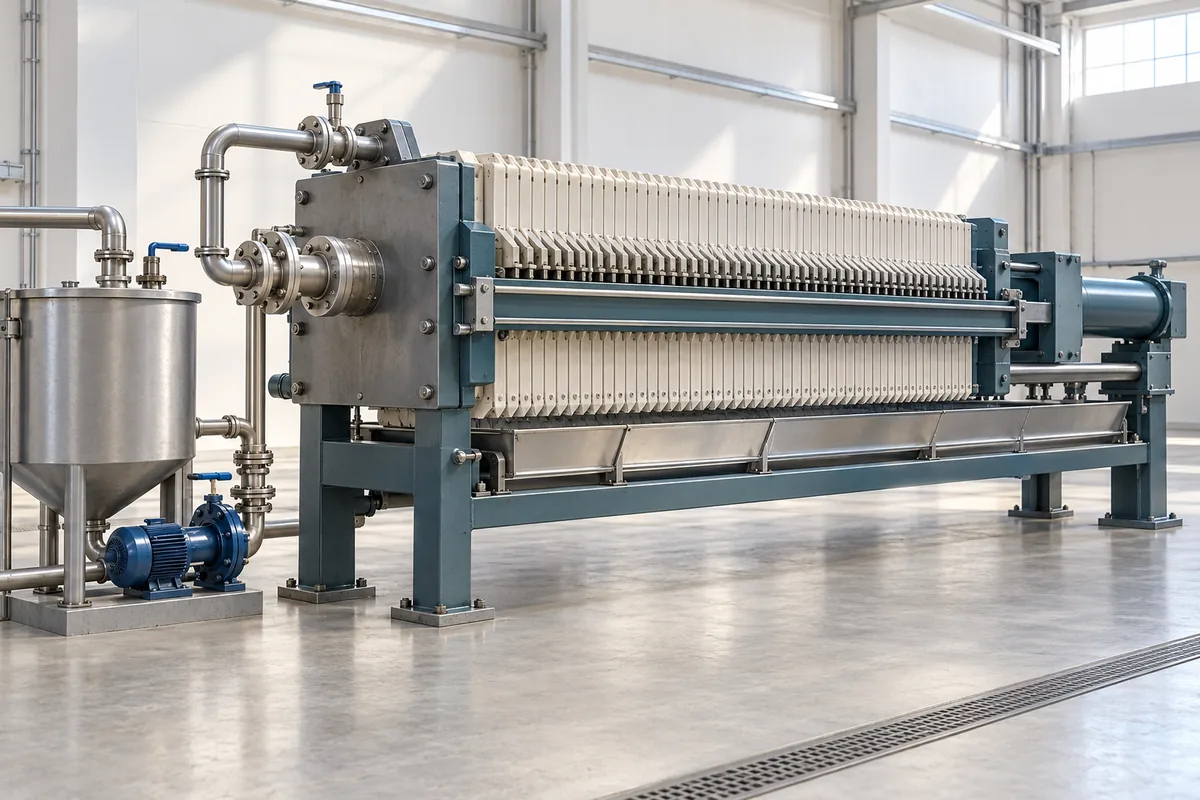
In ChemREADY’s published precast-concrete example, the $80,000 project included a 400 × 400 mm press, a dirty-water pit and screening system, an agitation mixer, a stand and connections, and a service package.
That example helps you see what a project can include. ChemREADY doesn’t publish enough operating data to check its payback independently, so you’ll need your own cost and savings estimates.
Your quotation checklist should cover:
- A correctly sized feed pump, tanks, and agitators.
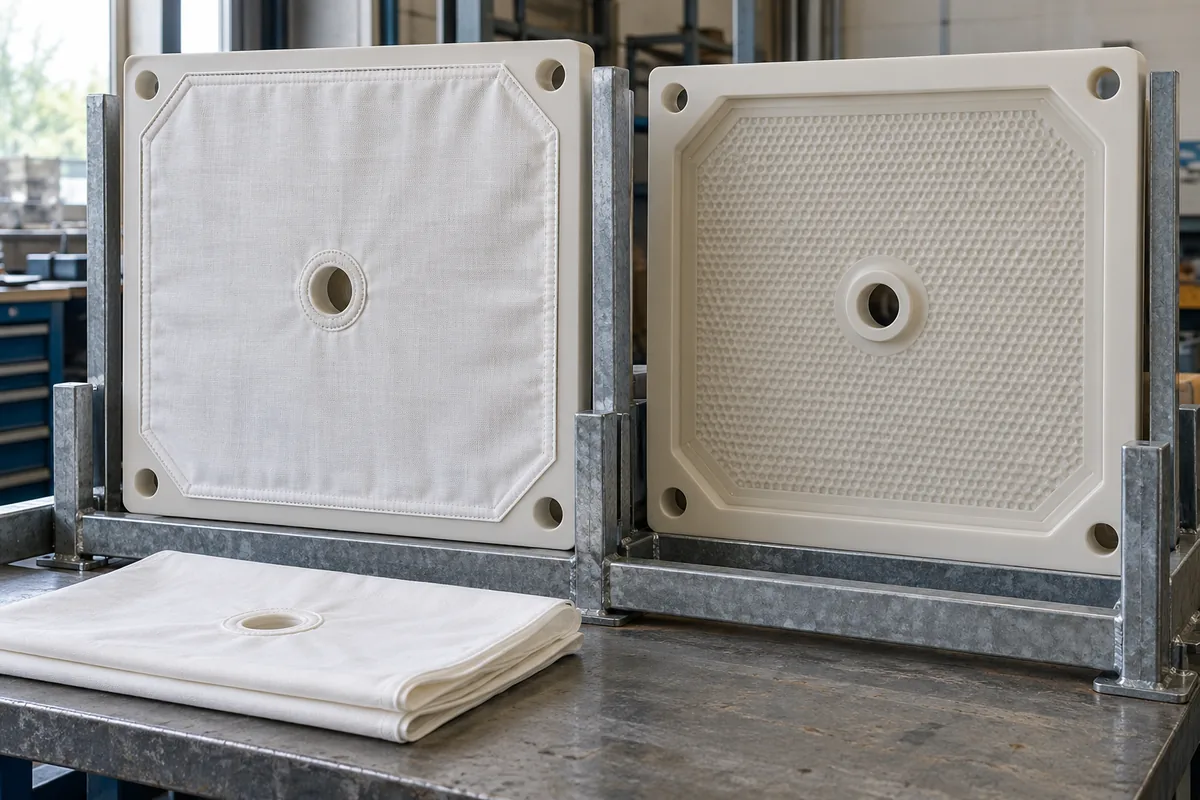
- Filter plates, application-specific cloths, and initial spare parts.
- Piping, valves, electrical connections, and controls integration.
- Any required compressed air or membrane squeeze equipment.
- Foundations, access platforms, cake collection, and conveyors.
- Freight, unloading, installation, operator training, and commissioning.
- Applicable taxes, duties, engineering, and permits.
Ask each supplier to mark every item as included, excluded, or supplied by you. You’ll soon see whether the lower quote leaves you with more to buy.
I’d also ask for a layout with maintenance clearances marked. Check that there’s room to change cloths and remove the cake container, as well as room for the machine itself.
What Changes the Filter Press Price?
Capacity, plate design, materials, automation, and the scope of supply all affect the price. Our guide to filter press types separates the plate arrangements from options such as automation, so you can compare what each quote actually includes.
Capacity and Cycle Time
Size the press around the dry solids you need to process and the time available for each complete cycle. Plate dimensions alone won’t tell you how much work it can finish in a shift.
Two slurries can behave very differently in the same machine. Fine particles, low permeability, and changing feed concentrations can affect filtration time and cake release.
Micronics’ sizing guidance identifies slurry composition, pH, temperature, solids concentration, daily volume, and available operating hours as key inputs. It also recommends testing to evaluate cloth selection, feed time, and cake moisture.
Count filling, filtration, any squeeze or blow stages, opening, discharge, and cleaning in the cycle time. Leave room in the schedule for maintenance and interruptions. The filter press sizing guide works through dry-solids loading and cake volume alongside that time check.
Too much unused capacity ties up cash; too little can leave you paying for overtime or emergency sludge removal.
Recessed Chamber and Membrane Plates
Membrane plates are worth the extra money when the additional squeeze produces enough savings through drier cake or shorter cycles. You’ll need to test how your material responds.
A recessed chamber press dewaters through feed pressure. A membrane press adds flexible plate surfaces that inflate to squeeze the cake after filling. Micronics describes membrane plates as an option for reducing cake moisture or shortening filtration cycles.
A squeeze stage doesn’t guarantee finer filtration or a particular moisture percentage. Ask for results from your slurry and include the extra utilities and maintenance in the comparison. Our membrane vs. chamber filter press guide explains the differences to check.
Materials and Chemical Compatibility
Choose materials for the slurry’s chemistry, temperature, pressure, and wear conditions. Paying more for a material only helps if it suits the job.
Polypropylene plates are common, including in membrane designs. Stainless steel may be appropriate for particular wetted components or sanitary requirements, but suitability depends on the chemical environment.
Have the supplier confirm compatibility for the plates, cloths, seals, pumps, and piping. A stainless steel frame or outer cladding tells you little about the components that touch the slurry.
Automation and Operator Time
Frequent plate handling, cake discharge, and cloth cleaning can make automation worth paying for. If you only process an occasional batch, you may have little use for some of those features.
Ask what “automatic” includes. Hydraulic closure, a plate shifter, automatic cake release, and cloth washing are separate functions; suppliers may package them differently.
Time the work an operator actually does during a cycle. A two-hour filtration cycle may need much less than two hours of continuous attention.
An employee freed up for other tasks gives you more available labor capacity. Count it as a cash saving only if it cuts overtime, contractor hours, hiring, or another expense you would otherwise pay.
Which Operating Costs Matter Most?
Allow for labor, replacement cloths, pump maintenance, utilities, conditioning chemicals, and cake disposal. Which of these dominates the bill will depend on your slurry and operating schedule.
Build the estimate from operating tasks and supplier data:
- Labor for loading, monitoring, discharge, cleaning, inspection, and maintenance.
- Cloths, seals, replacement membranes where fitted, and cleaning supplies.
- Utilities for feed pumping, hydraulics, compressed air, washing, and squeezing.
- Conditioning chemicals or filtrate treatment shown to be necessary by testing.
- Pump repairs, damaged plates, service visits, and backup disposal during downtime.
- Cake transport, disposal charges, and wash-water handling.
Cloth life varies with abrasion, chemistry, cleaning, and the number of cycles, so use an estimate suited to your application. McLanahan also lists cloth replacement and slurry feed pump rebuilding among routine maintenance needs.
Before ordering, get spare-part prices and delivery times. Even a cheap part can hold up production if it takes weeks to arrive.
Check the recovered liquid, too. Clear-looking filtrate can still contain dissolved contaminants. The EPA’s water reuse guidance describes treatment for chemicals and pathogens; appearance alone won’t establish whether water is suitable for its next use. Budget for any further treatment needed to meet your process requirements and local reuse or discharge rules.
How Do You Calculate Filter Press Payback?
Divide the total installed cost by annual net savings to find simple payback. Use savings after the new equipment’s additional running costs have been deducted.
Simple payback = installed project cost ÷ annual net savings.
The figures below are assumptions for a worked example, not customer results, a supplier quote, or a performance forecast. All amounts are in USD, and ‘tonne’ means a metric tonne.
Step 1: Establish Your Current Disposal Cost
Start with how much dry solids you capture and the solids concentration of the material going to disposal. You need both to compare the wet weights you’re paying to haul.
Assume your existing process sends 300 tonnes of dry solids per year to disposal in cake containing 30% solids by weight. Your combined haulage and disposal charge is $150 per wet tonne.
Wet cake weight equals dry solids divided by the solids fraction:
300 ÷ 0.30 = 1,000 wet tonnes per year.
Your annual bill is therefore 1,000 × $150 = $150,000.
Use invoices and measured cake samples for your own calculation. Keep truck minimums, fixed collection fees, and weight-based charges separate if your contractor bills that way.
Step 2: Estimate the New Disposal Weight
Use the cake solids percentage demonstrated by representative testing. For this illustration, assume the proposed system reaches 50% solids while capturing the same 300 tonnes of dry solids.
The new wet cake weight is:
300 ÷ 0.50 = 600 wet tonnes per year.
That removes 400 wet tonnes from the disposal bill. At the assumed rate, gross annual savings are 400 × $150 = $60,000.
That is a 40% reduction in wet weight under these assumptions, not a result every press will achieve. Keep solids capture, waste classification, and disposal acceptance comparable. Sending more solids into another waste stream would distort the saving.
Step 3: Subtract Additional Running Costs
Deduct the increase in operating expenses from the disposal saving. Assume the new system adds $15,000 per year in labor, utilities, maintenance, and consumables compared with the existing process.
Annual net savings become $60,000 − $15,000 = $45,000.
We haven’t assigned a value to recovered water, recovered product, or higher production here. Add those benefits if you can document them, taking care not to count the same saving twice.
Step 4: Divide by the Complete Installed Cost
Use everything you need to spend to get the project running. For this calculation, assume an installed budget of $90,000:
| Cost item | Assumed amount |
|---|---|
| Press and controls | $45,000 |
| Feed pump, tank, and piping | $12,000 |
| Freight and unloading | $6,000 |
| Site work and installation | $17,000 |
| Commissioning and initial spares | $5,000 |
| Contingency | $5,000 |
| Total | $90,000 |
The resulting simple payback is $90,000 ÷ $45,000 = 2 years. Taxes, financing, and any costs outside this illustrative scope must be added where applicable.
Step 5: Test a Less Favorable Outcome
Run the calculation again with lower cake solids or higher running costs. You need to know whether the purchase still works when operating conditions fall short of the first estimate.
If the new cake reaches only 40% solids, its annual wet weight becomes 300 ÷ 0.40 = 750 tonnes. Disposal savings fall to $37,500. Subtract the same $15,000 in additional operating costs, and net savings fall to $22,500.
Payback now takes 4 years, twice the original estimate. Also check what happens with lower annual throughput, an installation overrun, or a change in disposal rates. If net annual savings reach zero or turn negative, the benefits in your calculation won’t repay the investment.
When Does a Smaller, Used, or Rented Press Make Sense?
A smaller or used press can lower the upfront bill if it has the capacity you need and its condition and support are acceptable. For a temporary or uncertain workload, compare rental and outsourced dewatering where they’re available.
Manual cake discharge may be reasonable for a workshop running occasional batches. A plant handling several cycles each shift may save more with automation. Base the choice on a year’s workload.
For used equipment, inspect the frame, plates, hydraulic system, controls, and safety devices. Confirm pressure ratings, material compatibility, parts availability, and the cost of getting the unit into service. A replacement plate pack alone could use up the purchase-price saving.
Compare alternatives against the same duty. A screw press, belt press, centrifuge, or contracted service may offer different tradeoffs in cake dryness, staffing, chemicals, and process continuity. Plate filter presses operate in batches, so a continuous upstream process may also need buffer storage.
What Should You Ask Suppliers Before Buying?
Send every supplier the same process data and request an itemized proposal supported by testing. Otherwise, you may spend time comparing prices for machines designed to do different jobs.
Use this sequence:
- Describe the slurry composition, solids concentration, temperature, pH, and expected variation.
- State daily volume, dry-solids load, peak demand, and available operating hours.
- Set targets for throughput, cake solids, filtrate quality, and downstream requirements.
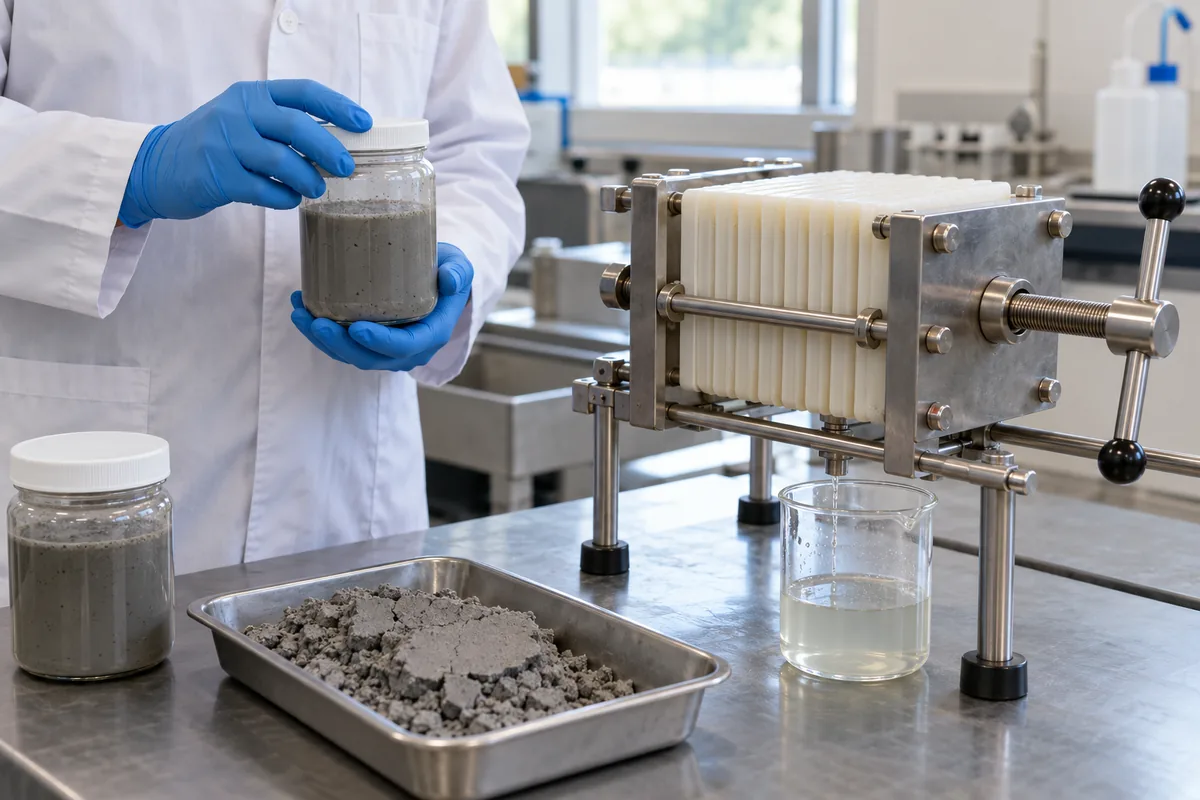
- Test representative samples and request the method, results, cycle stages, and limitations. Micronics offers slurry analysis and bench-scale testing to support equipment selection. If you are planning tests in-house, review the laboratory filter press options against the conditions you need to reproduce.
- Confirm the equipment, installation responsibilities, utilities, training, warranty terms, and exclusions.
- Request an operating estimate covering active labor, consumables, spare parts, utilities, and planned maintenance.
- Put commissioning and performance acceptance conditions in writing.
Keep a base case and a conservative case in your budget. If the purchase only pays off at the driest expected cake and maximum production volume, reconsider the specification or when to invest.
Decide With Your Own Operating Numbers
A filter press can be affordable when the test results and a complete installed quote hold up against your expected savings. Start with your disposal invoices and slurry data, then ask suppliers to quote the same job.
Check when the money is due as carefully as when you’ll earn it back. Deposits, installation, and startup costs arrive before a full year’s savings. Even a project that makes sense over its working life needs a payment plan you can manage.
With the installed cost, tested cake dryness, and annual net savings in hand, you can answer for your own operation: is a filter press affordable?