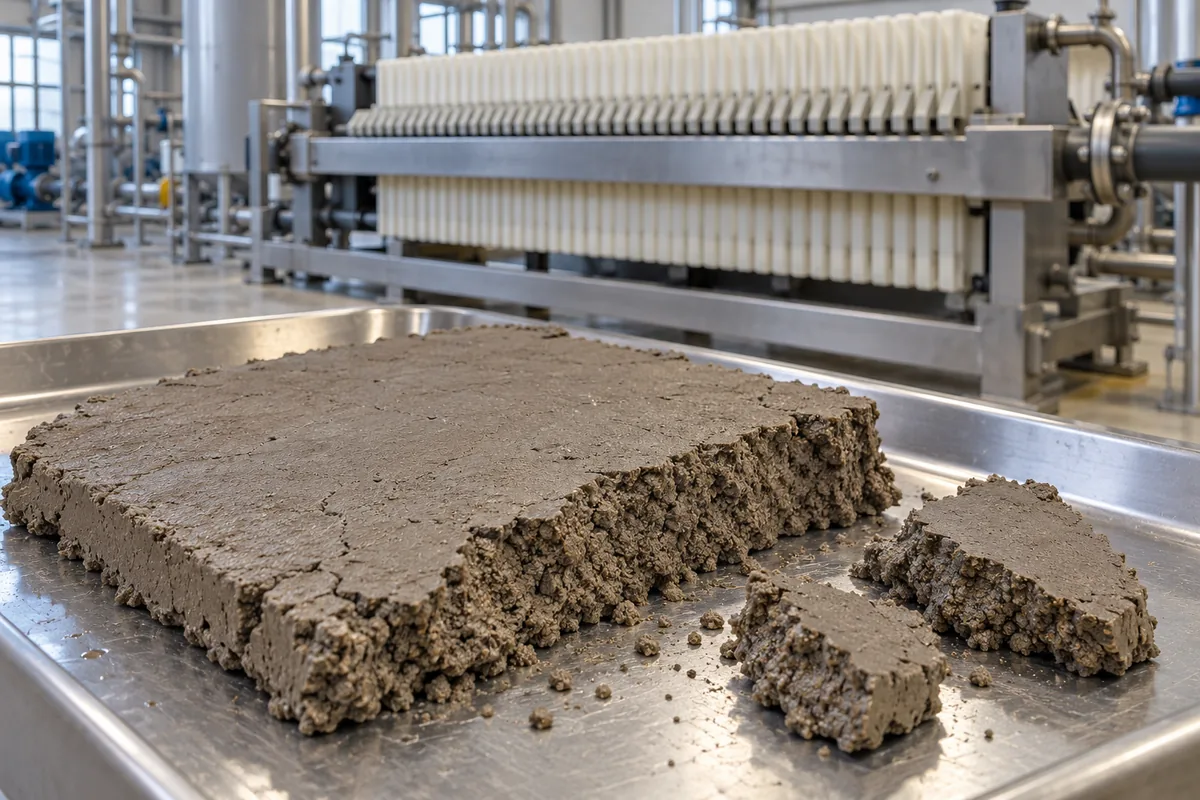
A filter press is used to separate suspended solids from liquids, producing a concentrated solid cake and a liquid called filtrate. The practical answer to what is a filter press used for includes dewatering sludge, recovering valuable materials, clarifying products, and preparing process water for possible reuse or further treatment.
| Application | Typical feed | Main purpose | Key consideration |
|---|---|---|---|
| Wastewater treatment | Municipal or industrial sludge | Reduce the water carried with waste solids | Filtrate and cake still need appropriate treatment or disposal |
| Mining and minerals | Concentrate or tailings slurry | Recover minerals and separate process water | Performance depends on particle size and slurry properties |
| Chemical production | Crystals, precipitates, pigments, or catalysts in liquid | Recover solids, clarify liquids, or wash cake | Materials must suit the chemistry and temperature |
| Food and beverages | Product suspensions, wine lees, or oil-processing streams | Recover product or remove unwanted solids | Food-contact suitability and hygiene need verification |
| Industrial cleaning | Wash water containing suspended particles | Separate solids before reuse or further treatment | Dissolved detergents and contaminants may remain |
| Stone and construction | Cutting slurry or concrete washout sludge | Collect fines and recover water | Water chemistry can limit reuse |
First, decide what you want to keep. A wastewater plant may send the cake for disposal; a chemical plant may collect it as a product. That choice affects the equipment, the tests you run, and what counts as a good result.
How Does a Filter Press Work?
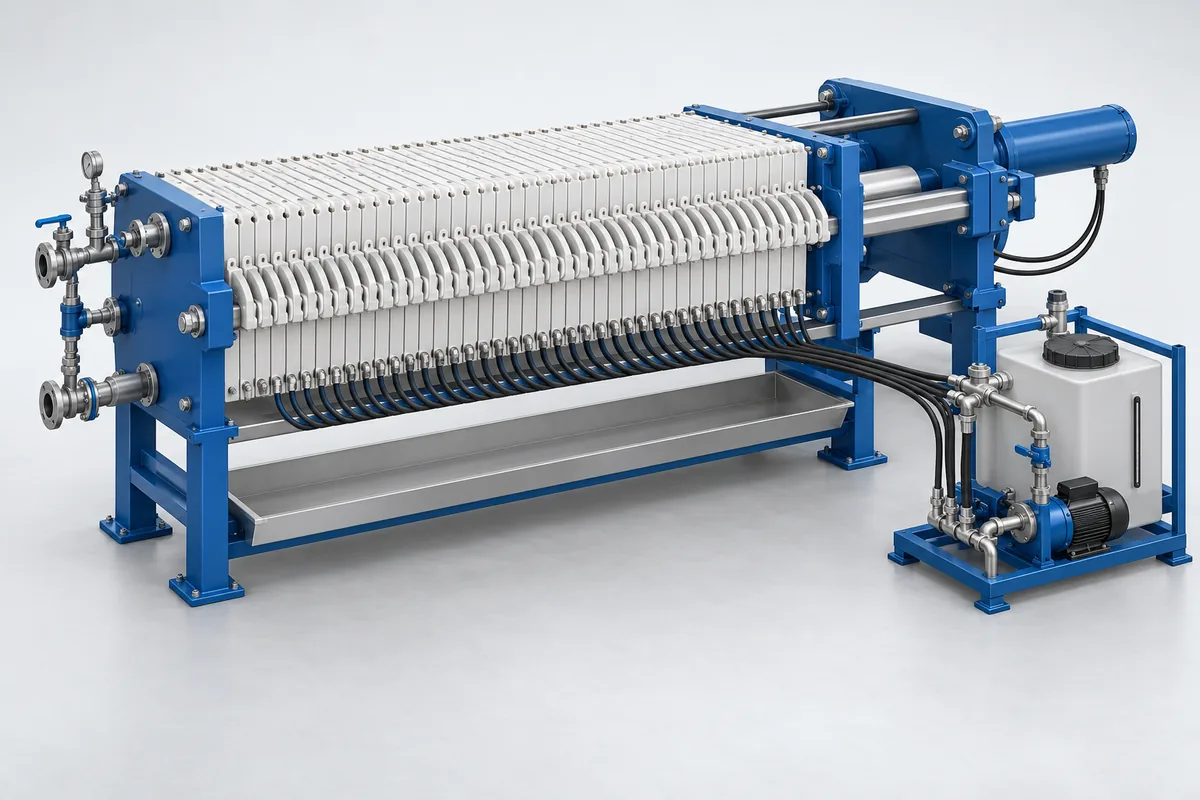
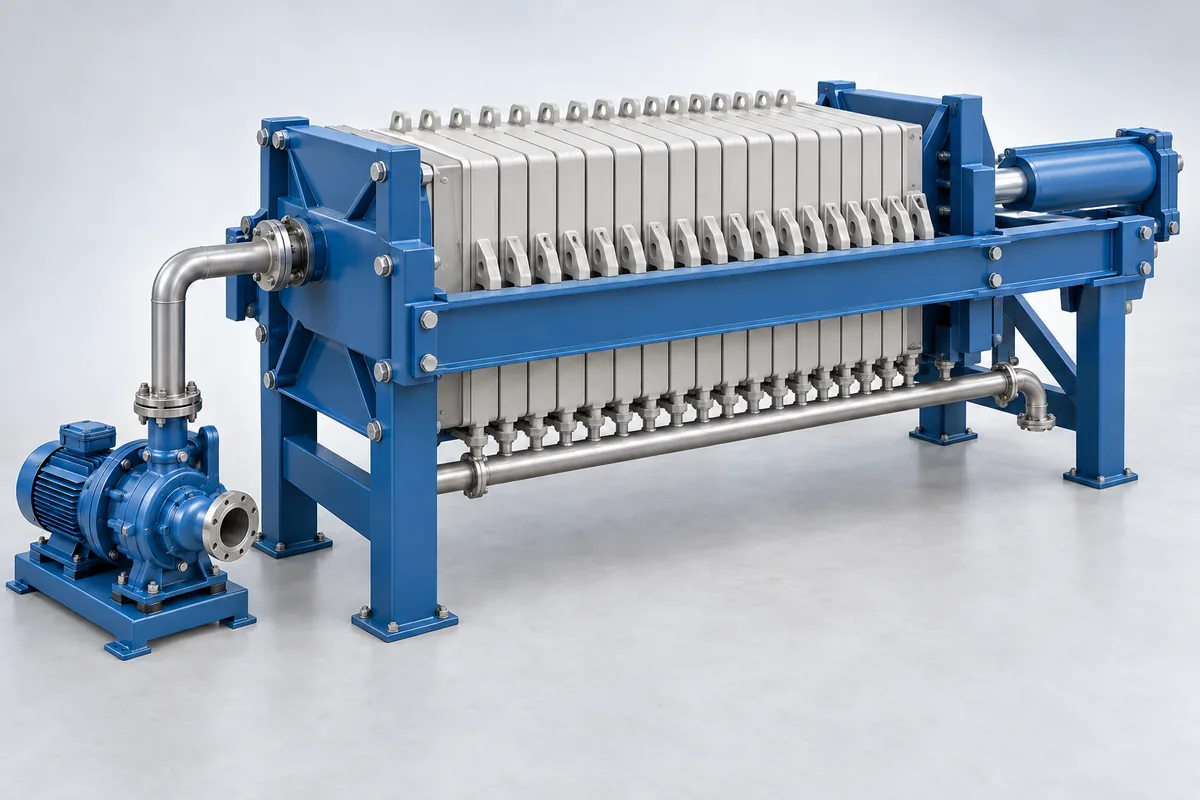
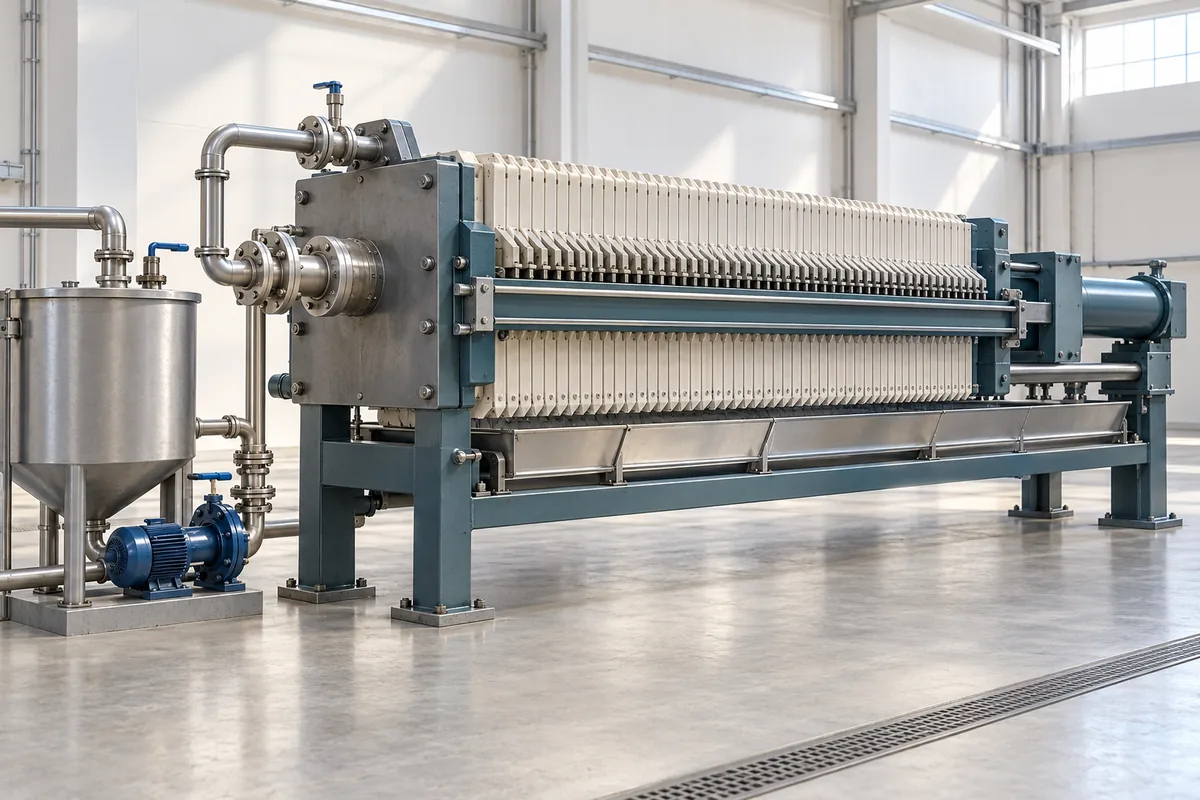
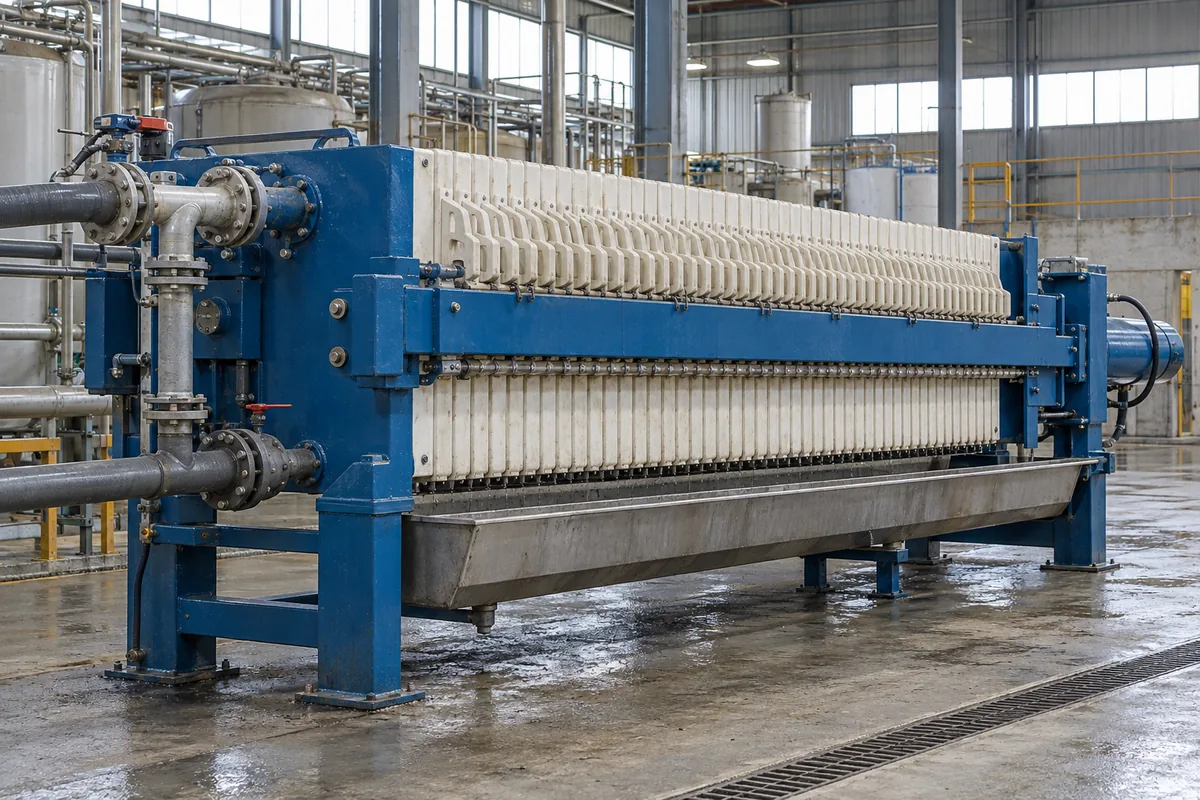
A filter press pumps slurry into enclosed chambers lined with filter cloth. Liquid passes through the cloth and the developing cake, while retained particles accumulate inside the chambers.
Slurry is simply a liquid carrying solid particles, such as mineral fines, treatment sludge, food residues, or crystals from a manufacturing process.
A typical cycle has five stages:
- Close and clamp the plates. A closing system holds the plate pack together so it can withstand the specified operating pressure.
- Pump in the slurry. The feed pump supplies the pressure that moves liquid through the filtering surfaces.
- Build the cake. Retained solids form a layer that adds resistance and can help capture finer particles.
- Finish the separation. Depending on the equipment and process, this may include membrane squeezing, cake washing, or an air blow.
- Depressurize and discharge. Once the approved sequence is complete and pressure is released, the plates open and the cake is removed.
The hydraulic closing system keeps the plate pack closed. The slurry feed pump supplies the pressure that drives filtration.
Most chamber filter presses operate in batches, even when automated systems run repeated cycles around the clock. Filling, filtering, discharging, and cleaning all affect daily output.
These stages and the optional systems used for washing and further dewatering. Not every application needs every stage.
Filter Press Applications in Industrial Processing
Industrial filter presses remove water from waste solids, recover solid products, or separate a liquid from suspended particles. Choose the configuration around the output you need.
Wastewater Treatment: Make Sludge Easier to Handle
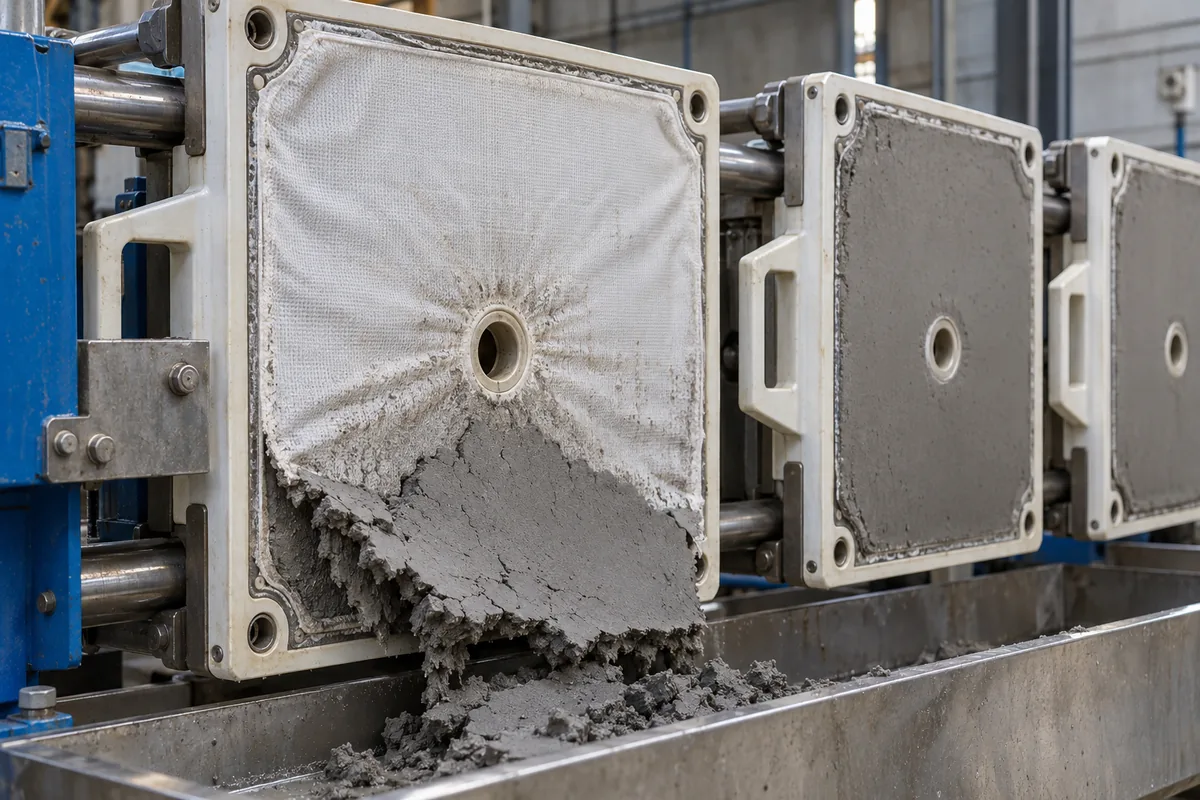
A filter press dewaters sludge to make the separated solids easier to handle and transport. It can process suitably conditioned municipal sludge or industrial treatment residues.
In a metal-finishing plant, for example, chemical precipitation converts certain dissolved metals into insoluble particles. The resulting sludge can then be concentrated and fed to a press.
A conventional filter cloth does not reliably capture metal ions that remain dissolved in water. Upstream chemical treatment creates particles that the press can separate.
The filtrate may return to the treatment system or qualify for a specific reuse after testing. It is not automatically ready for a drain just because it looks clear. For example, the U.S. EPA’s metal-finishing effluent guidelines describe discharge requirements implemented through permits and other controls.
The cake retains its relevant chemical hazards, too. Dewatering does not change hazardous sludge into ordinary waste.
Mining and Mineral Processing: Recover Solids and Water
Mining operations use filter presses to dewater mineral concentrates and tailings. Concentrate filtration prepares valuable solids for downstream handling, while tailings filtration separates water from the remaining mineral waste.
Both concentrate dewatering and filtered tailings management are established applications.
For a copper concentrate, moisture can affect transport and the requirements of the next processing stage. For tailings, filtration can support an engineered storage approach and make separated water available for treatment or reuse.
Fine clay-rich tailings can behave very differently from a coarse mineral concentrate, so test the material before assuming either result. Filtered tailings still need site-specific geotechnical design, drainage, and water management.
Chemical Manufacturing: Recover and Wash Products
Chemical manufacturers use filter presses to collect crystals, pigments, precipitates, and solid catalysts, or to clarify the liquid surrounding them. In some processes, cake washing removes soluble residues from the retained solids.
Suppose a pigment slurry contains the desired pigment particles and unwanted dissolved salts. Filtration collects the pigment. A suitable washing step can then displace liquid containing those salts.
Washing removes residual impurities from the cake. Dewatering reduces the liquid it retains; making a cake drier does not necessarily make it purer.
The plate materials, cloth, seals, and piping must suit the process chemistry and temperature. Solvent-containing streams may also require containment and equipment designed for the relevant fire and explosion hazards.
Pharmaceuticals: Separate Suitable Process Solids
A suitably designed filter press can separate crystals or other solids in pharmaceutical and intermediate production. Its suitability depends on product-contact materials, containment, cleaning, and the required process validation.
Particle capture alone does not establish suitability for a pharmaceutical process. Set requirements for product purity, cross-contamination control, and cleaning verification before choosing the equipment, then confirm how each will be demonstrated.
What Is a Filter Press Used for in Food?
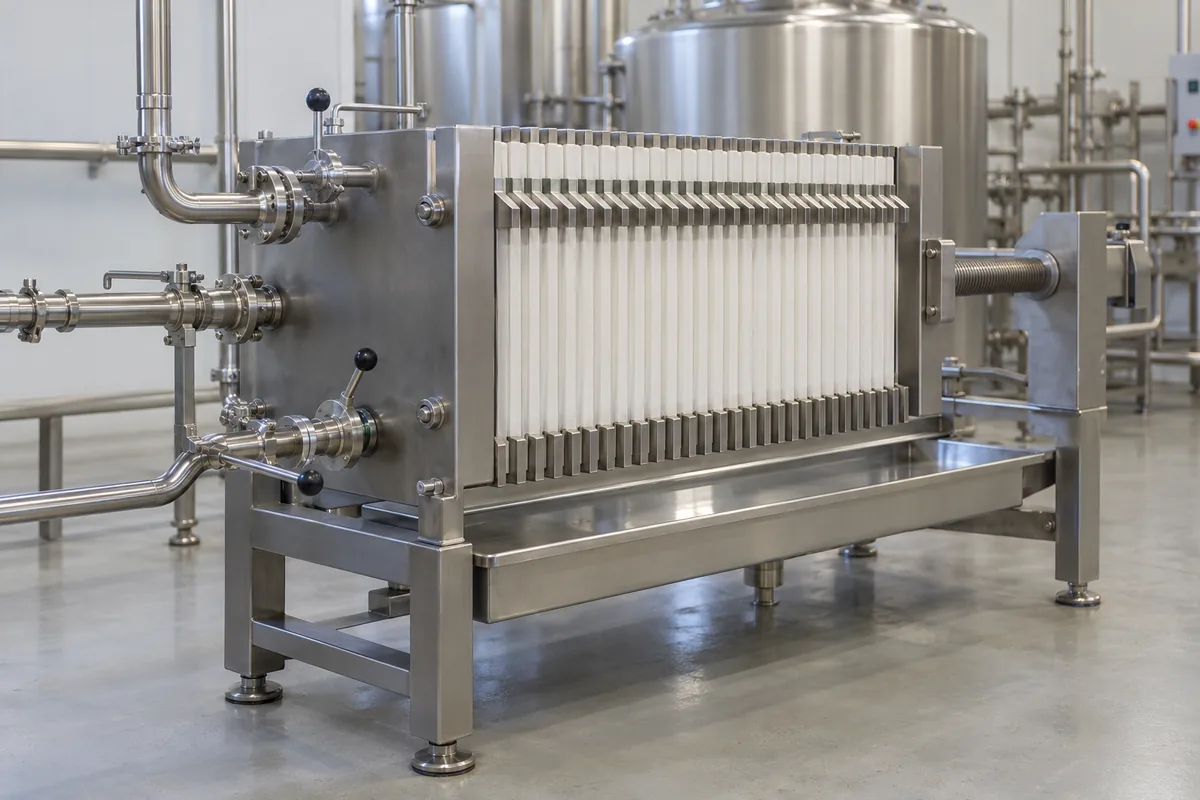
In food processing, a filter press separates unwanted solids from liquid products or recovers valuable solids and liquid trapped in a suspension. Applications can include wine lees processing, certain edible-oil operations, and filtration of protein or yeast suspensions.
These uses including the need for suitable product-contact materials and application-specific equipment.
The product you want to recover determines the duty:
- Wine lees filtration recovers liquid from the sediment left during winemaking. The recovered fraction still needs to meet the winery’s quality requirements.
- In suitable edible-oil refining processes, filtration separates suspended solids or spent processing aids from the oil.
- Ingredient-processing systems can separate protein, yeast, or other ingredient solids from a liquid stream when the equipment suits that material.
Food factories also use filter presses for wastewater sludge. That is a different duty from filtering a food product, with different hygiene and material requirements.
A Published Example: Recovering Edible Oil
A refinery in the Netherlands used laboratory testing and customized filter presses to address poor oil recovery from older manual equipment. Selecting equipment for both high-temperature purification and low-temperature winterisation, a step used to separate components that crystallize on cooling.
The manufacturer reports using two membrane presses and carefully dosed filtration aids to meet the customer’s requirements. The public account does not give a recovery percentage, so it cannot support a numerical savings claim.
When evaluating a similar duty, test the actual oils at their operating temperatures before choosing a press.
What Matters Most in a Food Application?
For food and beverage filtration, check food-contact suitability and cleanability alongside product quality and separation performance. The press must fit the food safety controls used for that process.
Check the cloth, plates, seals, and any filter aids. Confirm that the cleaning method is compatible with those materials and can remove the residues your process creates.
A thick liquid can filter slowly. Changing its temperature can affect both filtration and product quality, so assess both.
Clarification does not establish microbiological safety. A clearer beverage or oil has not automatically been sterilized, pasteurized, or made safe for consumption. Any microbial control claim needs a separately validated process.
What Is a Filter Press Used for Cleaning?
A filter press separates suspended solids from wash water or treatment sludge produced during cleaning. It treats the collected liquid; it does not scrub equipment or floors, and dissolved contaminants can remain in the filtrate.
Typical examples include:
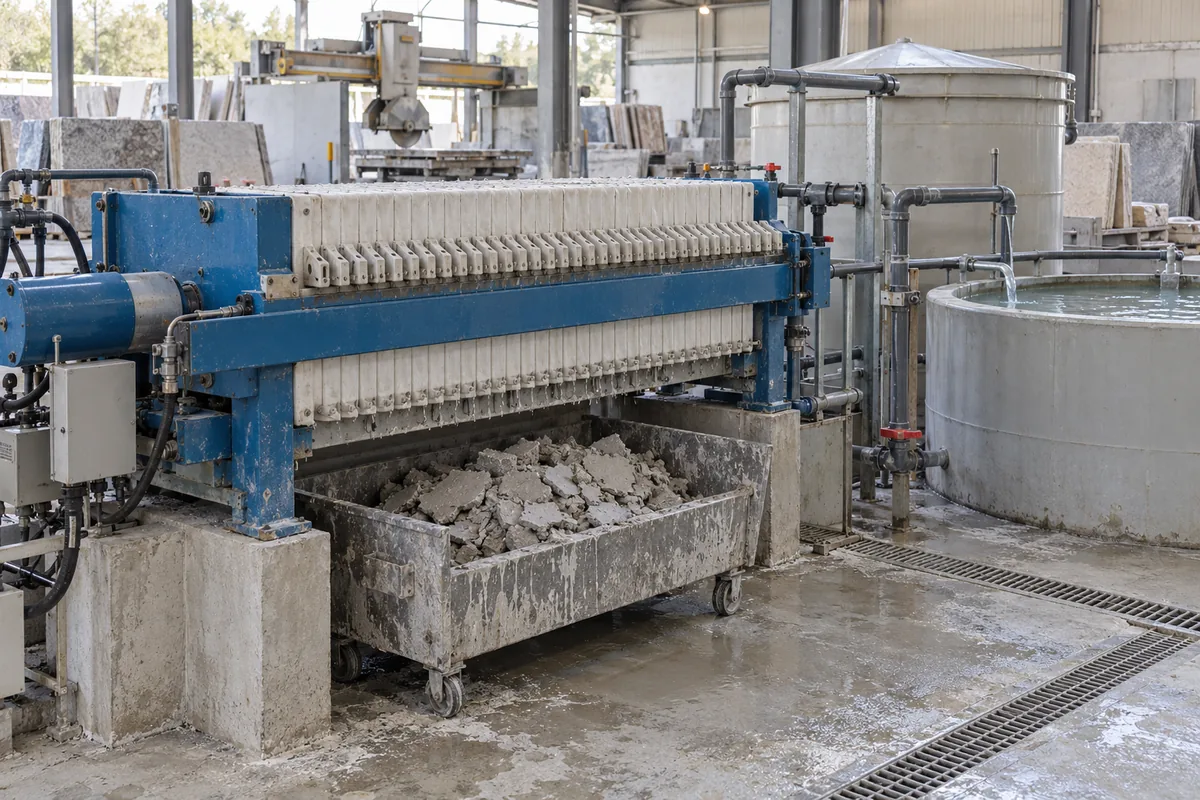
- Stone-cutting and polishing water containing mineral fines.
- Concrete washout sludge containing cementitious particles.
- Metal-finishing wastewater containing precipitated treatment solids.
- Industrial wash water with a separable suspended-solids fraction.
A stone workshop can collect water from its cutting machines and use a press to separate the suspended stone material. The cake is easier to collect, and the water may be suitable for reuse if its remaining contaminants meet the equipment’s water requirements.
Concrete washout can have a high pH. Removing its solid particles does not necessarily correct the liquid’s alkalinity.
Dissolved salts, detergents, and stable oil emulsions may need other treatment. Check what is in the water before specifying the process.
Is Cleaning the Filter Press the Same Thing?
Cleaning the press is maintenance: removing deposits from cloths, plates, and passages so filtration remains effective. It is separate from using the press to treat cleaning wastewater.
Cloth blinding happens when deposits block the available flow paths. You may notice longer cycles, wetter cakes, or poorer cake release.
The cleaning methods depend on cloth material and the deposited substances. Follow the equipment supplier’s procedure for chemical compatibility, isolation, depressurization, and washing conditions.
Stronger chemicals or excessive washing pressure can damage the cloth. Stay within the supplier’s cleaning procedure.
How Much Waste Can a Filter Press Reduce?
A filter press can reduce the wet mass that needs handling by removing liquid from retained solids. The actual reduction depends on the feed’s solids concentration and the cake dryness achieved in testing.
Consider this hypothetical mass balance. These are assumed conditions, not measured results or a performance guarantee.
Assume you start with 1,000 kilograms of slurry containing 5% dry solids by mass. That means 50 kilograms of dry solids and 950 kilograms of water.
If filtration retains all 50 kilograms of solids and produces a cake containing 30% dry solids:
- Cake mass = 50 ÷ 0.30 = approximately 167 kilograms.
- Water remaining in the cake = approximately 117 kilograms.
- Separated water = approximately 833 kilograms.
- Wet mass remaining for cake handling is approximately 83% lower than the original slurry mass.
All 50 kilograms of dry solids remain in the cake; most of the surrounding water has moved into the filtrate.
This simplified example ignores added chemicals, washing liquid, and solids lost in the filtrate. It also describes mass reduction, not an identical percentage reduction in volume.
Lower wet mass can reduce hauling costs, but total savings depend on disposal charges, labor, power, consumables, maintenance, and the cost of treating the filtrate.
Which Type of Filter Press Fits the Job?
Recessed chamber, membrane, and plate-and-frame presses use different chamber arrangements to meet different separation needs. Automation describes how a machine operates and can be added to several press designs.
- A recessed chamber press holds the cake in spaces formed by recesses in adjacent plates. It is widely used for sludge and process-slurry dewatering.
- A membrane press uses flexible membranes to squeeze the cake after initial filtration. Depending on the slurry, this can improve cake dryness or shorten the overall cycle.
- A plate-and-frame press uses separate frames to provide cake space between the plates. This arrangement can suit particular media, clarification, and cake-washing requirements.
An automatic press may include plate shifting, cake-discharge assistance, and cloth washing. Those features can reduce manual handling, but they do not eliminate inspections or maintenance.
Compare tested performance on your material before choosing a design. The membrane vs. chamber filter press guide explains what changes when a squeeze stage is added.
How to Choose a Filter Press for Your Application
Choose a filter press by testing representative slurry against specific requirements for throughput, cake moisture, filtrate quality, and product recovery. A generic capacity figure cannot tell you how your material will behave.
The factors such as feed solids, cake moisture, cycle time, cloth selection, and whether conditioning or membrane squeezing is needed.
1. Define the Output You Need
Specify what success means for both the cake and the filtrate. Examples include a maximum cake moisture content, an acceptable suspended-solids concentration, or a product-purity requirement.
Also identify where each stream goes next. Water for an industrial rinse has different requirements from water used as a food ingredient.
2. Test Representative Feed Conditions
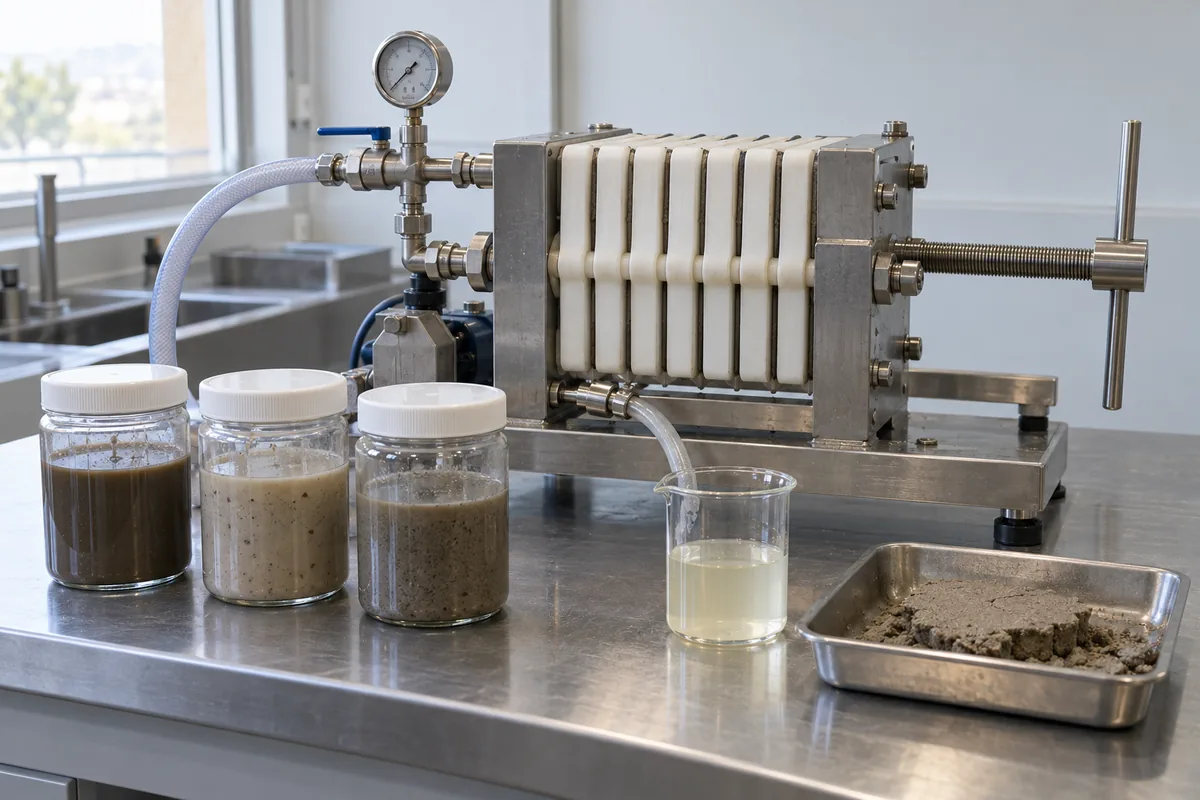
Use samples that reflect normal operation and realistic variations in solids concentration, particle size, chemistry, and temperature. A sample taken on a quiet day may miss the feed that causes the longest cycles. A suitable laboratory filter press can help compare media and observe cake formation before production equipment is selected.
Ask the laboratory to document the test conditions. A result obtained with added conditioning chemicals should not be presented as performance on untreated slurry.
3. Measure the Complete Cycle
When choosing filter press size, calculate throughput across the complete cycle: filling, filtration, any washing or squeezing, cake discharge, and required cleaning. Counting filtration time alone overstates what a press can process in a shift.
Include the time operators need to handle difficult cake release. A dry cake that sticks to every cloth can still slow production.
4. Compare Total Operating Cost
Compare purchase cost alongside labor, utilities, chemicals, replacement cloths, maintenance, and disposal. Check what happens to the budget when feed conditions change.
Give suppliers the same feed data and operating schedule, and ask them to spell out their assumptions. You can then compare competing proposals on the same basis.
When Is a Filter Press the Wrong Choice?
A filter press may be a poor fit when the main contaminants are dissolved, the solids form a very difficult cake, or the plant needs a different operating pattern. Another separation method, or a combination of methods, may work better.
For example, a very dilute stream may benefit from upstream thickening. Sticky or highly compressible solids may need conditioning, a different cloth, thinner cakes, or another technology.
A centrifuge or belt press may deserve consideration where continuous processing is especially important. Compare the options using actual feed tests and the same output requirements.
A press removes liquid mechanically rather than by thermal drying. The discharged cake normally retains moisture, even when it looks solid and holds its shape.
Put the Application Before the Equipment
A filter press can make solids easier to handle, recover product, and reduce the water carried with waste. Whether it earns its place in your process depends on the results it achieves with your feed.
Specify what you need from the cake and the filtrate, then test representative material through a complete cycle. Those results help you choose equipment and give a practical answer to what is a filter press used for.