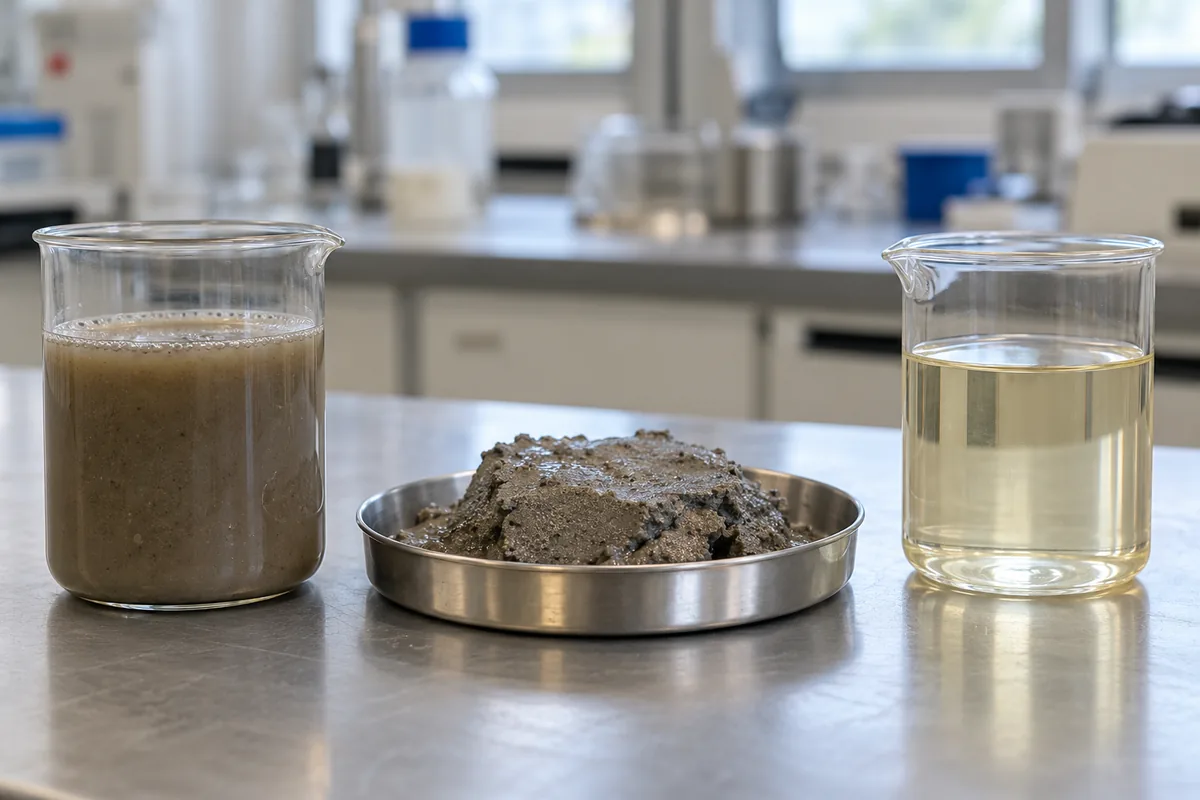
Mobile filter press is a portable dewatering system that uses pressure and filter cloths to separate slurry into solid filter cake and liquid filtrate, with the equipment mounted on a trailer, truck platform, or movable skid.
| Item | What you need to know |
|---|---|
| Main purpose | Separate suspended solids from liquid close to where the slurry is generated. |
| Operating method | Batch pressure filtration through cloth-lined plate chambers. |
| Outputs | Dewatered filter cake and filtrate that may require further treatment. |
| Transport options | Trailer, truck platform, or skid; some larger systems use transportable modules. |
| Typical uses | Temporary wastewater treatment, industrial cleanouts, and suitable mining or oilfield slurries. |
| Site requirements | Suitable access and support, feed and discharge connections, and the utilities specified for the unit. |
| Performance | Depends on slurry properties, conditioning, press configuration, and complete cycle time. |
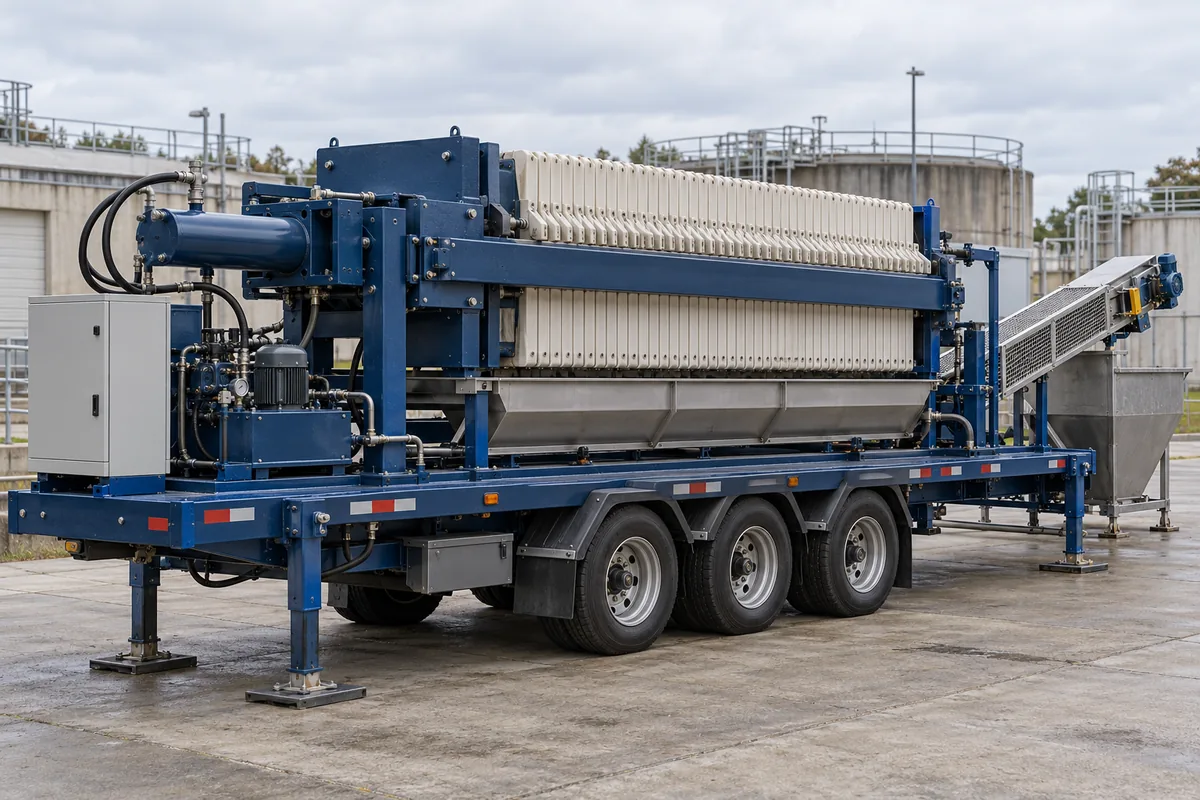
Suppose your plant’s permanent dewatering equipment needs repairs, but sludge keeps arriving. A mobile unit can cover the work if its capacity, materials, and connections suit the job.
Contractors moving between sites face a similar problem. Bringing the press to the slurry lets them separate the liquid and collect the cake where the work happens.
How does a mobile filter press work?
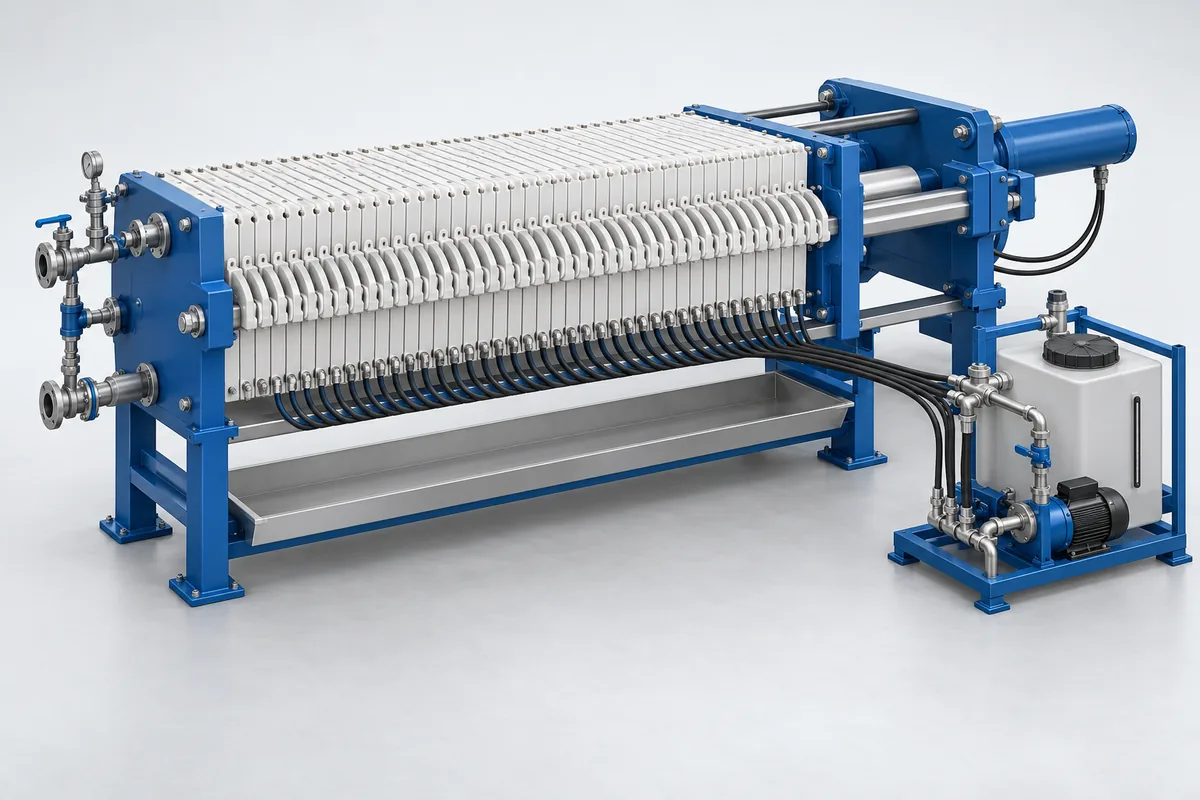
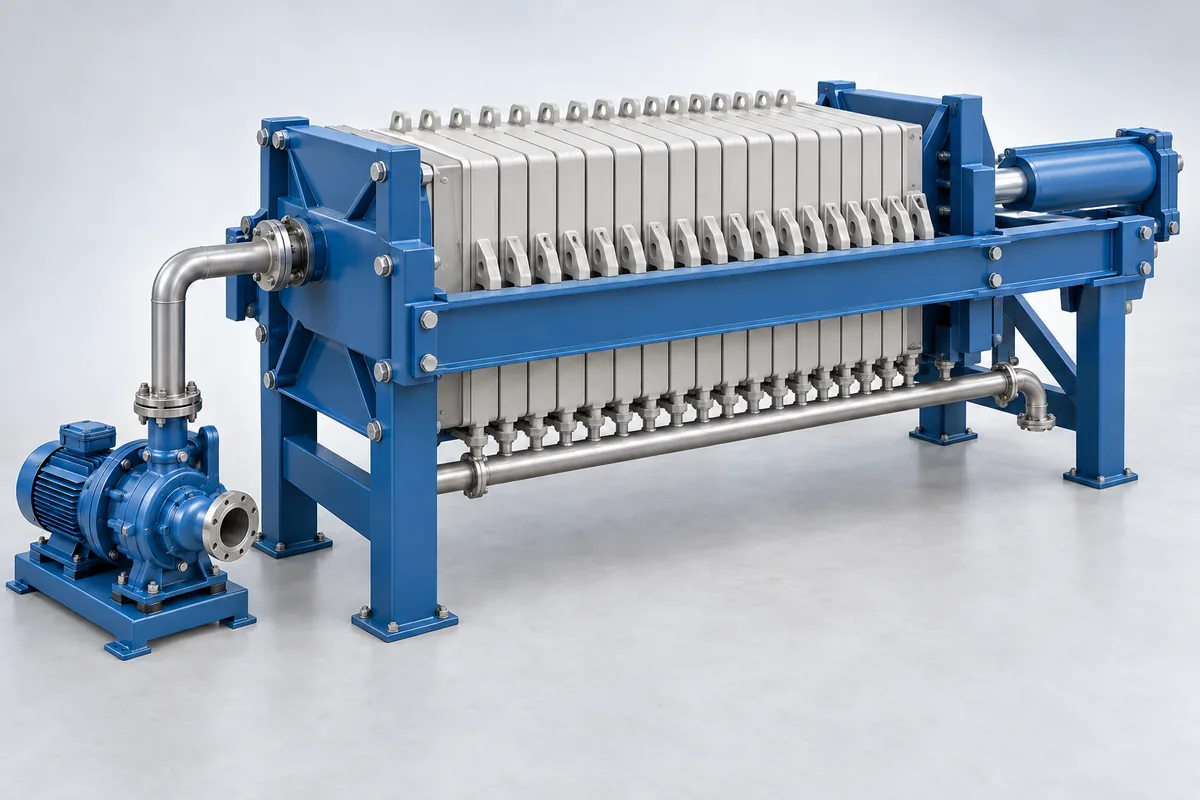
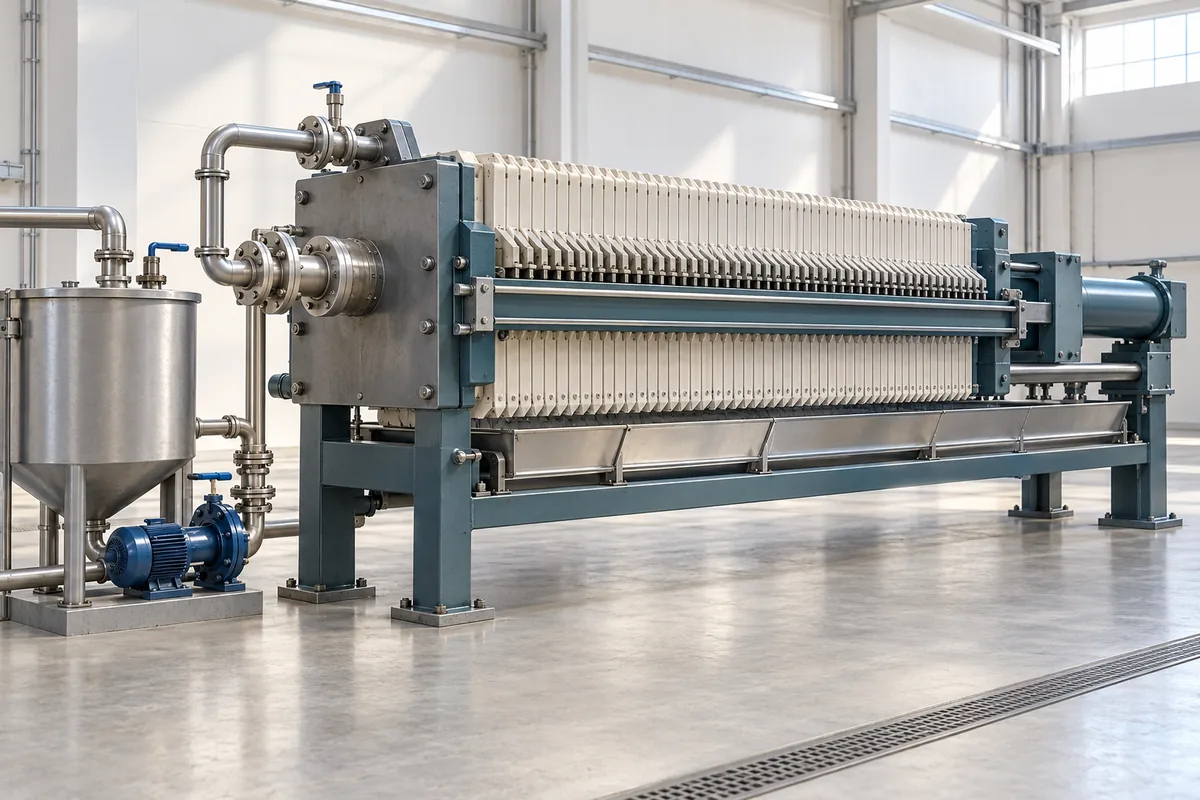
A mobile filter press pumps slurry into closed chambers, forces liquid through filter cloths, and holds the solids until the chambers are ready to empty. It uses the same filtration principles as a stationary plate press; the mounting arrangement makes relocation possible.
Micronics explains pressure filtration as pumping slurry into a press and dewatering it under pressure. The core components are the frame, plates, cloths, and piping manifold.
1. Prepare the slurry
The slurry may need screening, mixing, or chemical conditioning before it enters the press. What it needs depends on the solids, liquid chemistry, and treatment goal.
A polymer, for example, can help fine particles form larger clusters that are easier to separate. Other applications call for different conditioners or filter aids. Test a representative sludge sample to find out whether those additions help and how much to use.
2. Close the plates and pump in the feed
The closing mechanism clamps the plates together, then the feed pump moves slurry into the chambers between them. Filter cloths cover the filtration surfaces inside those chambers.
Clamping pressure and filtration pressure have different jobs. The hydraulic closing system holds the plate pack shut. The feed pump supplies the pressure that drives liquid through the cloth and the cake as it forms.
3. Build the filter cake
Solids collect in the chambers while filtrate leaves through drainage passages. As the cake thickens, resistance to liquid flow generally increases.
The operating settings determine when filtration ends, using pressure, flow, and time. A cycle time in a brochure won’t tell you how your sludge will behave.
4. Apply an optional membrane squeeze
A membrane filter press uses flexible plate surfaces to squeeze the cake after initial filtration. A conventional recessed-chamber filter press does not include that additional stage.
Micronics describes membrane plates as having inflatable drainage surfaces that press against the cake. Depending on the slurry and operating conditions, the extra squeeze can reduce moisture or shorten the overall cycle.
5. Discharge the cake and reset
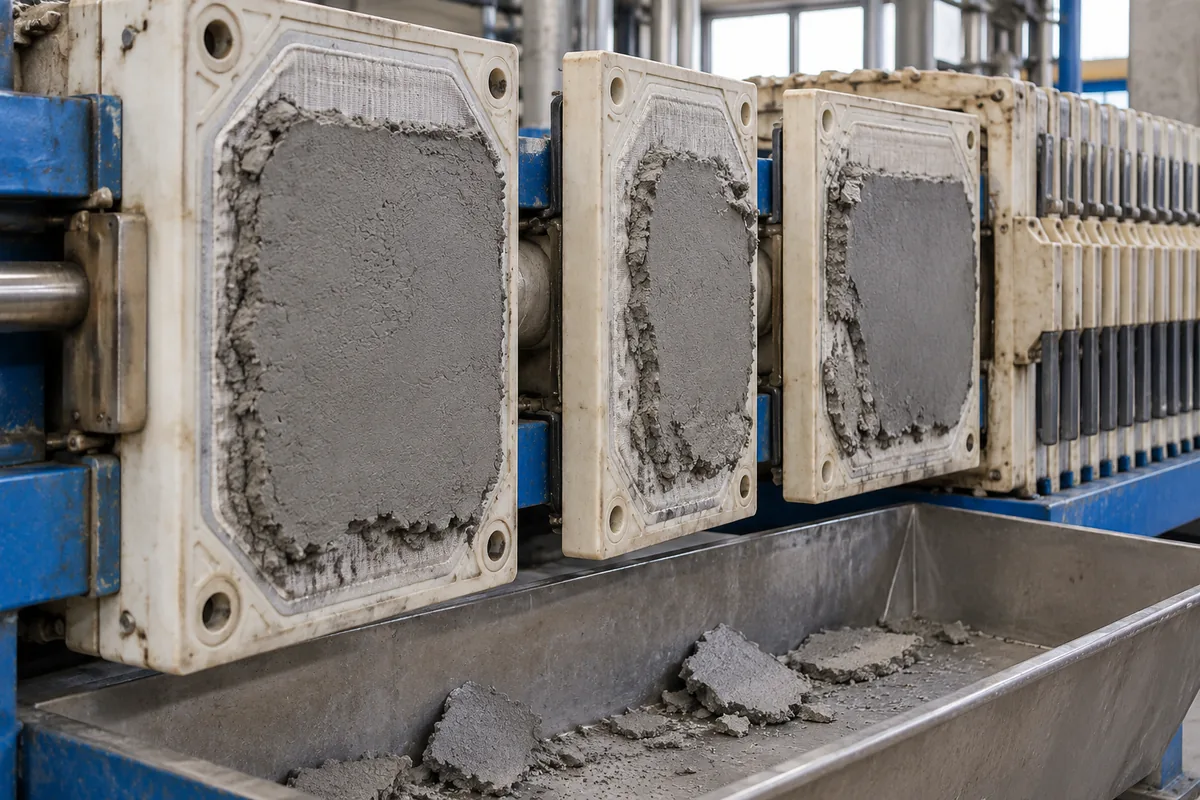
After the specified shutdown and depressurization sequence, the press opens and the plates separate so the cake can fall into a collection system. Operators inspect or clean the cloths as needed before starting another batch.
The cake may drop into a chute, bin, or conveyor. Automatic plate shifting reduces some manual work, though operators still need to monitor the process and maintain the machine.
What makes a filter press mobile?
A mobile filter press has a transportable mounting system and a layout designed for relocation. How easily it moves depends on everything connected to it, including tanks, pumps, utilities, and cake handling equipment.
The main arrangements are:
- A trailer-mounted filter press travels between sites on a suitable trailer. Check road dimensions, transport weight, site access, and towing requirements.
- A skid-mounted filter press sits on a frame that suitable lifting equipment can relocate. The skid itself is not a road trailer.
- A containerized or modular system combines the press with other treatment equipment in transportable modules. Reassembly and connections may take more work.
Manufacturers use “mobile,” “portable,” and “semi-mobile” differently. Ask for both a transport drawing and an operating layout. You need to know what arrives together and what requires separate handling.
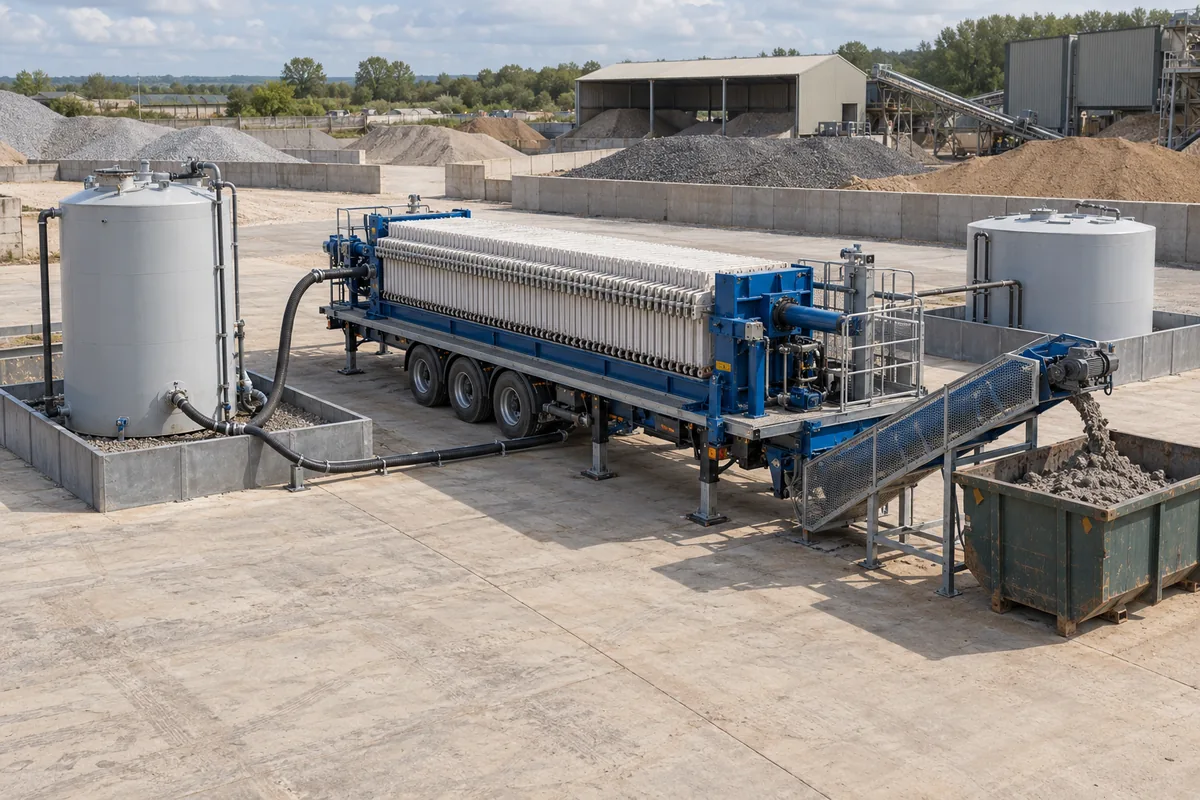
Check what “self-contained” includes, too. The pump, controls, and conveyor may be integrated while the unit still needs site electricity, compressed air, wash water, or external tanks.
For example, M.W. Watermark lists adjustable levelers, a cake chute, an extendable conveyor, a control panel, and a wash-down deck on its trailer-mounted presses. Those are features of the units it describes. Check the scope of supply for any other machine you’re considering.
Where are mobile filter presses used?
Mobile filter presses suit temporary, seasonal, or changing locations where a compatible slurry needs solid-liquid separation. They can also add dewatering capacity at a permanent installation for a defined period.
In municipal wastewater treatment, a temporary press can cover equipment maintenance or a sludge-processing campaign. The U.S. EPA’s recessed-plate filter press overview describes the purpose: removing water from wastewater residuals to produce a non-liquid cake.
Industrial plants may need mobile equipment during tank cleanouts or process changes. For wastewater and sludge dewatering, the sludge source and its response to conditioning help determine whether a press will suit the job. Sharing a unit across facilities can make sense when their schedules allow it and the equipment is compatible with each feed.
Mining and mineral processing projects may use portable filtration to dewater mineral slurries and recover process water. Abrasive particles, changing solids concentrations, and cake handling requirements affect the equipment choice.
Oil and gas projects can use mobile systems for suitable sludge and suspended solids. A filter press won’t remove dissolved salts simply by passing water through cloth, however. Produced-water treatment may require several additional processes.
Ask yourself where the capacity is needed. If demand stays high and predictable at one location, a stationary installation deserves consideration.
What benefits can you realistically expect?
A mobile press lets you treat slurry near its source, move the equipment as work changes, and remove water from material that will leave as cake. Whether that saves money depends on transport costs, disposal arrangements, and actual filtration results.
Reduce the wet mass that needs hauling
Removing water can substantially reduce cake haulage compared with transporting untreated slurry. You still need somewhere suitable to send the separated filtrate.
Take this simplified example. The figures are assumptions for a calculation, not measured customer results:
- Starting slurry: 20 metric tonnes at 5% dry solids by mass.
- Dry solids in that slurry: 20 × 0.05 = 1 tonne.
- Assumed cake concentration after dewatering: 30% dry solids by mass.
- Resulting wet cake: 1 ÷ 0.30 = about 3.33 tonnes.
Under those assumptions, the mass leaving as cake is about 83% lower than the original slurry mass. Approximately 16.67 tonnes leave as separated liquid.
The calculation assumes all original dry solids enter the cake and no conditioning chemicals add mass. It doesn’t predict your achievable cake dryness or an 83% saving on the project. Truck payload limits, filtrate treatment, and disposal charges still affect the bill.
Cover temporary work without committing to permanent capacity
A mobile filter press rental can cover an outage or a cleanup project with a defined end date. It also gives you a chance to assess performance before buying equipment for recurring work.
Allow time for delivery, site setup, sampling, and commissioning. An available rental machine isn’t ready to process your sludge the moment you book it.
For a contractor serving several compatible sites, owning a press may spread its cost across multiple projects. Include relocation, cleaning between jobs, and scheduling in that calculation.
How do you choose the right mobile filter press?
Choose the system around your dry-solids load, tested filtration performance, and site constraints. Plate size or pump flow alone won’t tell you whether it can finish the work on schedule.
Calculate the solids load
Dry-solids load is the mass of solid material the press must capture during the operating period. Estimate it from feed volume, measured slurry density, and solids concentration by mass.
Suppose a project produces 40 cubic meters of slurry per day, with a density of 1,000 kilograms per cubic meter and 4% dry solids by mass. Its daily load is:
40 × 1,000 × 0.04 = 1,600 kilograms of dry solids per day.
Use measured values for your project; these numbers are illustrative. Tell the supplier how many operating hours are available as well.
The press must handle that load across complete cycles. Filling, filtration, optional squeezing, cake discharge, and cloth cleaning all take time. A feed pump’s maximum flow rate is not the press’s sustained daily capacity.
Our guide to choosing a filter press size explains how to turn a solids load into cake volume per cycle, then check filtration area and operating time.
Test the actual sludge
A filtration trial helps you choose cloths, conditioning, and cycle settings. Send representative samples that cover the feed variations you expect.
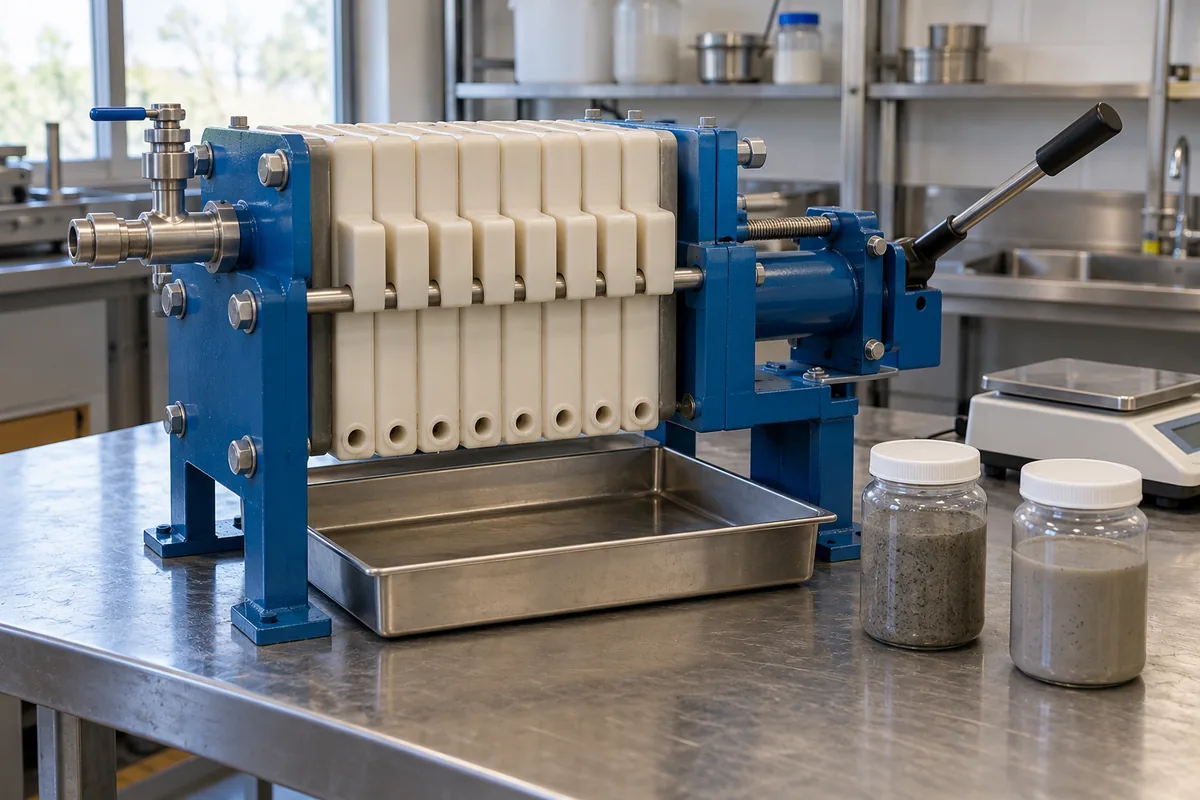
A laboratory filter press can help compare media and observe cake formation before you select production equipment. Agree on the test conditions and what the results need to establish.
Ask the supplier to report:
- Feed solids concentration and relevant chemistry.
- Conditioning chemicals and dosage, if needed.
- Achieved cake solids concentration.
- Filtrate quality and solids capture.
- Complete cycle time and expected daily throughput.
- Cake release behavior and cleaning requirements.
A dry cake won’t solve a capacity problem if each cycle takes too long to clear the day’s sludge. Good throughput also needs to come with filtrate quality that suits the next treatment stage.
Request the test conditions alongside every performance claim. You’ll have a much firmer basis for comparing proposals.
Check the whole site layout
The site must support the equipment during operation and leave room for deliveries, maintenance, and cake removal. Check the deployed footprint as well as the transport dimensions.
Confirm ground-bearing requirements and leveling arrangements with the supplier. Then review electrical supply, air demand, wash-water needs, hose routes, and feed storage.
Decide where filtrate and wash water will go. Allow for containment, truck access to the cake bin, and enough space to open or service the press.
Review guarding, emergency stops, safe access, and procedures for isolating stored hydraulic, pneumatic, and process pressure. OSHA’s guidance on hazardous energy explains why unexpected startup or the release of stored energy during servicing can injure workers. Operators need to follow the machine manual and the site’s applicable safety procedures.
Should you rent or buy a mobile filter press?
Renting generally suits short projects or uncertain demand. Buying deserves a closer look when you have recurring, compatible work and staff to run the equipment. Compare the options over the same workload and service scope.
The daily rental rate is only part of the bill. Ask for a written quotation covering:
- Delivery, collection, setup, and commissioning.
- Operator support and training.
- Electricity, fuel, compressed air, and water requirements.
- Chemicals, cloths, wear parts, and cleaning.
- Standby charges, minimum hire periods, and extension terms.
- Cake transport and disposal, plus filtrate treatment.
For ownership, add capital or financing cost, maintenance, storage, transport equipment, and idle periods. Check whether service support is available where you plan to work.
I’d compare proposals using total cost per tonne of dry solids treated, with the same required cake and filtrate quality. A low equipment price offers little comfort if the unit can’t finish the job.
Common questions about mobile filter presses
A mobile plate press works in batches, leaves moisture in the cake, and needs a plan for filtrate. Setup time and final performance depend on the machine and site.
Is the filter cake completely dry?
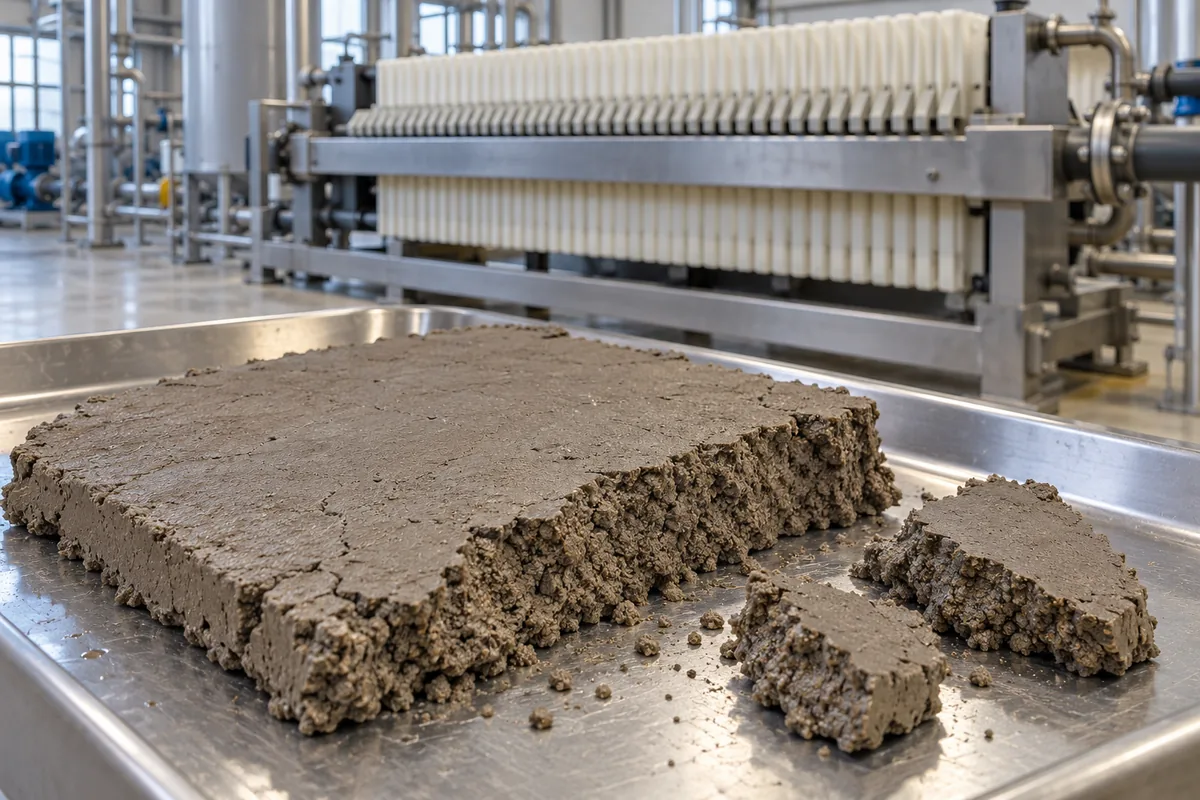
No. Filter cake retains moisture, and its final solids concentration depends on the slurry and process conditions. “Dewatered” means water has been removed; it doesn’t mean the material is moisture-free.
Ask for measured cake solids as a percentage by mass. “Dry-looking cake” tells you much less about performance or disposal weight.
Can the filtrate go straight to a drain?
Only if it meets the requirements for that discharge route and any necessary authorization is in place. Clear appearance alone doesn’t establish that.
Pressure filtration mainly separates suspended solids. Dissolved contaminants can remain, so the filtrate may need further treatment, controlled reuse, or a return route to the plant’s treatment process.
In the United States, EPA’s NPDES permit guidance distinguishes discharging pollutants from a point source into regulated waters from sending wastewater to a municipal sanitary sewer. The latter requires checking the municipality’s rules. Confirm the requirements for your actual discharge destination with the responsible authority.
Does a mobile plate filter press operate continuously?
A conventional chamber or membrane plate filter press operates in batches. It must open to discharge cake before starting another cycle.
Buffer tanks or multiple presses can help a treatment system accept an ongoing feed. Automatic controls don’t remove the batch cycle of an individual plate press.
How quickly can it start after delivery?
Startup depends on site readiness, equipment configuration, and commissioning requirements. There is no universal setup time you can safely build into a schedule.
Ask the supplier to confirm what must be ready before arrival, which connections its team will make, and what checks are needed before processing your slurry. Schedule the work on that basis.
Make the decision with a sludge test
Start with a representative filtration trial and a complete site plan. Together, they help establish achievable throughput, cake quality, utility demand, and the cost of handling both output streams.
What is a mobile filter press? It’s transportable pressure-filtration equipment that brings sludge dewatering to the job. Choose one when the test results and the value of relocation fit your project, then confirm the full operating scope before renting or buying.