To operate a filter press correctly, inspect and clamp the plate pack, feed the slurry, monitor filtration, complete the approved finishing stages, then release process pressure before opening and removing the cake. This guide to operate a filter press also covers cleaning and restart checks; use your machine’s manual and site procedure for pressure settings and valve positions.
In this guide, as a reliable filter press manufacturer, I will explain how to prepare and clamp the plate pack, start slurry feeding, monitor pressure and filtrate flow, confirm the filtration endpoint, complete approved washing or squeezing stages, depressurize before opening, discharge the cake, and clean the equipment.
And I will also cover symptom-based troubleshooting, batch records, pressure limits, cloth maintenance, and restart checks.
| Stage | Operator’s task | What to verify |
|---|---|---|
| 1. Inspect | Check plates, cloths, guards, utilities, and discharge equipment. | Equipment is serviceable and the work area is clear. |
| 2. Close and clamp | Close the correctly assembled plate pack. | The specified clamping condition is established. |
| 3. Feed | Start slurry delivery using the approved feed profile. | Feed pressure, flow, and filtrate discharge are normal. |
| 4. Filter | Monitor cake formation through operating measurements. | The validated cycle endpoint is reached. |
| 5. Finish, if equipped | Run the approved washing, squeezing, or air-blow sequence. | Each stage stays within its separate equipment limits. |
| 6. Depressurize | Stop and isolate relevant supplies; vent and drain as specified. | Process pressure is safely relieved before unclamping. |
| 7. Discharge | Open the press and release cakes using the designated controls. | People stay clear of moving plates and falling material. |
| 8. Clean and record | Remove residue, inspect components, and log results. | The next cycle starts with a clean, correctly assembled press. |
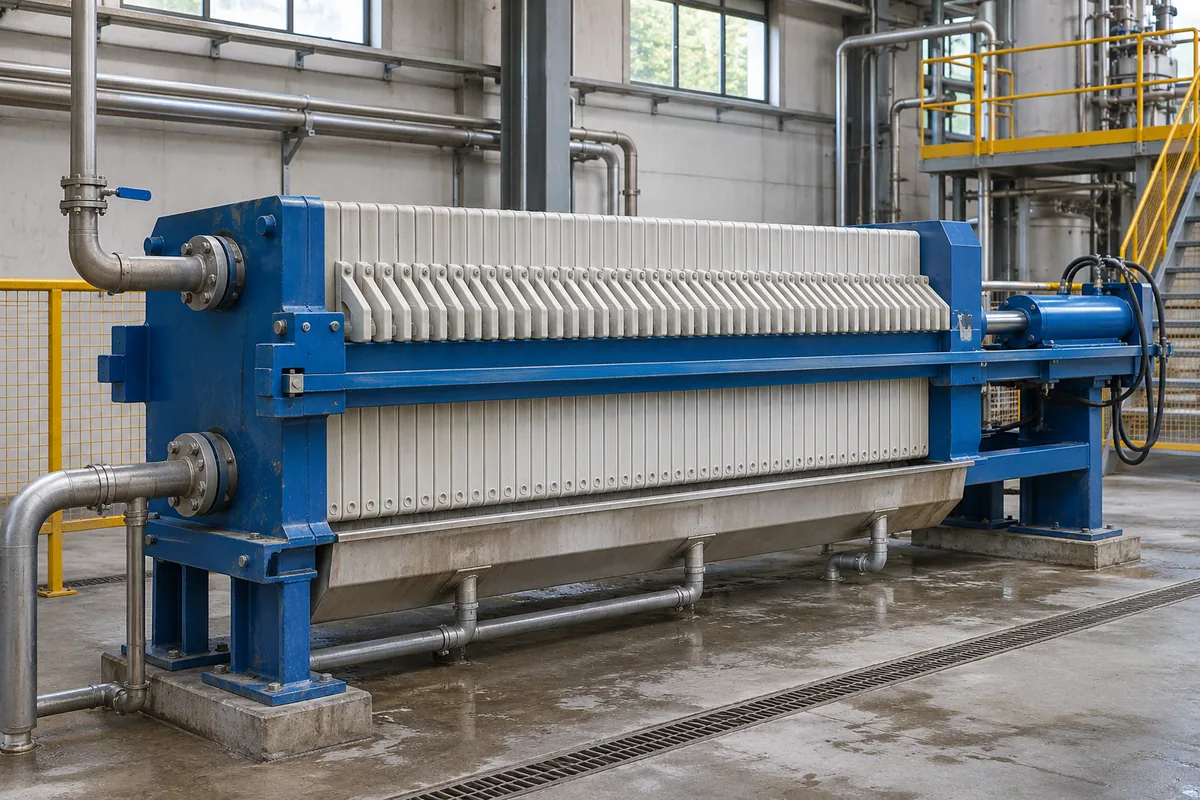
These steps apply to batch plate filter presses, including recessed chamber and membrane designs. Trained operators need the original equipment manufacturer’s instructions and an approved standard operating procedure (SOP) for their installation.
Understand What the Press Is Actually Doing
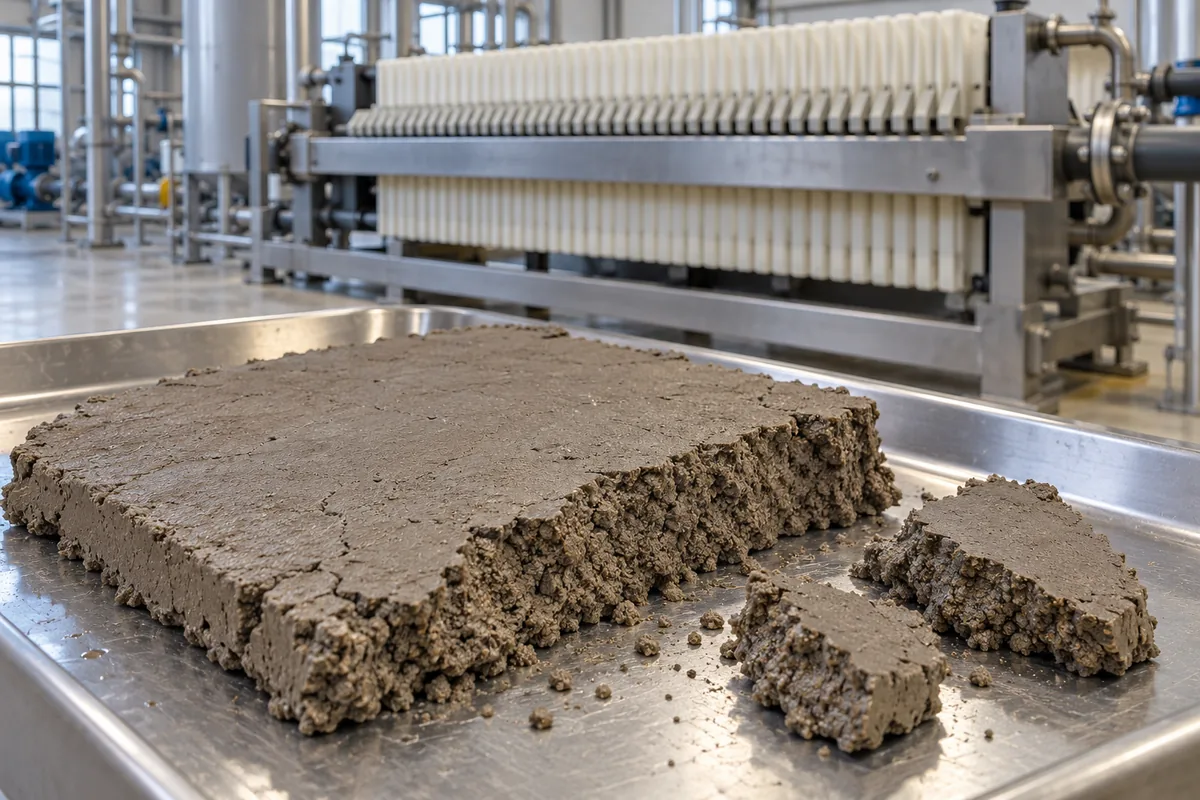
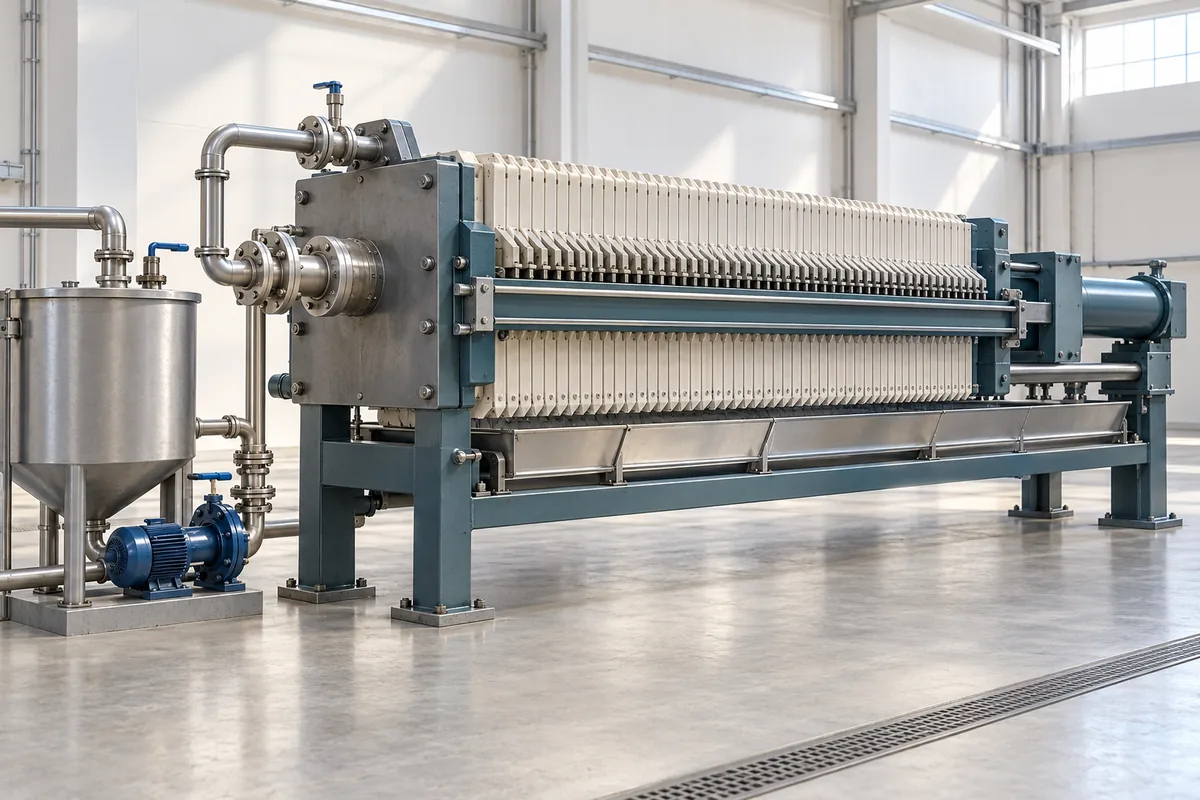
A filter press separates suspended solids from liquid by pumping slurry into closed, cloth-lined chambers. Liquid passes through the filter cloth and leaves as filtrate; the retained solids form a filter cake. The EPA’s recessed-plate filter press fact sheet describes this dewatering process for wastewater residuals.
In a conventional recessed chamber press, the hydraulic system holds the plates together. The slurry feed pump supplies the pressure that drives filtration.
Keep the clamping system at its specified setting. Raising hydraulic closing pressure is not a general remedy for wet cake.
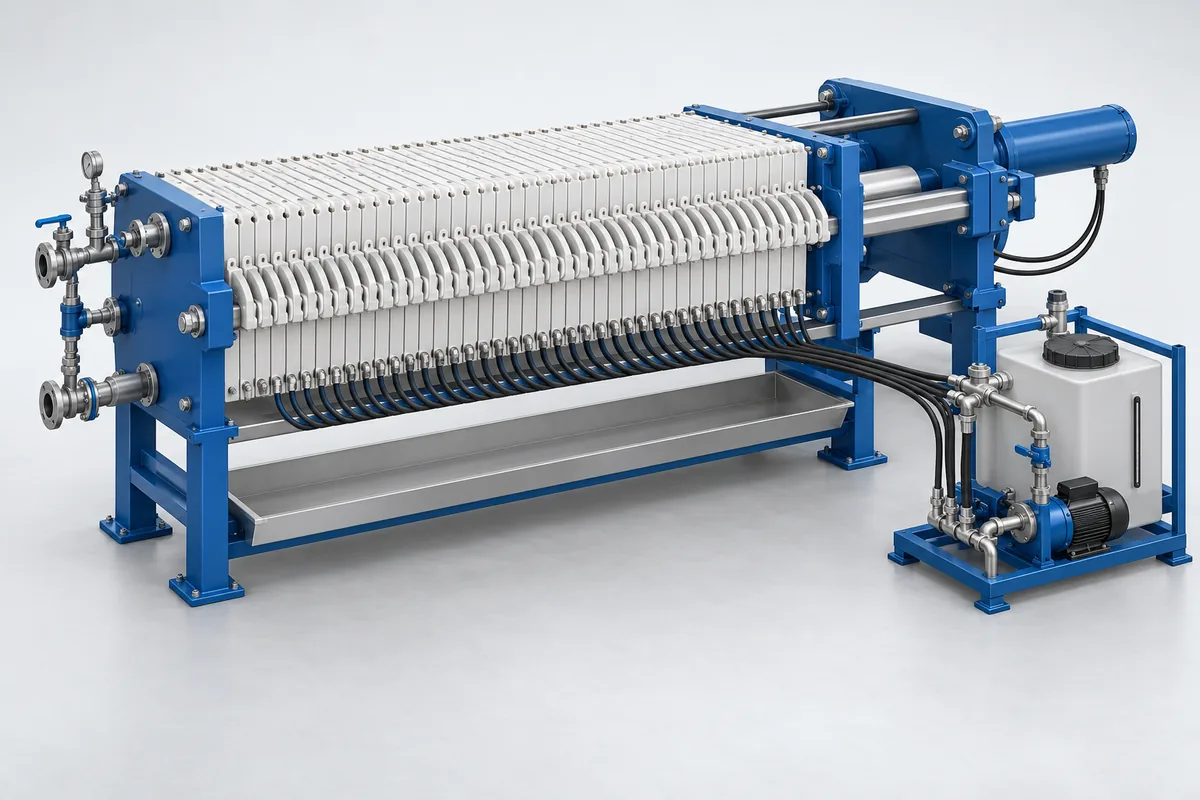
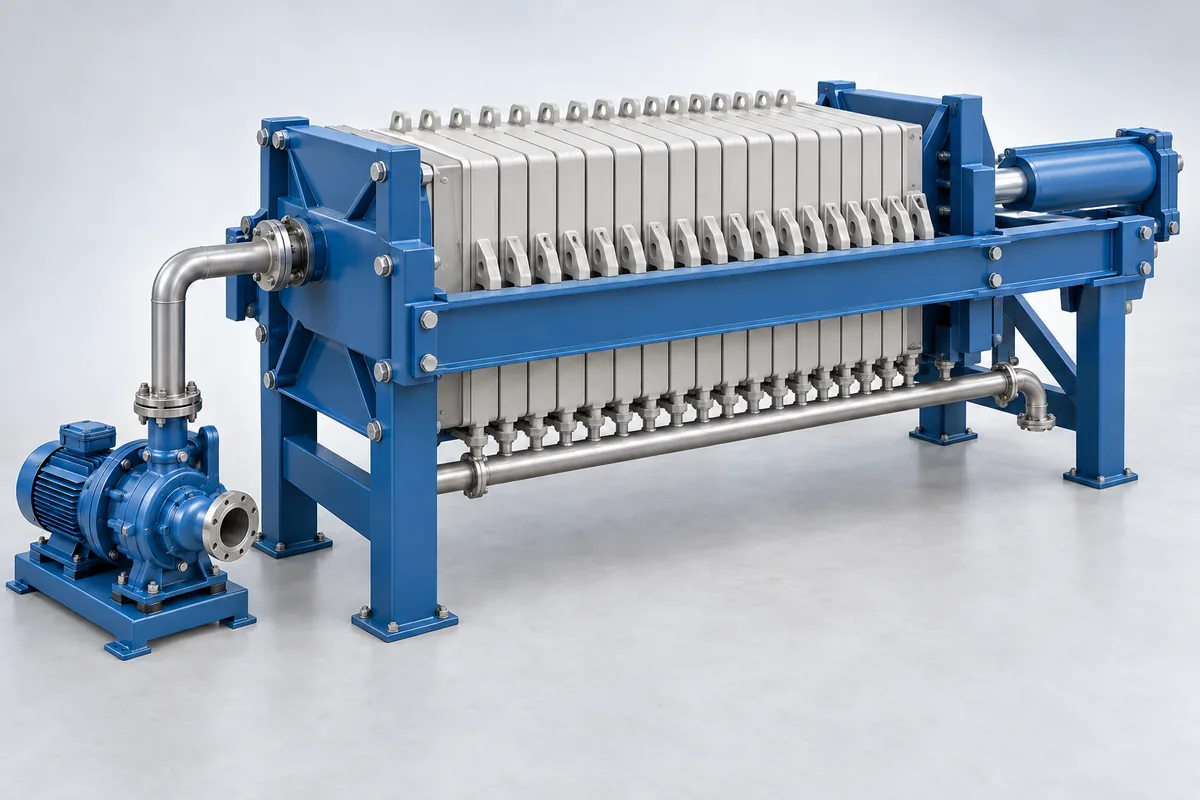
Know these components before starting:
- Filter plates form the chambers and provide drainage paths.
- Filter cloths retain solids while allowing liquid to pass.
- The feed pump and piping deliver slurry into the plate pack.
- Filtrate outlets and the manifold carry separated liquid to its designated destination.
- The hydraulic closing system establishes and maintains the required clamping force.
- Membranes, if fitted, squeeze the formed cake through a separate pressure circuit.
An automatic plate shifter moves the plates during discharge. The solid-liquid separation principle stays the same, and the process still needs monitoring. Our filter press types comparison explains how plate design differs from automation and other equipment options.
Prepare the Press Before Starting a Cycle
Before starting, confirm that the press is serviceable and the slurry matches the approved process. Have the operating limits available, and check the accessible parts before closing the machine.
Check the following before feeding:
- Check the plate count, sequence, orientation, and alignment. Look for cracks or distortion.
- Make sure cloths are seated correctly, feed openings are clear, and sealing faces are free of trapped cake. Inspect gaskets where fitted.
- Look for hydraulic leaks. Check the oil level and instrument condition as the manual requires.
- Set feed, filtrate, wash, vent, and drain valves according to the machine’s valve diagram.
- Confirm that guards and interlocks are in service and the required functional checks are complete.
- Prepare the discharge bin or conveyor, check that it has enough capacity, and control access to the area.
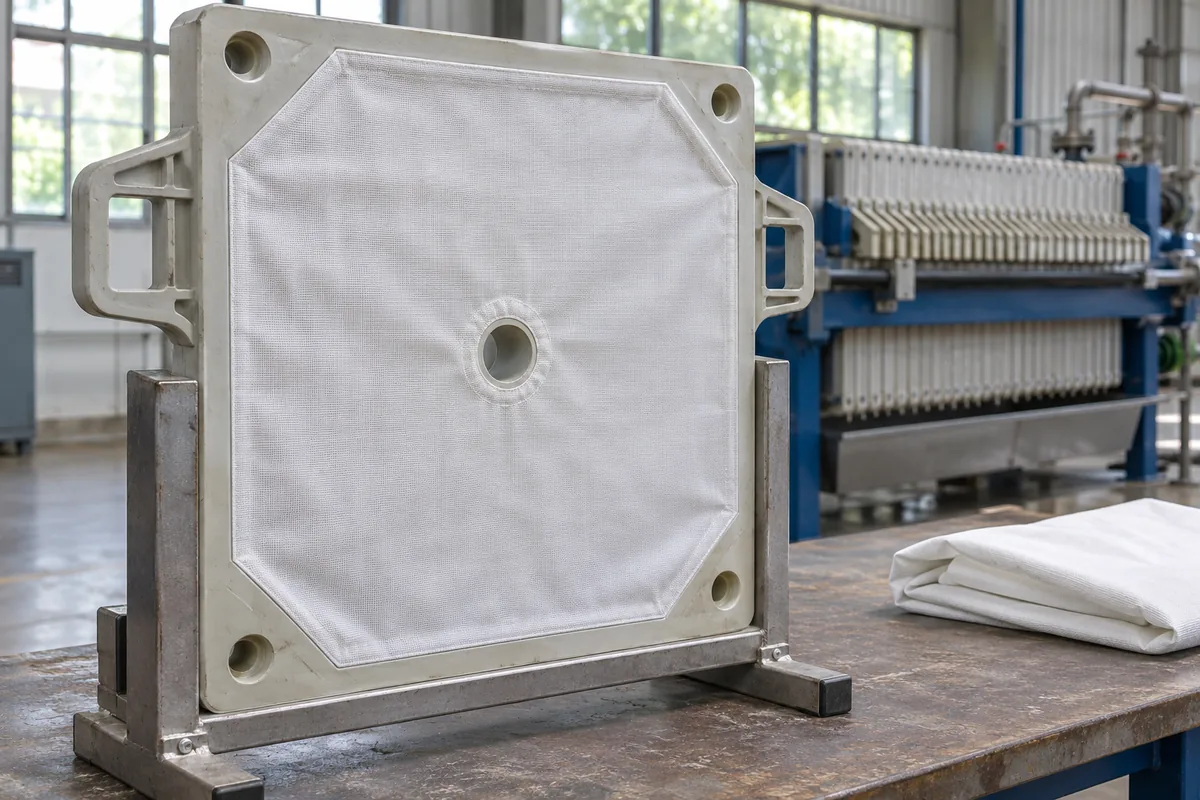
Check slurry temperature, chemistry, solids concentration, and any approved conditioning requirements. A different feed can change filtration behavior even when the press settings stay the same.
Wear the protective equipment specified by the site risk assessment and the material’s safety data sheet. Hot, corrosive, or otherwise hazardous slurries need controls appropriate to those hazards.
Keep the machine’s settings sheet nearby, with separate entries for hydraulic closing pressure, maximum slurry feed pressure, membrane squeeze limits, and any air-blow limits. These values are not interchangeable.
Need replacement plates or filter cloths?
Send your press model, plate dimensions, required quantity, and photos of the existing parts. Our team can review compatibility and prepare a quotation.
Run the Filter Press in Eight Steps
Follow the validated sequence and finish each stage before moving to the next. Use the checks below alongside your machine’s controls and SOP.
1. Close and Clamp the Plate Pack
Close the aligned plate pack and establish the manufacturer’s specified clamping condition before feeding slurry. Keep hands, tools, and clothing clear of moving plates.
Watch the moving head and confirm the closed-and-clamped indication. If the press cannot reach or maintain its required closing condition, stop and investigate under the approved procedure.
Do not feed slurry into a partially closed press. Do not bypass an interlock to get the next batch started.
2. Start Slurry Feeding Under Control
Start the feed pump at the approved flow or pressure profile, with the designated filtrate discharge paths available. Your installation may use a staged pressure increase or an automatic sequence.
Watch feed pressure, pump behavior, filtrate flow, and the plate edges from a safe position. An unexpected pressure jump with little filtrate can indicate restricted flow or an incorrect valve position.
Some cloth and slurry combinations allow a brief period of cloudy filtrate while the initial cake layer forms. Route that liquid as the process procedure requires; persistent cloudiness needs investigation.
If slurry sprays from between plates, use the prescribed safe shutdown procedure. Keep away from the leak and relieve process pressure before inspection. Do not raise the clamp setting beyond its specification to stop a leak.
3. Monitor Filtration and Cake Formation
Watch pressure and flow together as the chambers fill. The growing cake resists liquid flow, so filtrate output commonly falls as the batch progresses. Feed pressure may rise or remain controlled, depending on the pumping system.
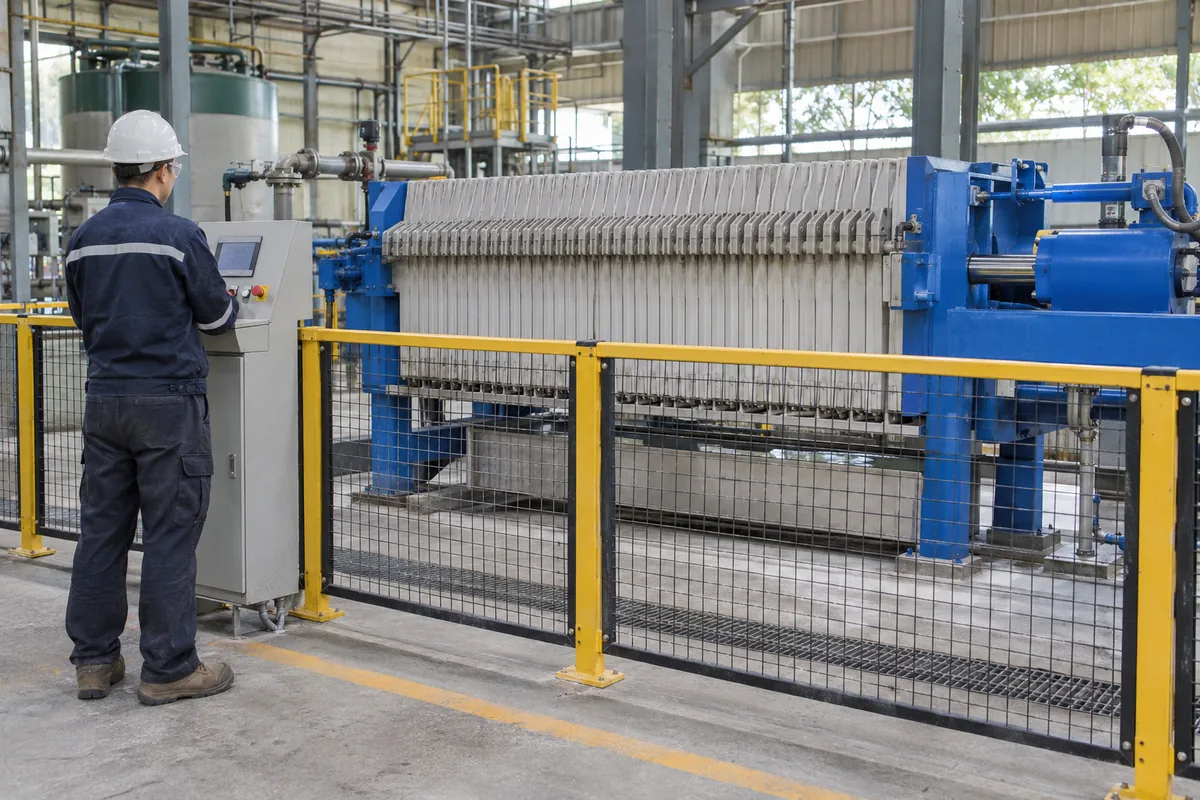
Compare these readings throughout filtration:
- Feed pressure against the approved operating profile.
- Filtrate flow against the normal trend for this slurry.
- Filtrate clarity against the process acceptance requirement.
A rising pressure reading alone does not prove that the press is filling correctly. Blocked feed passages, blinded cloth, or unusually viscous slurry can also restrict flow.
Compare the batch with a known good run of similar material. If pressure rises much earlier and little filtrate comes out, check for a restriction before assuming the cycle is complete.
4. Confirm the Filtration Endpoint
End feeding when the batch meets its validated endpoint: the specified combination of pressure, low flow, elapsed time, or other programmed criteria. Cycle duration and pressure depend on the press and slurry.
You can use the flow at terminal pressure to assess completion. The applicable threshold must come from your equipment supplier and process trials.
On some air-operated diaphragm pump systems, slowing strokes help you judge progress. A stalled pump can also mean a supply problem or blockage, so check the other endpoint criteria.
After safe discharge, inspect cake thickness and consistency across the pack. Repeatedly thin or uneven cakes can show that the filling process or endpoint needs review.
5. Complete Approved Washing, Squeezing, or Air Blowing
Use optional finishing stages only when the press is designed for them and the process recipe calls for them. Their purpose, pressure limits, valve routing, and sequence differ.
Cake washing passes a compatible wash liquid through the formed cake to displace retained process liquid. It can improve product purity or recovery. Washing the cloth after discharge is a separate task.
Membrane squeezing introduces the approved pressure medium behind flexible membranes, which compress the cake while the pack stays clamped. A standard recessed plate does not provide this function. See our membrane filter press configurations when comparing equipment with this extra dewatering stage.
Air blowing can remove residual liquid through a designed flow path. Core blow and cake blow serve different purposes, so follow the machine’s piping and control arrangement.
The process consists of cake washing followed by membrane squeezing. Other configurations may use different validated stages. Follow your own recipe, including its minimum filling requirements and membrane deflation procedure.
Never improvise an air connection or valve sequence. Compressed air introduces stored energy that must be released before opening.
6. Stop Feeding and Verify Depressurization
Stop and isolate the relevant process supplies, then vent and drain through the designated routes while the plate pack remains clamped. Verify that process pressure has been relieved before releasing the clamp.
Account for slurry feed pressure, wash pressure, trapped air, and membrane squeeze pressure where applicable. A stopped pump does not mean those pressures have disappeared.
Follow the prescribed verification method and check the relevant indicators. A gauge at zero may not reveal pressure trapped in an isolated or blocked section. If you cannot confirm the pressure status, keep the press closed and involve authorized personnel.
Do not loosen a hose, fitting, or plate to test for pressure.
Follow the site’s hazardous-energy control procedure for servicing, cloth replacement, and clearing hazards. In the United States, OSHA’s lockout/tagout standard, reproduced by Cornell LII, covers servicing and maintenance. It requires stored energy to be made safe and continued verification where that energy could reaccumulate. An emergency stop is not a substitute for energy isolation.
7. Open the Press and Discharge the Cake
Release the hydraulic clamp and open the press only after the required process-pressure checks are complete. Separate plates using the designated controls or handling method, and stay clear of the discharge path.
Allow cakes to drop into the prepared receiver. Sticky material may need an approved discharge aid, but reaching between moving plates is unsafe.
If a cake hangs up, stop movement and follow the safe intervention procedure. Use only suitable tools; sharp metal edges can damage cloths and plate surfaces.
Check the discharged material for differences between chambers, unusually wet centers, or difficult release. Record the affected plate positions so maintenance has a location to investigate.
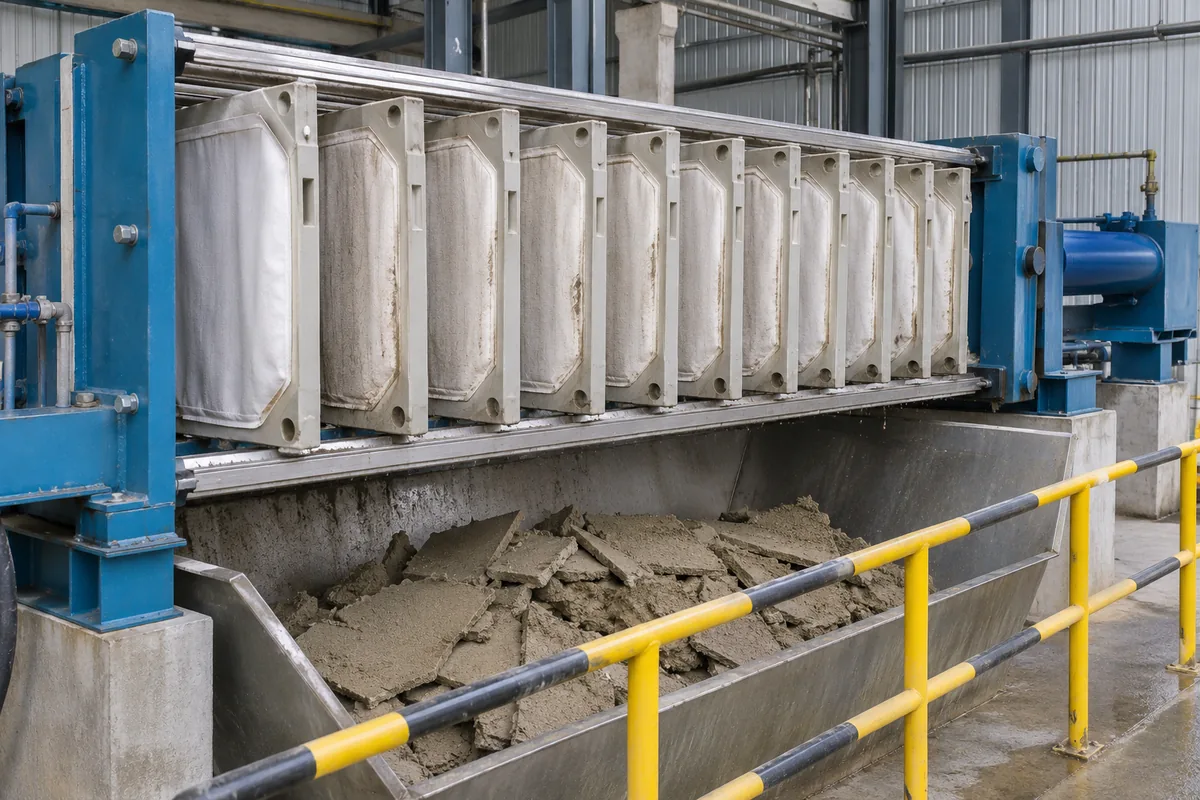
8. Clean, Inspect, and Prepare the Next Batch
Remove residual cake from sealing surfaces, inspect the cloths and plates, and clean according to the approved schedule before restarting. Residue trapped between sealing faces can cause leakage in the next cycle.
Follow the cleaning limits for pressure, nozzle distance, temperature, and chemicals. Excessive pressure or incompatible chemicals can damage the cloths and plates.
The particles embedded in the cloth mesh can reduce filtration rate and extend cycle time. Cleaning frequency depends on the application; some materials require attention after every cycle.
Replace damaged components under the required isolation procedure. Before restarting, restore guards, confirm the plate arrangement and valve positions, and make sure everyone is clear.
Troubleshoot From the Symptom
Start with the symptom and make the equipment safe before inspection. Change one approved setting at a time so you can tell what affected the result.
| Symptom | Possible causes | What to check |
|---|---|---|
| Persistent cloudy filtrate | Damaged or poorly seated cloth; unsuitable media; changed slurry. | Contain off-spec filtrate as required, then inspect the affected cloth and review feed conditions. |
| Spray or unexpected leakage between plates | Trapped solids, cloth folds, damaged sealing surfaces, or incorrect clamping. | Stop safely, depressurize, and inspect sealing surfaces and the specified closing condition. |
| High pressure early, with little filtrate | Restricted feed, wrong valve position, cloth blinding, or changed slurry viscosity. | Compare the trend with previous batches; check flow paths and cloth condition after safe shutdown. |
| Wet or uneven cakes | Incomplete filling, poor distribution, unsuitable endpoint, or changed feed properties. | Record cake location and thickness; review the feed profile, chamber filling, and process recipe. |
| Progressively longer cycles | Cloth blinding, pump wear, or a change in feed solids concentration. | Review cleaning records, pump condition, and comparable slurry measurements. |
| Cake sticks during discharge | Sticky material, cloth condition, or an unsuitable dewatering endpoint. | Review release behavior, cloth selection, and trial results before adjusting the process. |
Write down what happened and where. “Cloudy filtrate at the same outlet on three consecutive batches” gives the next shift a place to start; “press running badly” does not.
Measure Results Across the Whole Cycle
Compare cake moisture and filtrate quality with dry solids processed per complete cycle. Extra dewatering may reduce the weight you haul away while a longer finishing stage reduces hourly throughput.
Keep a batch log that includes:
- Slurry source and measured feed solids concentration.
- Feed pressure and flow trend.
- Filtration, finishing, discharge, and cleaning times.
- Filtrate test results and any off-spec routing.
- Cake mass and moisture results, using a consistent sampling method.
- Alarms, interventions, and maintenance observations.
For example, suppose two batches each contain 100 kg of dry solids, with moisture measured as a percentage of total wet cake mass:
- At 60% moisture, solids make up 40% of the cake: 100 ÷ 0.40 = 250 kg of wet cake.
- At 50% moisture, solids make up 50% of the cake: 100 ÷ 0.50 = 200 kg of wet cake.
That is 50 kg less wet material, or a 20% reduction in wet cake mass, for the same dry solids quantity. This is an illustrative mass balance, not a promised result or a plant case study.
Processing those 100 kg of dry solids in a complete 60-minute cycle gives 100 kg per hour. Extend the cycle to 75 minutes with extra finishing, and throughput falls to 80 kg per hour.
Use both figures when weighing a change against disposal costs, product requirements, and available capacity. Make adjustments through approved trials and record the results. If you are planning more capacity, our filter press sizing guide explains how solids loading, chamber volume, and the operating schedule affect equipment selection.
Frequently Asked Questions
Pressure settings, cycle duration, and cleaning intervals depend on your equipment and slurry. Start with the supplier’s specifications, then use consistent batch measurements to assess performance.
What Pressure Should a Filter Press Run At?
Use the approved feed-pressure profile for the installed press, plates, cloths, piping, and pump. Hydraulic closing pressure and membrane squeeze pressure have separate specifications; never copy a pressure value from a different machine.
How Do You Know When the Press Is Full?
Use the validated endpoint criteria, commonly combining terminal feed pressure with low flow or another programmed condition. Confirm the outcome through cake inspection after safe discharge; high pressure or a stalled pump alone does not establish complete filling.
Does Clear Filtrate Mean the Water Is Safe to Discharge?
No. Visual clarity does not establish chemical safety or compliance with a discharge permit. A filter press primarily removes suspended solids; dissolved contaminants may remain, so use the required testing and treatment before reuse or discharge.
How Often Should Filter Cloths Be Cleaned?
Inspect cloths and sealing faces after discharge, then clean at the interval established for the application. Falling flow, longer cycles, and persistent deposits can indicate that the cleaning procedure or frequency needs review.
Make Every Cycle Repeatable
For a repeatable cycle, assemble the plate pack correctly, follow the approved feed profile, and verify the endpoint. Release process pressure before opening. Keep up with cleaning and batch records so you can spot changes between runs.
Planning a new press or a capacity upgrade?
Share your slurry, required throughput with units, feed solids if known, target cake condition, and project location. Ask our team to review a suitable configuration and quote the equipment scope.
Before restarting, check that the equipment is ready, the recipe matches the slurry, and the discharge area is clear. Resolve or escalate the previous batch’s problems.