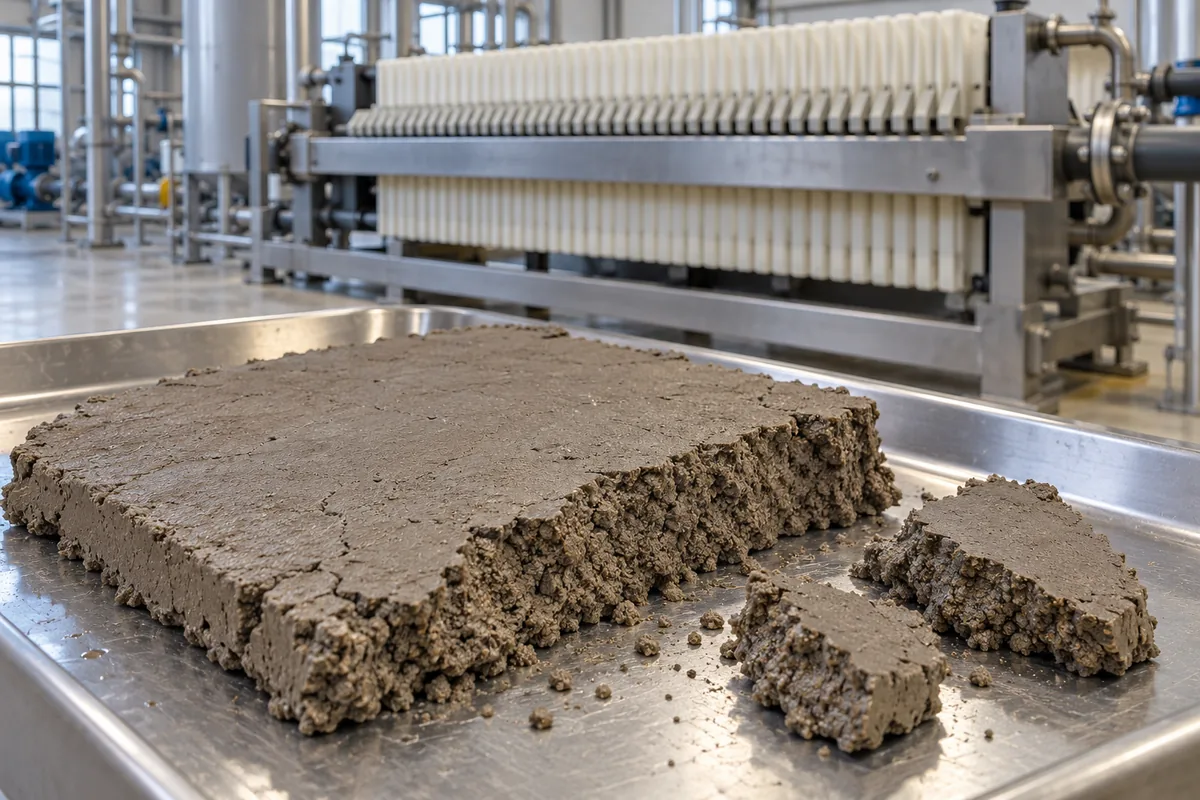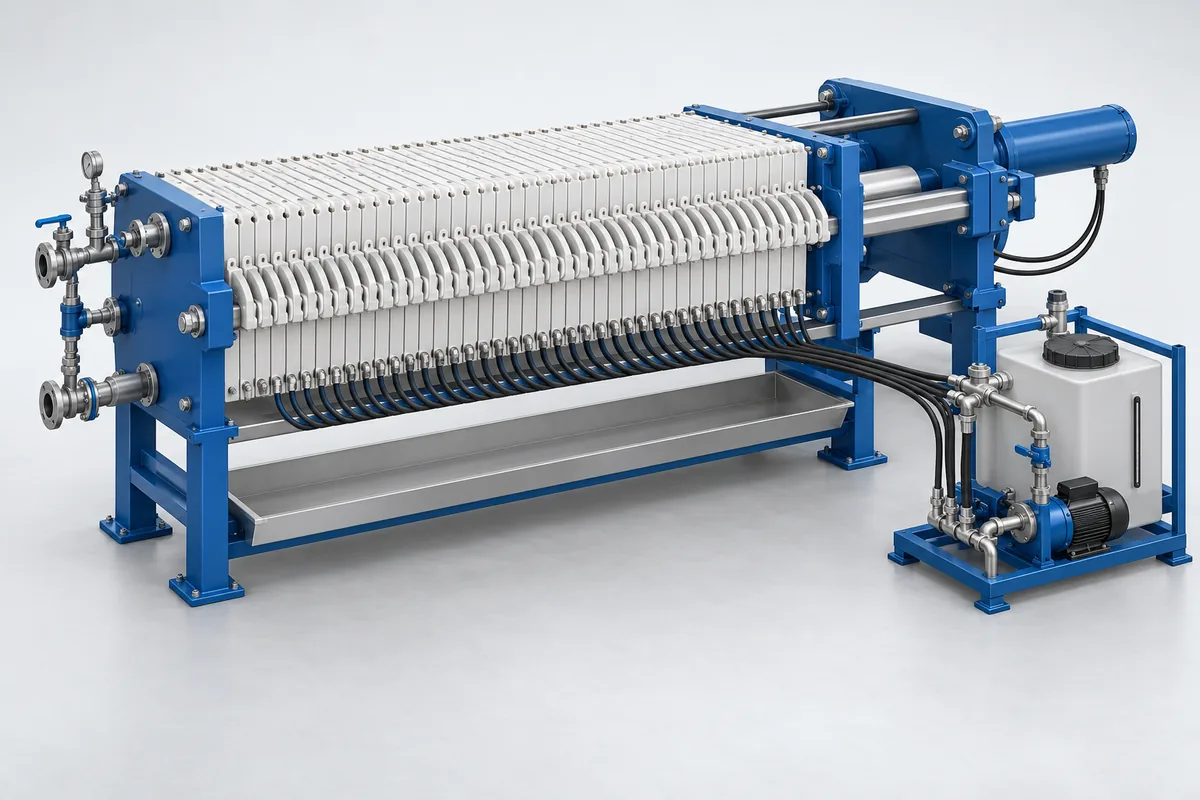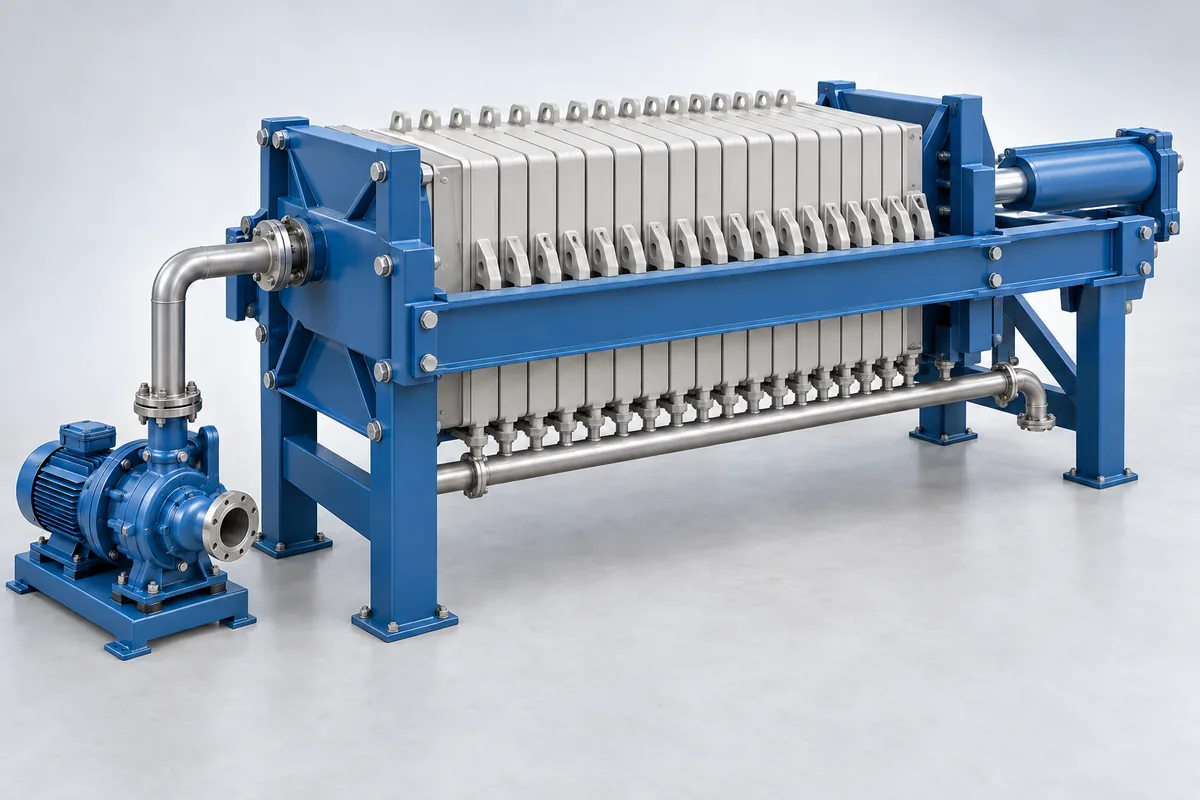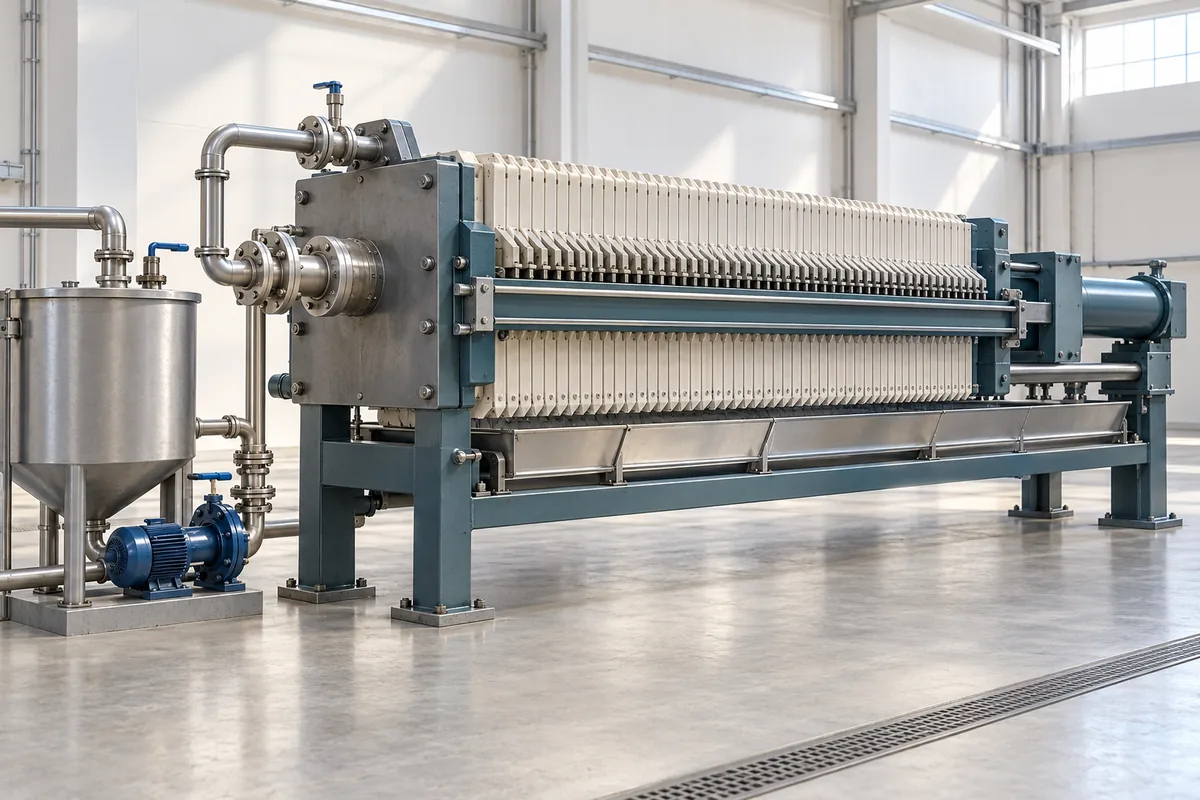
The advantages of filter press systems include drier cakes, lower hauling and disposal costs, recovered process water, and high solids capture. These benefits can cut costs at plants that pay to transport wet sludge or lose saleable solids in wastewater.
| Advantage | What improves | What to verify |
|---|---|---|
| Drier filter cake | Higher solids concentration; for example, 25% to 40% solids by mass | Achievable dryness with your slurry |
| Lower disposal weight | In that example, wet cake falls from 4,000 to 2,500 kg per 1,000 kg of dry solids | Actual hauling rates and disposal terms |
| Water recovery | More separated water available for potential reuse | Water balance and reuse quality limits |
| High solids capture | Less suspended material carried into the filtrate | Solids recovery and filtrate quality |
| Potential energy savings | Lower overall energy demand in a suitable application | Whole-system kWh per dry tonne processed |
| Accessible maintenance | Serviceable cloths and plates, with automation options | Cloth life, cleaning time, and spare parts |
| Application flexibility | Plate, cloth, pump, and cycle choices matched to the material | Slurry testing and chemical compatibility |
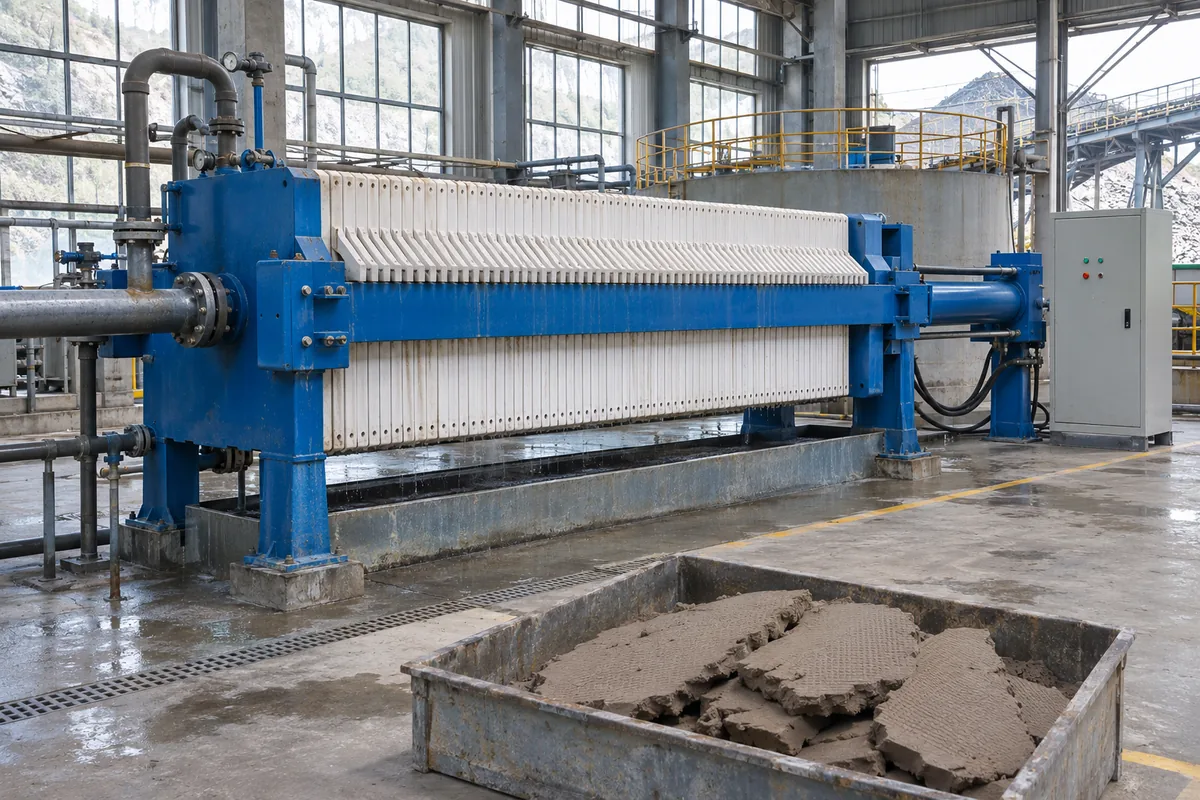
Before investing, check how much a press can improve your process at the production rate you need. Compare cake dryness and water quality alongside cycle time and operating cost.
7 Advantages of Filter Press
1. Produce a Drier Cake That Is Easier to Handle
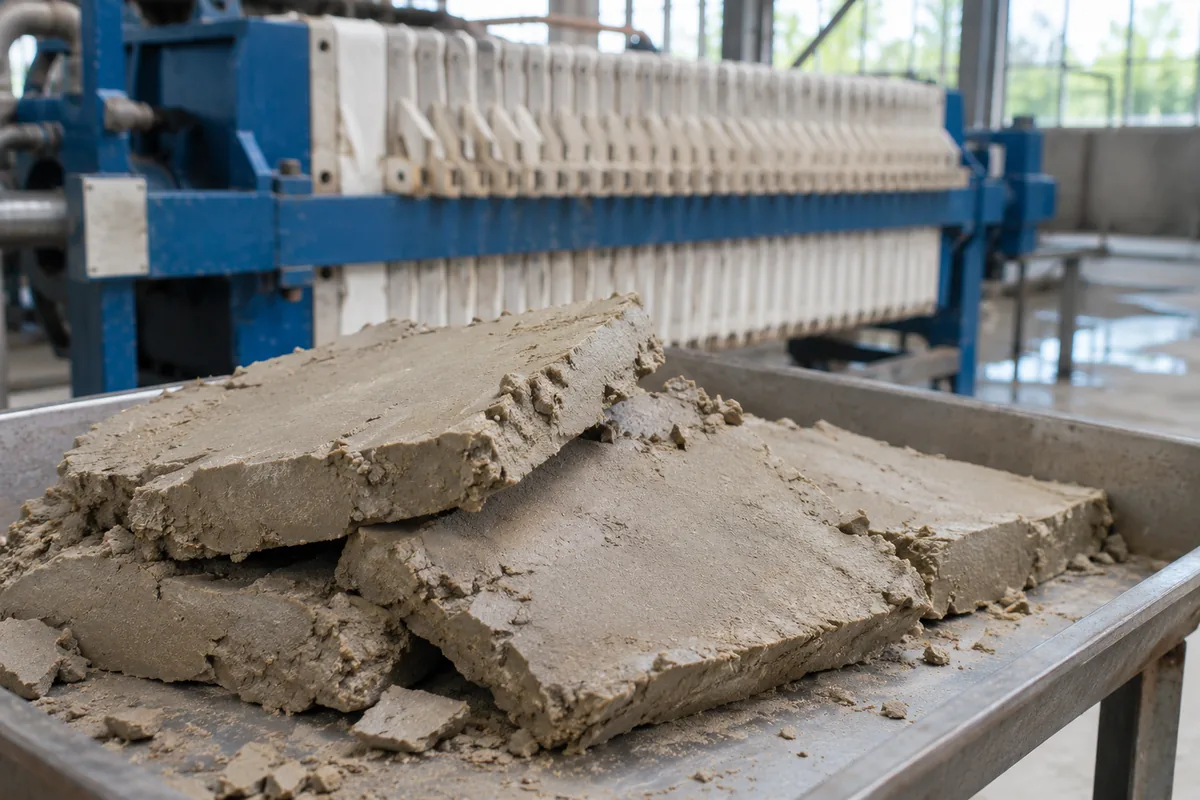
A filter press removes liquid from slurry, leaving a concentrated cake that is often easier to collect, convey, store, and transport. Where the material responds well to pressure filtration, less water leaves with the solids.
The U.S. EPA’s recessed-plate filter press overview identifies high cake solids concentration as a strength of this technology. It is worth evaluating if moisture left by your current equipment adds to handling or disposal costs.
Every kilogram of water in a sludge container takes up carrying capacity. Remove more of it before loading, and the same dry solids leave the site in a lighter load.
Cake dryness also matters downstream. If you thermally dry a product, mechanical dewatering can reduce the water your dryer must evaporate. If you stockpile mineral residue, a more manageable cake can simplify handling.
There is no universal cake-solids percentage, though. Particle size, clay content, compressibility, conditioning, and filtration time all influence the result. A material that feels dry may still contain substantial moisture.
Ask for a measured cake-solids result and a handling assessment. Stackability and conveyor behavior need checking separately from moisture content.
2. Reduce Hauling and Disposal Costs
A drier cake reduces the weight you haul and dispose of, provided the quantity of captured dry solids stays the same. Savings are greatest where disposal is charged by weight and the lower moisture content reduces transport costs.
For wastewater and sludge dewatering, use your current cake-solids result and disposal rate to estimate the saving.
Calculate the Savings From Higher Cake Solids
Increasing cake solids from 25% to 40% reduces wet cake mass by 37.5% for the same captured dry solids. This is an illustrative mass balance, assuming unchanged solids capture and no change in conditioning solids.
Suppose your plant produces 1,000 kg of dry solids per operating day:
- At 25% solids, wet cake mass is 1,000 ÷ 0.25 = 4,000 kg.
- At 40% solids, wet cake mass is 1,000 ÷ 0.40 = 2,500 kg.
- The difference is 1,500 kg less wet cake per day.
For an assumed combined hauling and disposal rate of $100 per wet metric tonne, that reduction is worth $150 per operating day. Over 250 operating days, the gross saving is $37,500.
These assumed figures illustrate the calculation; they are not a quotation or a forecast for your site. Minimum collection charges, container capacity, disposal rules, and loading schedules can change what you actually save.
Subtract any additional power, chemicals, labor, maintenance, and other operating costs. Include the installed capital cost when calculating payback, and check the estimate against your actual hauling and disposal invoices.
Considering a press to reduce disposal costs?
Share your slurry type, daily throughput, and current cake condition. We can discuss a suitable configuration and prepare a quotation for your project.
3. Recover Water and Reduce Dependence on Settling Ponds
A filter press separates water from solids so suitable filtrate can return to the process, reducing freshwater demand. In some mineral-processing systems, combining a thickener with a press also reduces the space needed for settling ponds.
An industries case study reports about 96% process-water recovery at a silica-processing operation using a thickener and filter press.
The figure applies to that combined system, so it cannot be used as a recovery rate for every press or slurry. The supplier also reports less reliance on settling ponds and easier handling of the clay tailings.
For your plant, start with a water balance. Account for water entering with the feed, water retained in the cake, wash water, losses, and any liquid that must leave the circuit to control dissolved contaminants.
Also test the filtrate against its intended use. Clear-looking water can still contain dissolved salts, metals, or other substances. A filter press primarily separates suspended solids; additional treatment may be necessary before reuse or discharge.
4. Capture Fine Solids and Preserve Valuable Product
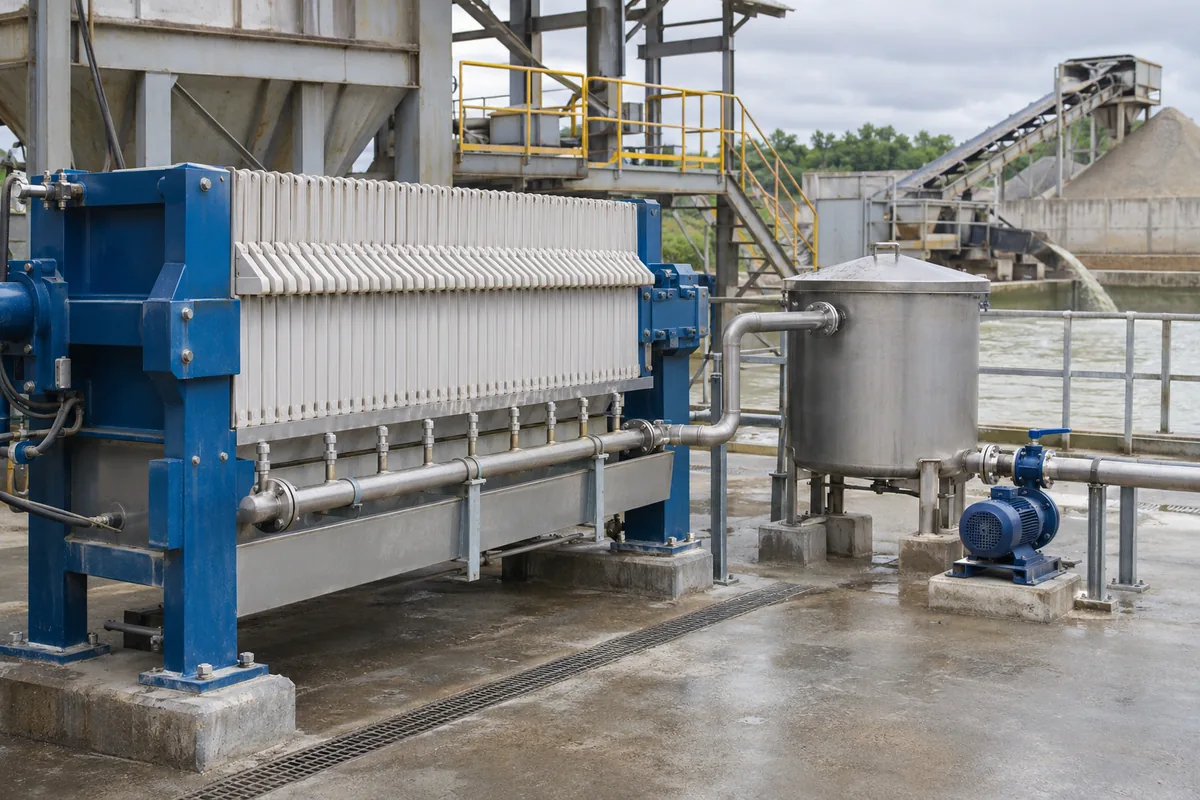
A properly selected filter press can retain a high proportion of suspended solids. That improves filtrate quality and reduces product losses. The cloth and the cake that builds on it both help separate solids from the liquid.
A pilot-scale study of fine silica-sand slurries, documented by Penn State, reported solids recoveries above 99.5% across its tests. Reported cake moisture ranged from 12.0% to 17.5%, and filtrate solids content was below 0.1% by weight.
These results show what the press achieved with that material and test setup. They cannot serve as a performance specification for an unrelated wastewater sludge.
The study also found that lower cake moisture generally came with lower processing capacity. A longer cycle may produce a drier cake while processing less material per hour.
For a plant recovering mineral concentrate or a chemical product, evaluate the value of captured solids alongside cake dryness. Record filtrate quality throughout the cycle, including startup, so a clean sample taken at the end does not hide earlier losses.
5. Control Energy Use Across the Dewatering System
A filter press can reduce energy use in a suitable application, particularly when a drier cake needs less thermal drying. Measure the saving across the whole system at the throughput and product quality you require.
The plate pack stays closed during filtration. A feed pump supplies the pressure needed to push liquid through the filtering surfaces. Depending on the design, the installation may also use hydraulic equipment, membrane squeezing, compressed air, cloth washing, and cake conveyors.
Comparing only the press’s hydraulic motor with a centrifuge’s motor leaves out those loads. An air-operated feed pump, for example, draws energy through the compressed-air supply.
Ask suppliers for kWh per dry metric tonne processed, using the same feed conditions and output requirements. Include pumps, compressors, wash systems, and relevant downstream equipment in the comparison.
If a press produces a drier feed for a thermal dryer, calculate that benefit too. Evaluate the reduction in evaporation duty separately from the electrical demand of the press itself.
6. Simplify Routine Maintenance and Reduce Manual Work
The cloths and plates in a filter press are accessible for inspection and replacement, and suitable automation can reduce routine handling. The maintenance work differs from that of equipment with continuously rotating, high-speed components.
Plan for cloth cleaning and replacement: cloths can blind, tear, or lose performance. Abrasive slurry also wears pumps and valves, while poor cake release adds cleaning work and lengthens the cycle.
The cloth selection, operating conditions, and maintenance will affect cloth life. It also identifies longer cycles and progressively wetter cakes as possible signs that cloth replacement is needed.
Automatic plate shifters, cloth washing, and cycle controls can reduce repetitive tasks. Their value depends on how reliably your material releases and how much intervention remains necessary.
Before buying, ask to see a complete cycle with comparable material, including cake discharge and cleaning. A short filtration demonstration will not show how long it takes to prepare for the next batch.
7. Match the Press to Different Materials and Applications
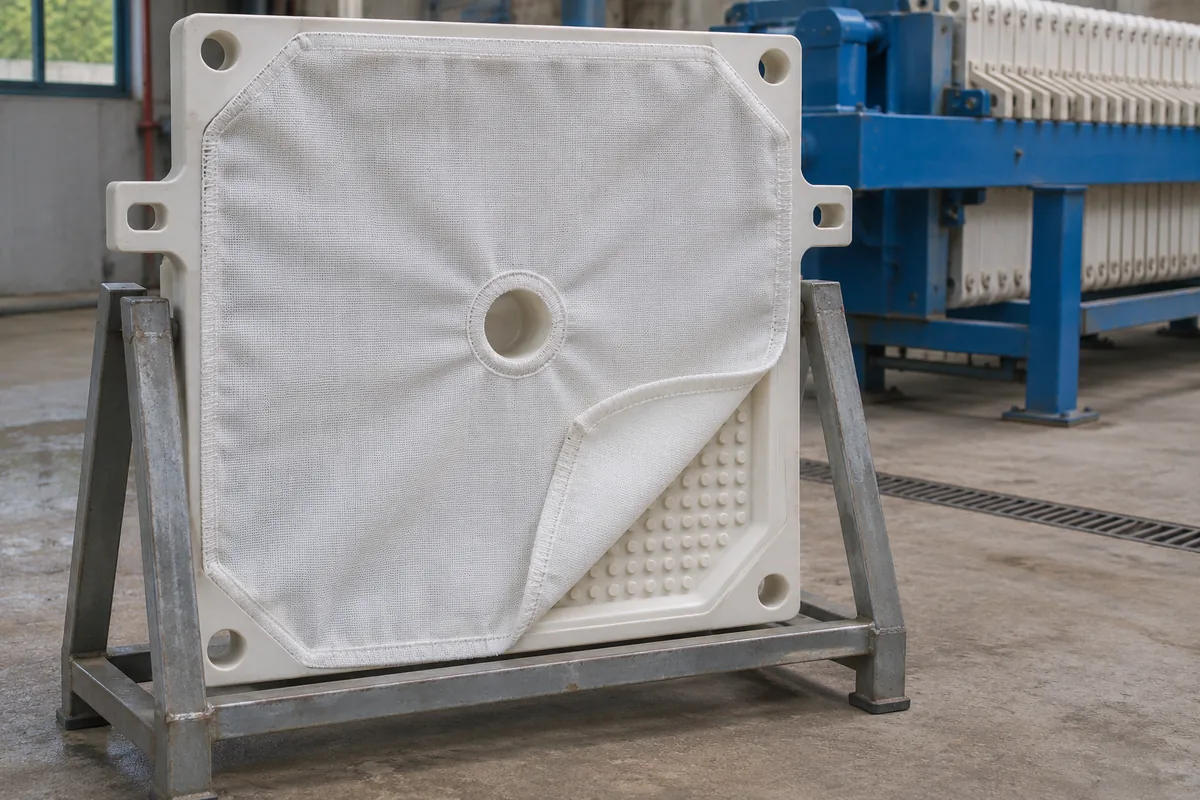
Plate design, cloth selection, pumps, construction materials, and operating sequences can all be matched to the slurry. Filter presses are used in mineral processing, industrial wastewater treatment, and chemical production.
A recessed chamber filter press uses rigid plates for pressure filtration. A membrane filter press adds a squeeze stage that may remove more liquid from a compressible cake. Some applications also require cake washing to displace residual process liquid.
Our membrane vs chamber comparison explains when the additional squeeze stage is worth evaluating.
Check material compatibility for your operating conditions. Polypropylene is common in filter plates, but it is not suitable for every chemical, temperature, or pressure combination. Review every part that contacts the process liquid, including cloths, seals, piping, and pumps.
Portable units can suit temporary projects or work at multiple locations. Before choosing one, confirm how you will provide feed storage, utilities, site access, filtrate routing, and cake removal.
What Is Filter Press Technology?
A filter press is a machine that separates a slurry into liquid filtrate and a solid-rich filter cake using pressure and a filtering medium. In this guide, the term refers to plate filter presses, including recessed-chamber and membrane designs.
The main parts are a supporting frame, a pack of filter plates, filter cloths, a closing mechanism, and feed and filtrate connections. The feed pump and associated controls complete the operating system.
A belt filter press is a different design. It dewaters material between moving belts and typically operates continuously. A plate filter press normally works in batches: fill, filter, discharge, then repeat.
Filter Press Working Principle: How the Separation Happens
The filter press working principle is pressure-driven filtration. The feed pump forces liquid through the cloth and developing cake while solids collect inside the chambers. The hydraulic closing system holds the plate pack sealed throughout filtration.
The rigid plates do not keep moving together to squeeze slurry during ordinary recessed-chamber filtration. The pump provides the filtration pressure. A membrane press can add a separate squeeze stage using flexible plate surfaces.
A typical cycle follows these steps:
- Close and clamp the plates to form sealed chambers.
- Pump in the slurry. Feed fills the chambers as liquid begins passing through the cloth.
- Allow the cake to build. As solids accumulate, resistance to liquid flow increases.
- Complete the specified dewatering stages. Depending on the design, these may include membrane squeezing or an approved air-blow sequence.
- Depressurize, open the press, and discharge the cake before starting the next cycle.
- Inspect and clean the sealing and filtering surfaces as required for the next batch.
Follow the equipment manufacturer’s operating sequence and pressure limits. Stored pressure and moving plates require appropriate controls; discharge begins only after the system is safely depressurized.
Filter Press Diagram: Follow the Two Output Streams
This simplified filter press diagram shows slurry entering a closed plate pack and leaving as two separate outputs: liquid filtrate during filtration and cake during discharge. It is a process sketch, not an installation or piping drawing.
Slurry tank
    |
    v
Feed pump
    |
    v
Closed plate pack
    |                         |
    v                         v
Liquid passes through     Solids collect
cloth and cake            inside chambers
    |                         |
    v                         v
Filtrate outlet           Depressurize and open
    |                         |
    v                         v
Reuse or further          Cake discharge
treatment                 for handling
The hydraulic clamp keeps the plates together during filtration. The liquid and cake outlets occur at different stages of the batch, which is why upstream storage may be needed for a continuously operating plant.
When Another Dewatering Method May Fit Better
A plate filter press may not suit your plant if you need uninterrupted discharge, have little floor space, or struggle to release the cake. Compare it with centrifuges, belt presses, or screw presses using representative feed tests and weigh those constraints against the value of higher cake solids.
Avoid assuming that one machine always produces the driest solids. In a Penn State-documented comparison using coal thickener underflow, filter press cake moisture ranged from 27.3% to 29.6%, while centrifuge moisture ranged from 24.2% to 36.4% across different operating conditions.
The centrifuge’s lower moisture results came with lower solids recovery. You need both measurements to judge the result.
Consider these constraints together:
- A continuous production line may need a surge tank or multiple presses to accommodate batch operation.
- Filling, dewatering, opening, discharge, and cleaning all count toward cycle time and affect capacity.
- Allow space for plate movement, maintenance access, cake collection, and supporting equipment.
- Some slurries need conditioning chemicals or filter aids, adding cost and potentially more solids.
- Dewatering does not by itself make hazardous material harmless or establish disposal compliance.
The best option meets your production and quality requirements at an acceptable total cost.
How to Verify the Benefits Before You Buy
Test representative slurry and compare the full operating costs before selecting a press. Set your acceptance criteria before the trial so each supplier works to the same requirements.
I recommend starting with the cost or constraint you most need to improve. That might be disposal weight, water demand, product recovery, or a shortage of available land.
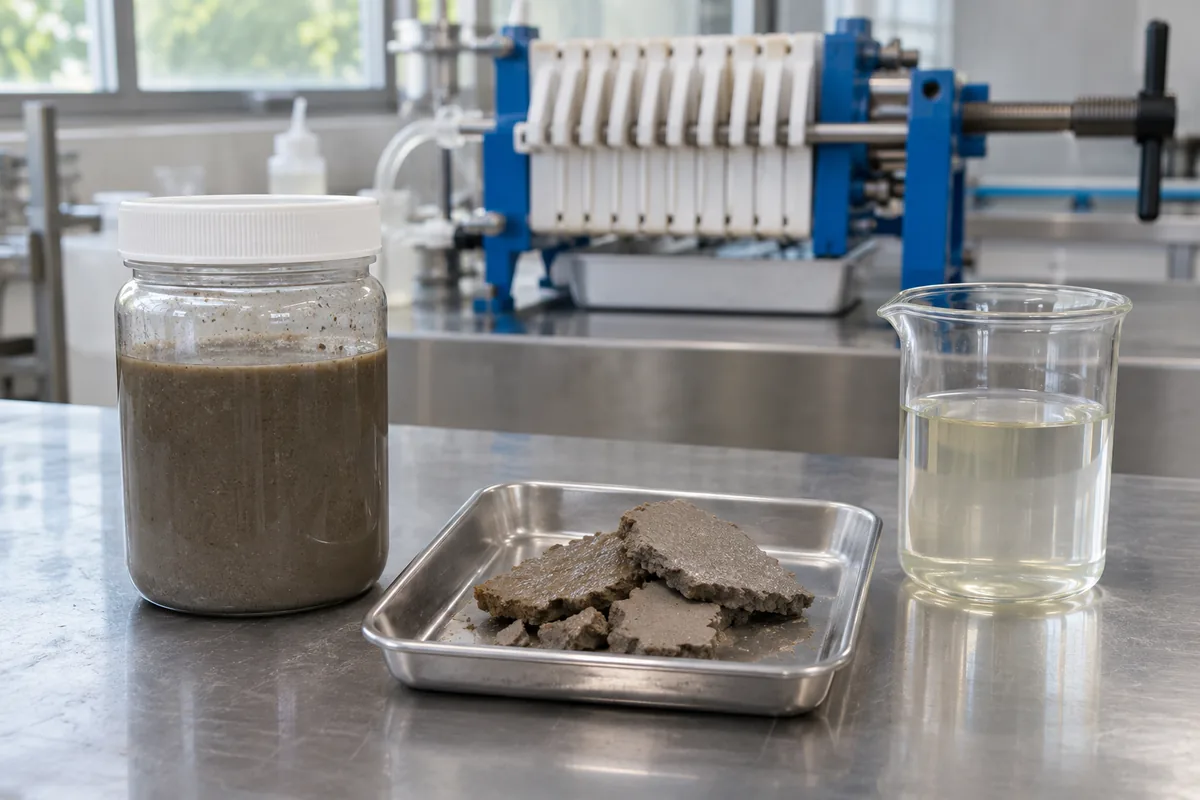
Collect the evidence in four steps:
- Measure feed solids concentration, particle-size distribution, pH, temperature, and relevant chemistry. Include the variation you expect during production.
- Specify dry-solids throughput, cake solids, filtrate quality, solids recovery, and available operating hours.
- Test the whole cycle. Record conditioning dose, pressure, filtration time, cake release, washing needs, and operator intervention. Repeat with difficult feed samples.
- Compare installed and operating costs, including foundations, tanks, pumps, utilities, labor, consumables, maintenance, and residuals handling.
Our filter press sizing guide explains how throughput, chamber volume, filtration area, and cycle time affect equipment selection. Keep the units consistent when comparing proposals: compare dry tonnes with dry tonnes, and use the same number of operating days to calculate annual savings.
Get a quote for your application
Send your material, throughput with units, target cake condition, and project location. If some figures are unknown, send what you have so we can confirm the next step.
Use the test results to agree on performance requirements and acceptance testing. Compare the measured cake dryness, filtrate quality, and throughput with your current costs to put a value on the advantages of filter press.